Scottish history books for children: a chronological overview
This is part two of a short series of articles looking at Scottish history books for children. You can see the other articles here:
- Main resources for studying Scottish history with children
- Chronological overview of Scottish history books for children (this post)
- Scottish history for children: some authors and series to look out for
I have organised the books into different periods of history, in chronological order. Some periods of history have more resources available than others! There are not as many children’s book available in this field as I would like, and you will see that there are big gaps. It tends to be easier to find children’s books about specific Scottish historic individuals and events, rather than about overall time periods. For overall time periods, we were heavily dependent on Scotland’s Story and A History of Scotland for Children which are reviewed in my previous article.
When studying Scottish history, we used what was available, and made up the gaps with historical fiction, plenty of field trips and the odd Youtube video.
This post contains affiliate links. As an Amazon Associate, I earn from qualifying purchases.
Ancient Scotland
There are a number of books available for studying Stone Age Scotland, and the Romans in Scotland, but it is harder to find resources on the Picts . We relied quite heavily on archaeological site visits to inform and inspire us. The good news is that if you are living in Scotland, it is relatively easy to find Pictish sites such as brochs to visit, or carved stones in museums.
The Boy with the Bronze Axe
Kathleen Fidler
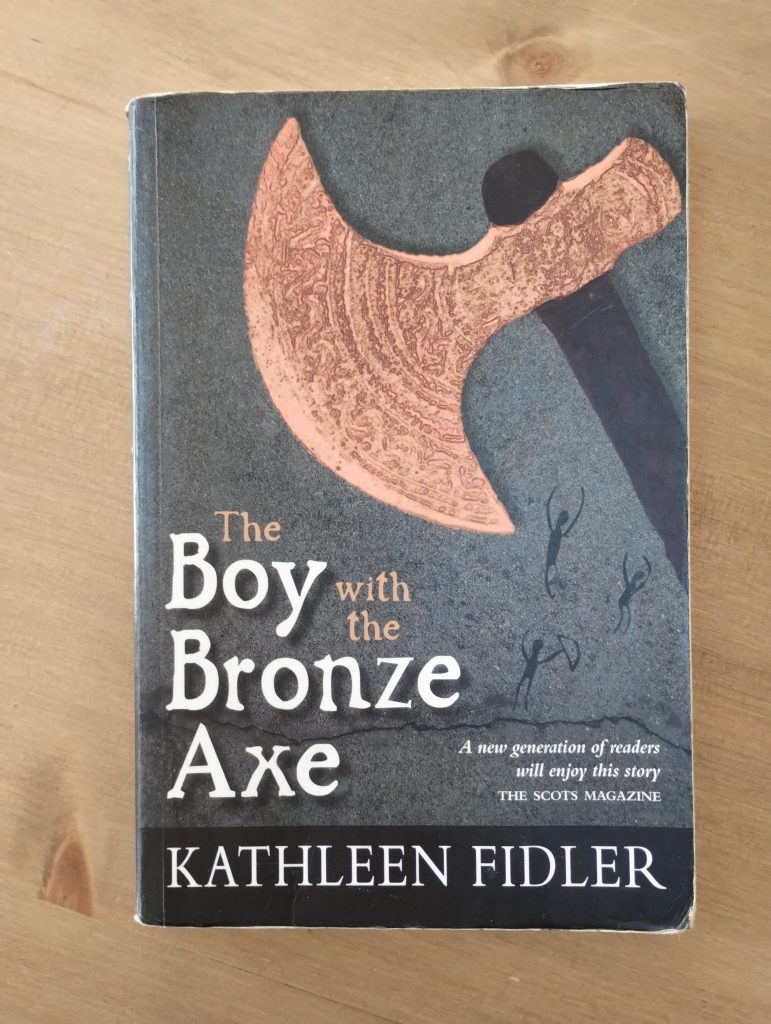
A classic children’s story set in the village of Skara Brae in Orkney. A boy arrives from the mainland with a bronze axe, which no-one there has seen before. This book is historical fiction, but lots of the settings are real places, and my child was absolutely delighted to visit them all when we visited Orkney. This is one to fire a child’s imagination for life in the Stone Age.
If you are unable to visit Orkney, I would recommend finding a video of Skara Brae and some of the other Orkney sites to watch in conjunction with reading this book. The Ness of Brodgar archaeological dig is particularly interesting. I believe it is the first site in the world with surviving Stone Age painting as decoration on building walls.
The Eagle of the Ninth
Rosemary Sutcliff
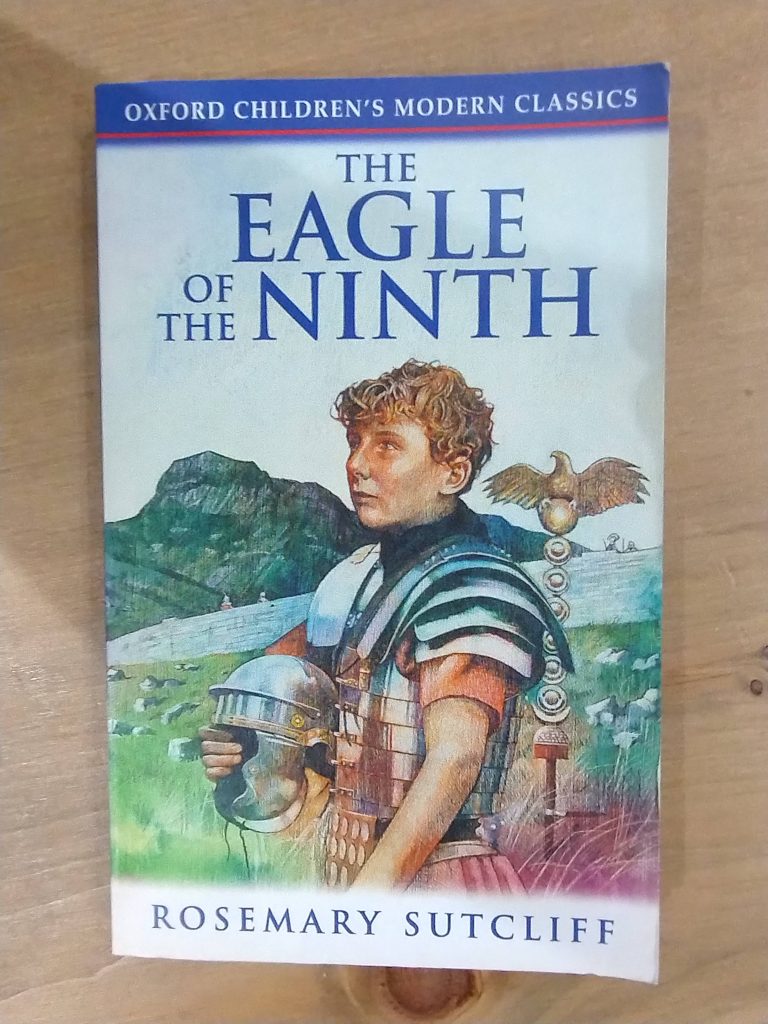
This is another work of historic fiction, looking at the mystery of the disappearance of the Ninth Roman legion, which had been sent to deal with Caledonian tribes in the north. It provides some good contextual information for the Romans in Britain, and particularly their attempts to subdue the northern tribes.
We coupled this book with visits to Hadrian’s Wall and the Antonine Wall.
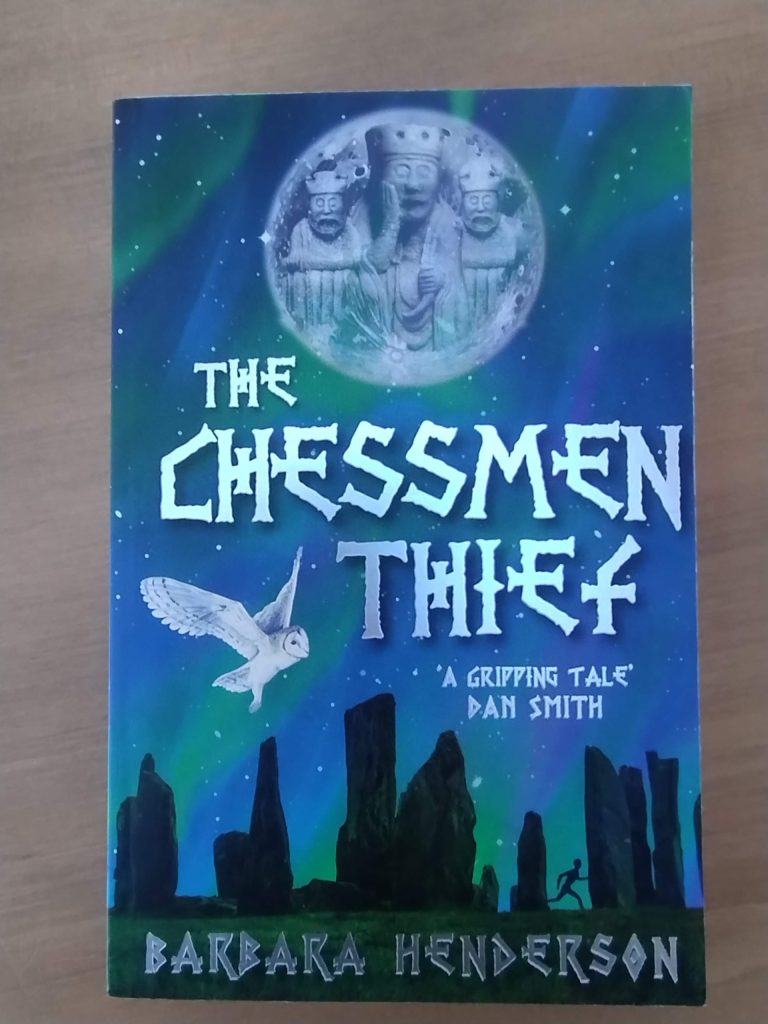
The Chessmen Thief
Barbara Henderson
Again, this book is historic fiction looking at the abduction of slaves from the Hebridean islands by the Vikings. The protagonist, Kylan, is attempting to get home to Lewis. The book features the real ‘Lewis Chessmen’ discovered in 1831. Lots of adventures and excitement along the way.
Medieval Scotland
There are large swathes of medieval Scottish history for which I could find no books at all. There are a fair number of resources for William Wallace and Robert the Bruce.
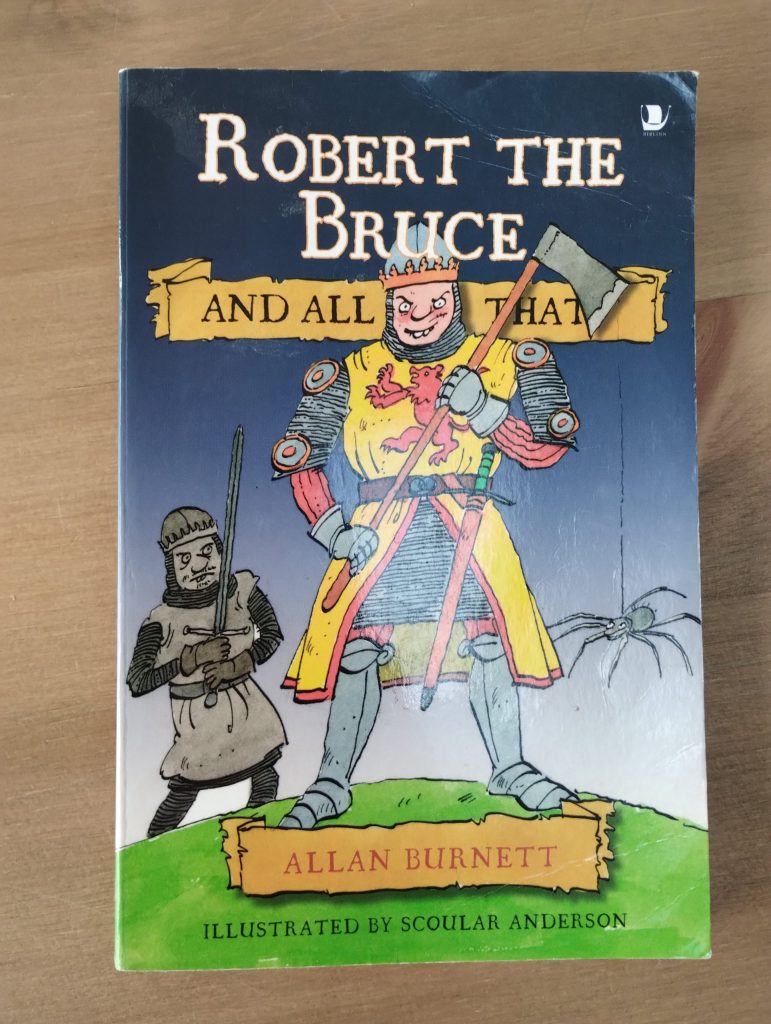
Robert the Bruce and All That
Allan Burnett
This series is similar in style to Horrible Histories, with lots of cartoons and funny pictures interspersed through the text. This book gives a pretty thorough overview of Bruce’s life with a comic tone that will appeal to lots of children.
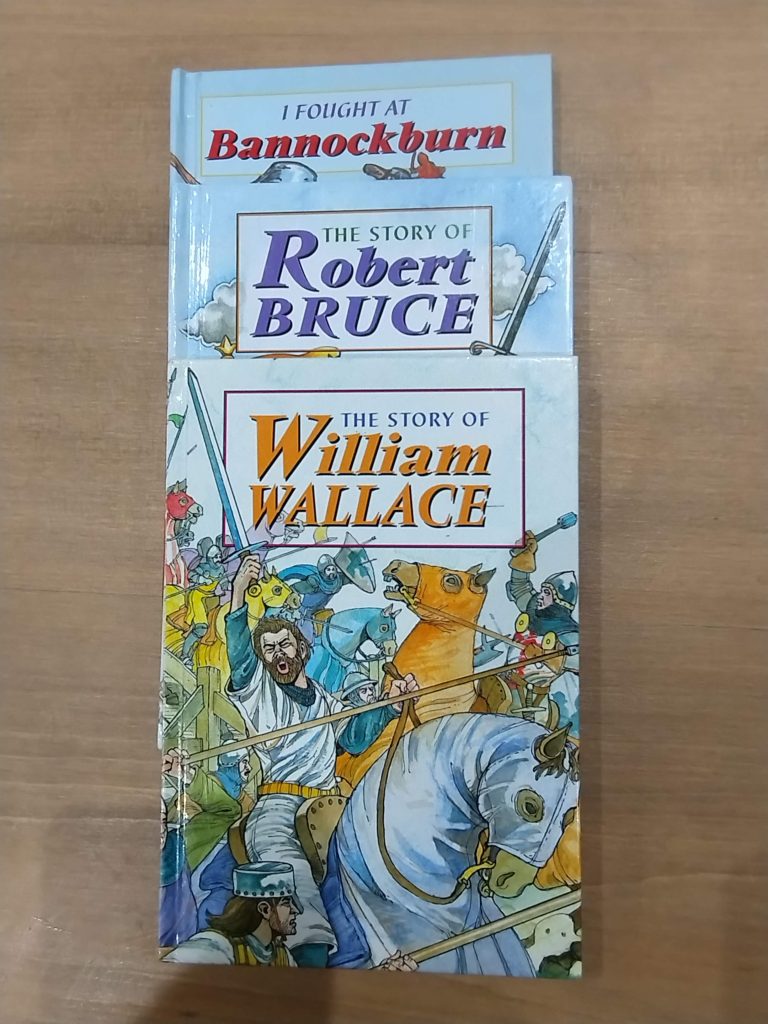
The Story of Robert the Bruce
The Story of William Wallace
I Fought at Bannockburn
I have grouped these Corbie biographies together as they cover similar themes. The Corbie biographies are similar to Ladybird books. They are short easy reads with plenty of pictures. I Fought at Bannockburn has more of a fictional element, being told from the perspective of a young boy in Clan Donald who gets caught up in the battle.
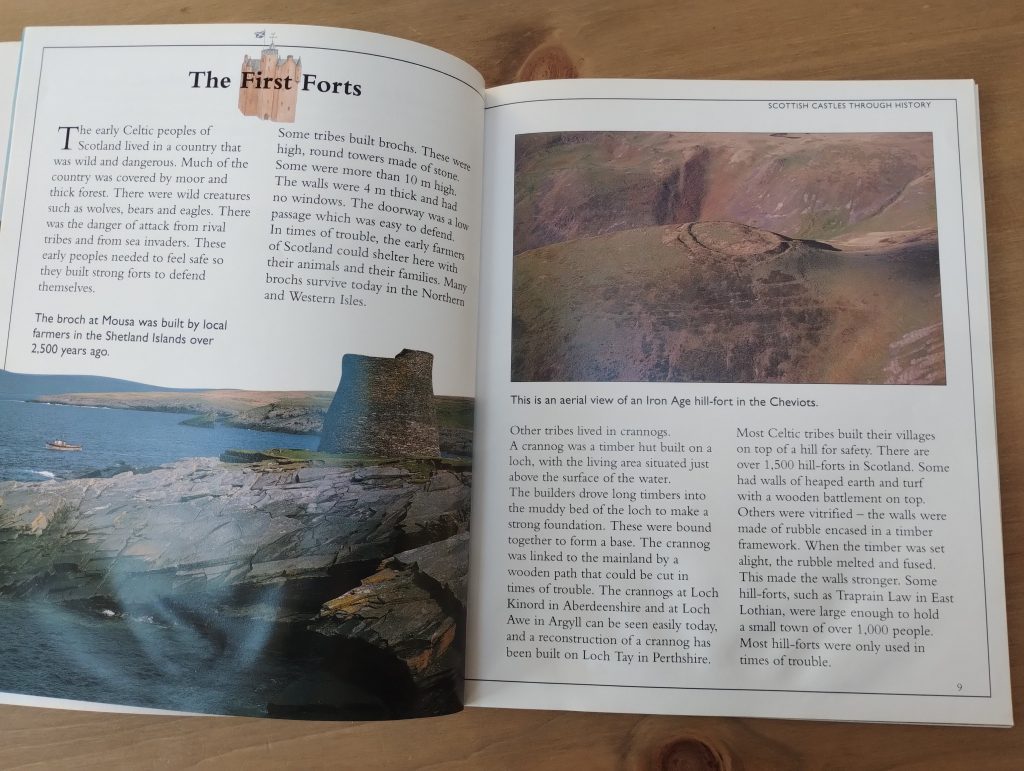
Scottish Castles Through History
Richard Dargie
This short non-fiction book covers the development of castles, but using Scottish castles and history as examples. There is a little discussion of early hill forts and Pictish brochs, but the main bulk of the book covers stone castles, from King Malcolm’s tower at Dunfermline through to tower houses in the 1600s. There are plenty of colour drawings and photographs.
Looking online, there are some other books in a series by the same author, including the Vikings in Scotland and the Romans in Scotland.


Tales of the Scottish Clans
Helen Drever
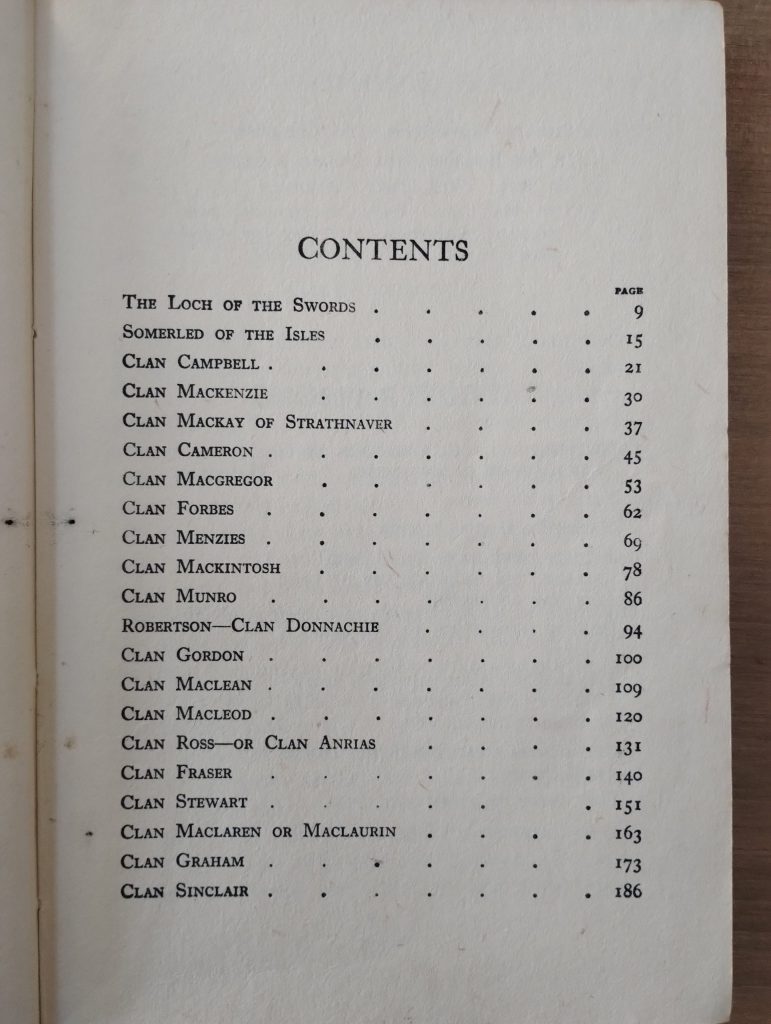
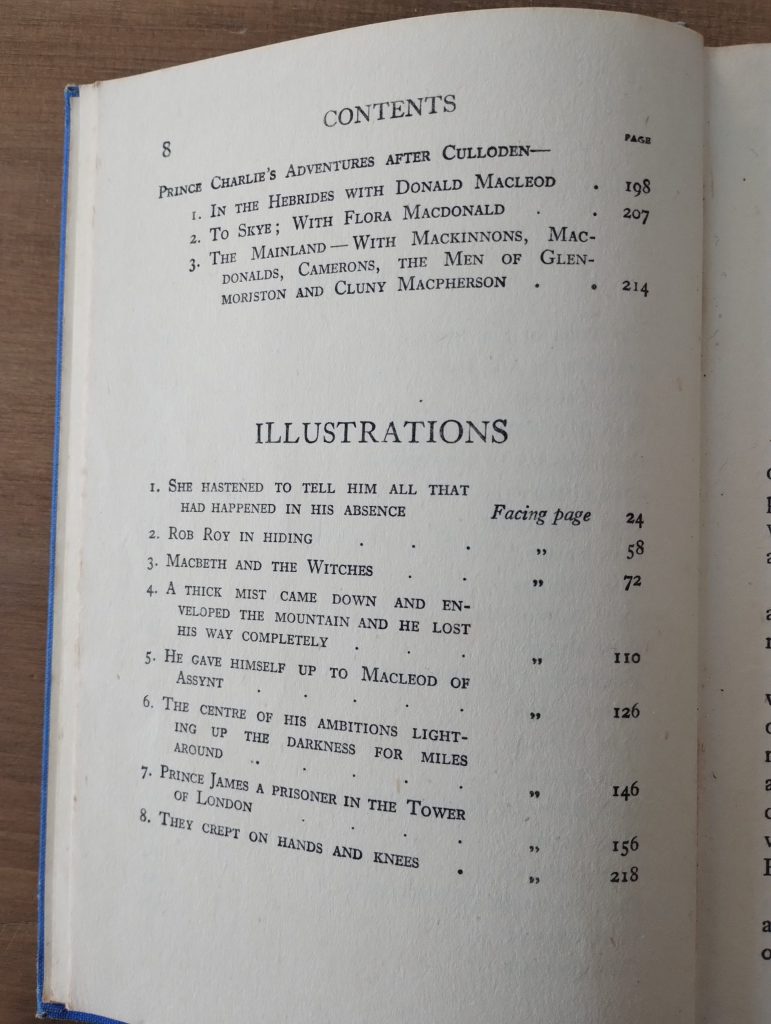
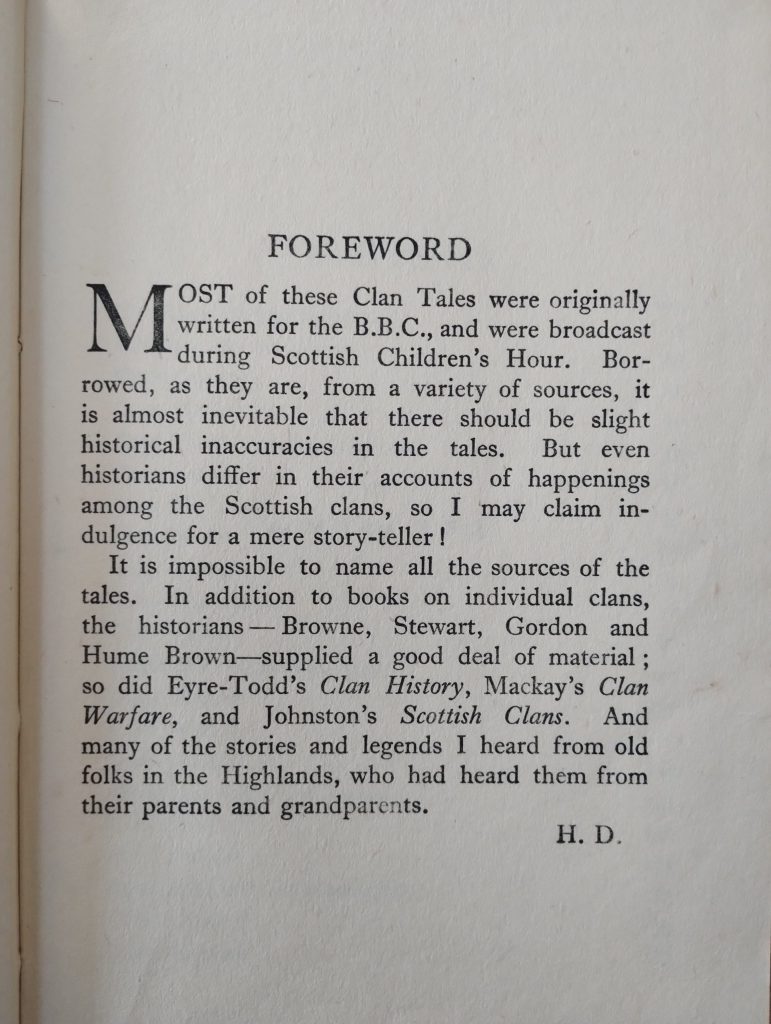
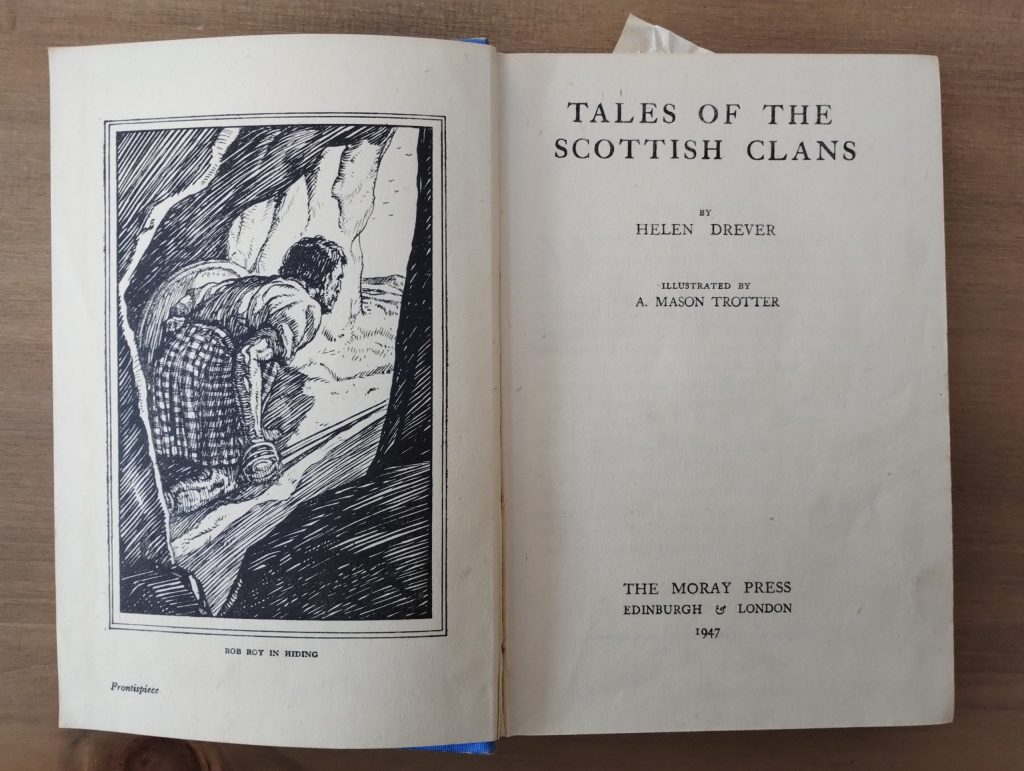
This lovely old book is full of short stories originally written for the BBC Scottish Children’s Hour on the radio. There are about 25 stories, many being medieval in origin, but others coming later in Scottish history, including the clans’ roles in protecting Bonnie Prince Charlie. Lots of the stories are very ‘local’ to particular parts of Scotland, so it would be easy to pick out some that involve places and names familiar to you.
The Siege of Caerlaverock
Barbara Henderson
A work of historic fiction based during the siege of Caerlaverock Castle in 1300. Barbara Henderson’s books are very popular in my household, and she is good at bringing history to life with lots of well researched details.

Stuart Scotland
Mary, Queen of Scots is generally well covered, and there are a number of books about Bonnie Prince Charlie and the Jacobite uprisings. I haven’t been able to find much in between!
Mary, Queen of Scots: Escape from the Castle
Theresa Breslin
This is a picture book for younger children covering Mary’s escape from the island castle on Loch Leven. It’s a lovely story, and very enjoyable to read. It does rather gloss over some important historical context for why Mary was imprisoned on the island (e.g. Mary’s probable role in murdering her husband Lord Darnley). Mary is very much the heroine of the story.

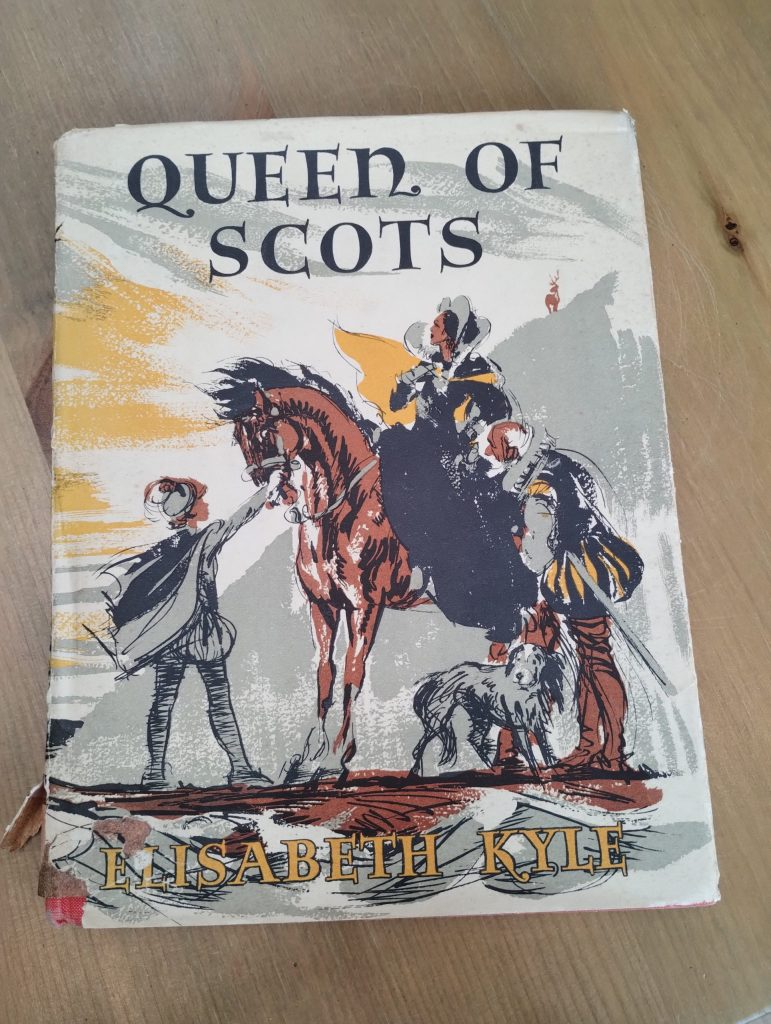
Queen of Scots
Elizabeth Kyle
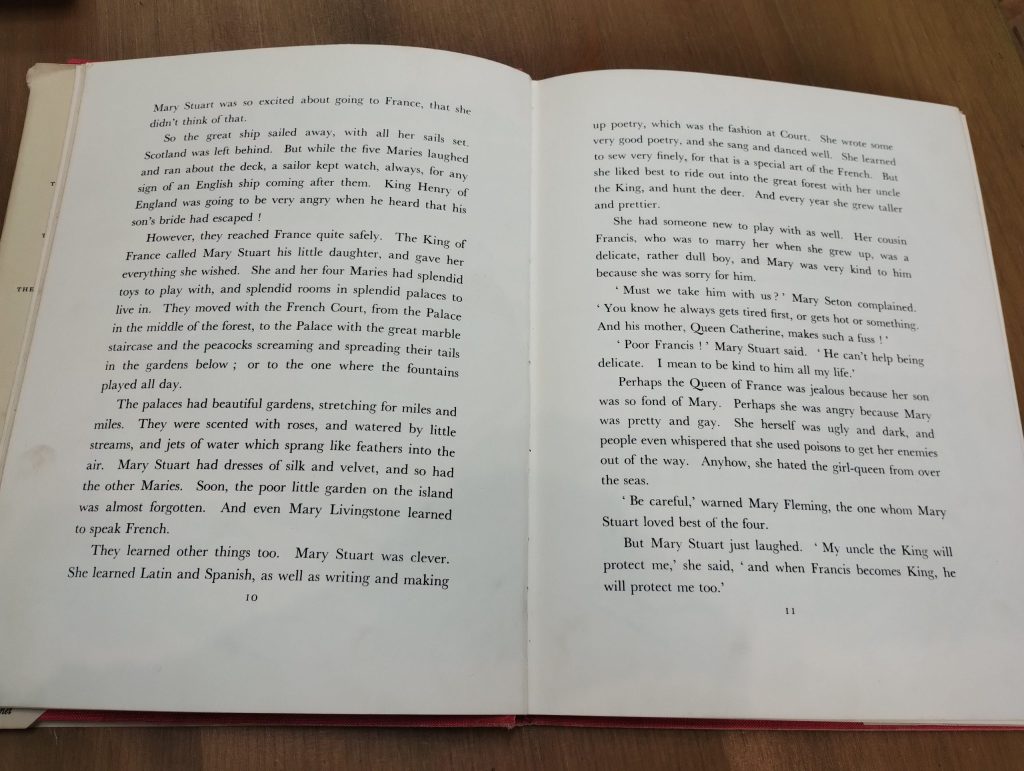
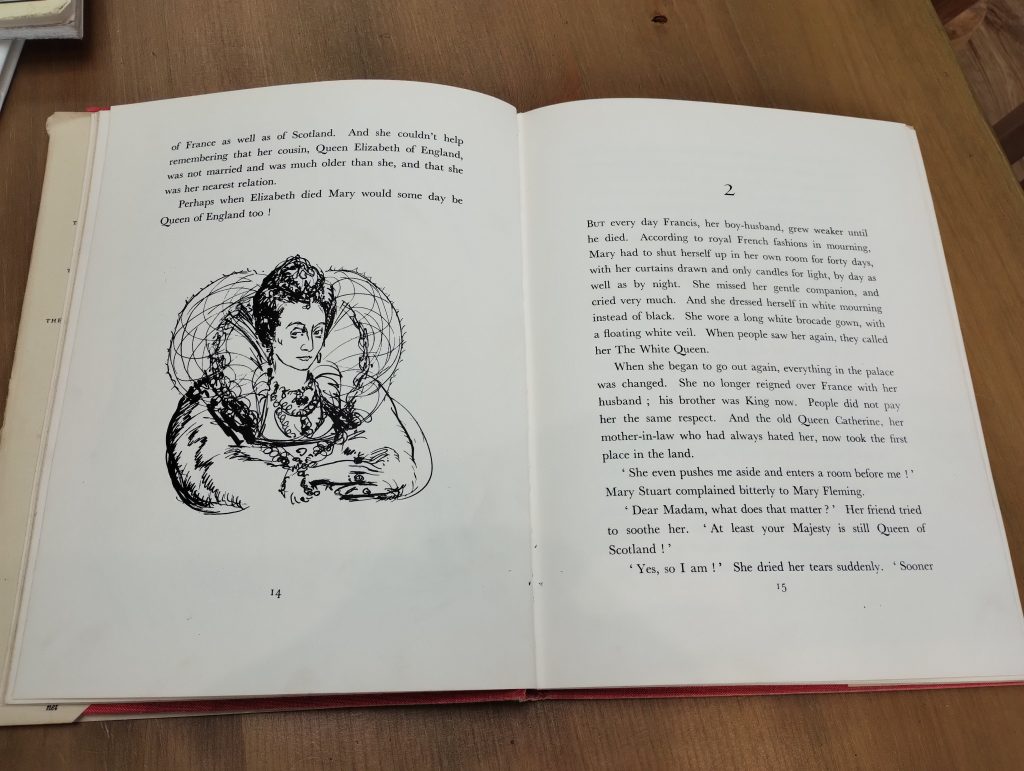
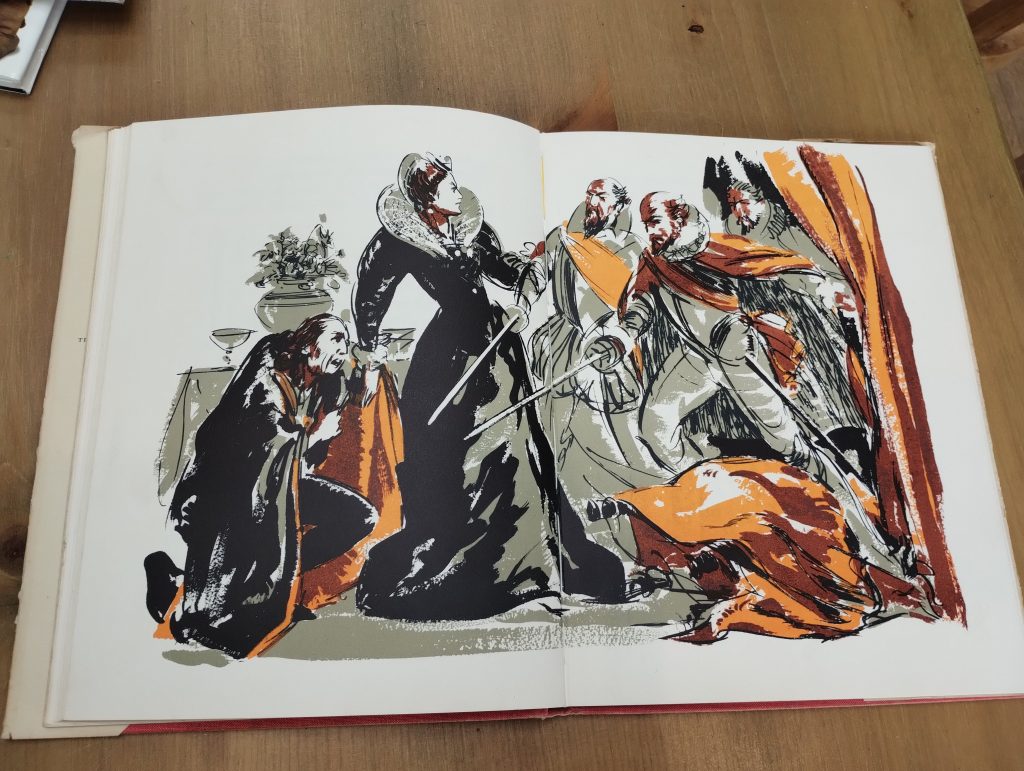
A very enjoyable older biography, this one might be harder to source but is a lovely read if you can find it. The text is very interesting, and well spaced out, so that many older children should be able to read this one themselves. There are quite a few illustrations of the more dramatic scenes. I thought it was a balanced account of Mary’s life.

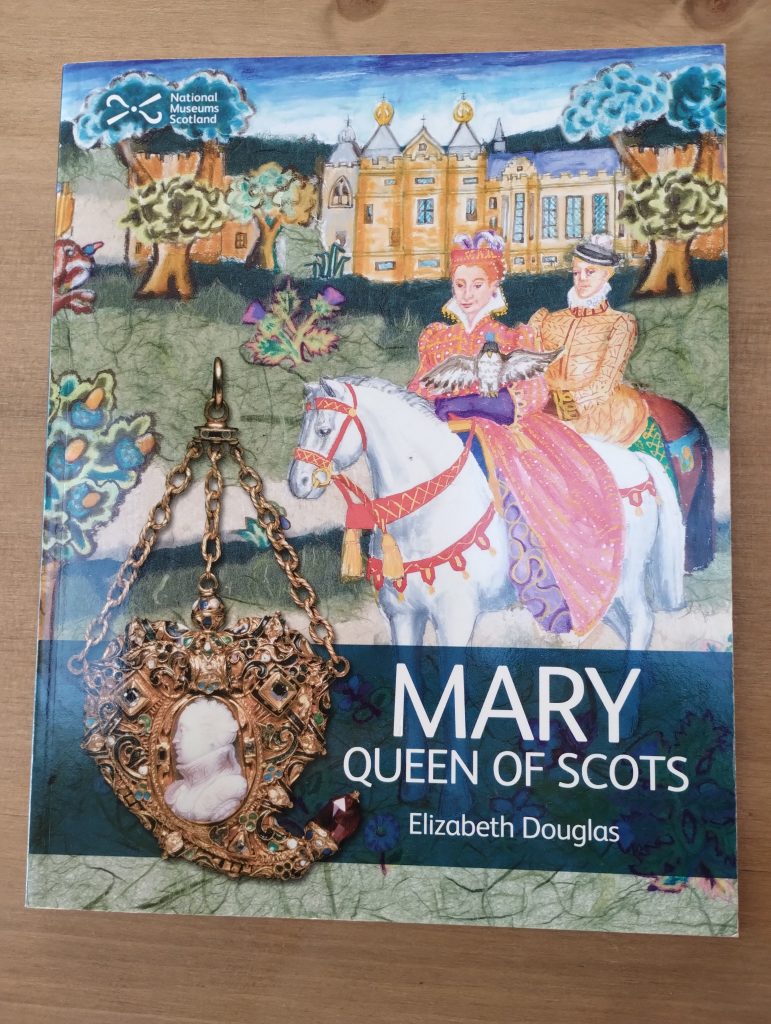
Mary, Queen of Scots (NMS Scottie Books)
Elizabeth Douglas
This is part of the National Museums Scotland series of short history books for children. There are lots of pictures and information boxes, and each page covers a different part of Mary’s life. I would say that this book is easier to read ‘straight through’ than others in this series, because there is a clear narrative flow through the life of a single individual. It is however very much a factual work, with little embellishment to the plain facts of Mary’s life story, and I preferred the telling in Scotland’s Story.
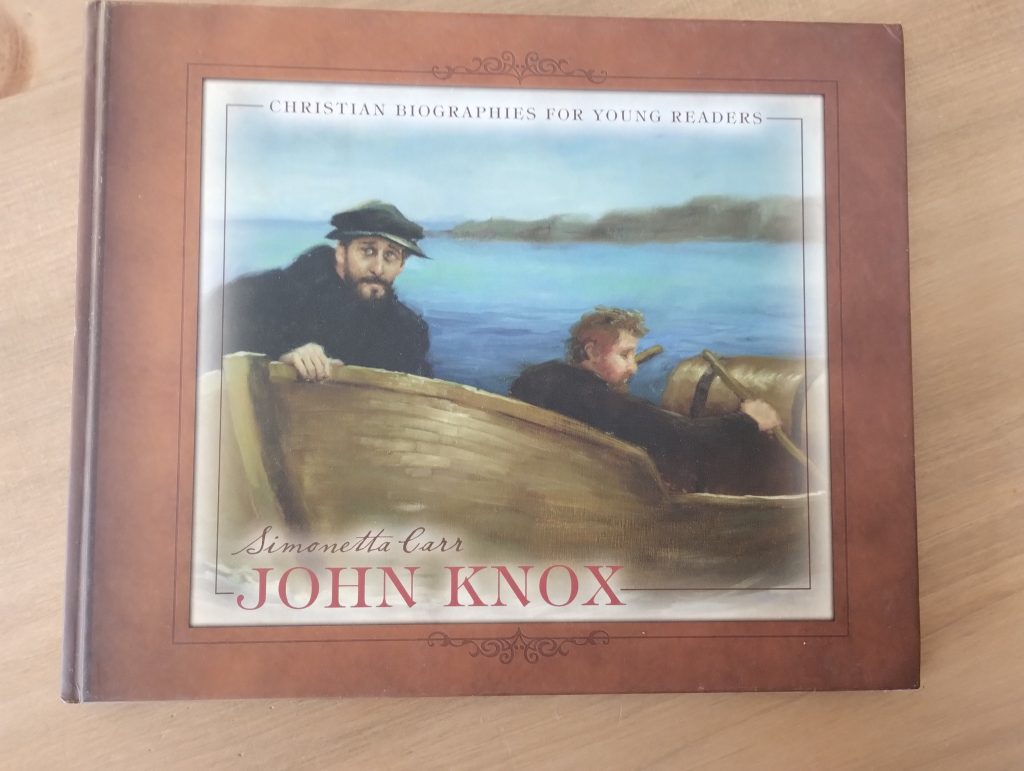
John Knox (Christian Biographies for Young Readers)
Simonetta Carr
If you are interested in the religious history of Scotland at this time, this is a helpful and comprehensive biography of the life of John Knox . It also provides some helpful context on what was happening in Scottish church life more generally. The book is written from a Christian perspective. I like Simonetta Carr’s biographies, I think they strike a good balance between the events of the person’s life, and explaining what they believed. She is able to distil some complex ideas in ways which are accessible to young readers.
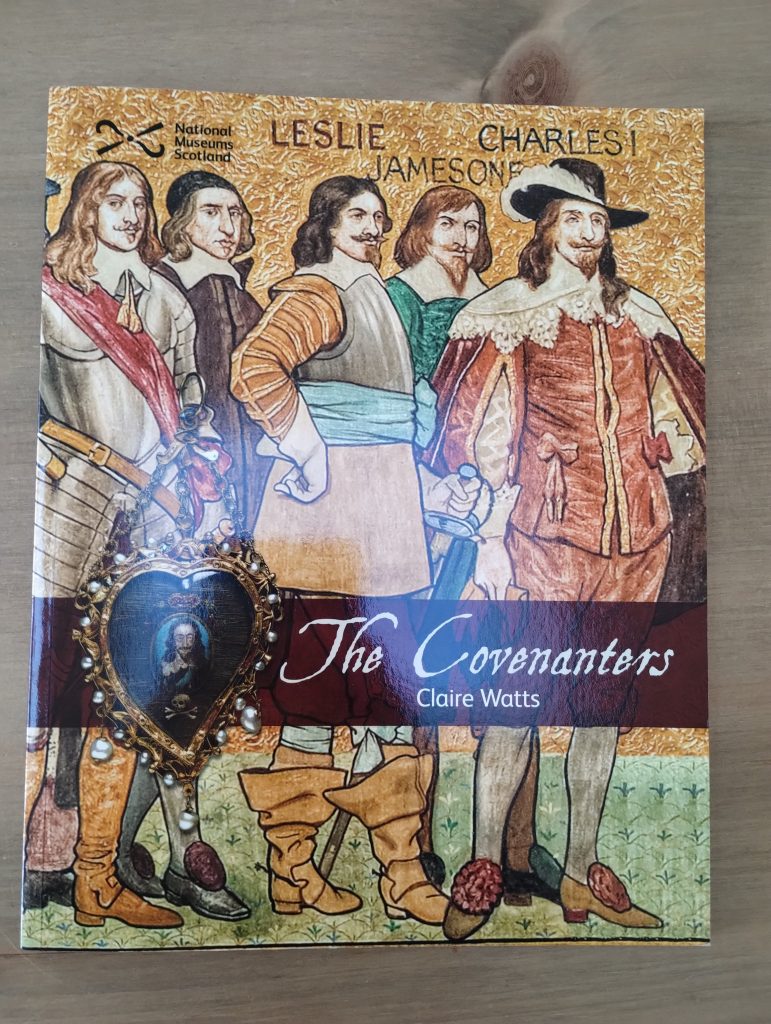
The Covenanters (NMS Scottie Books)
Claire Watts
This is the only children’s book I have been able to find covering the history of the Scottish Covenanters. There are a number of books on specific individuals, and also historic fiction available. This book is part of the National Museums Scotland series of short history books for children. There are plenty of photographs and paintings, and each double page covers a different aspect of the history of the Covenanters.
This period of Scottish history is very complicated, and explaining how the rapid changes in government interacted with the Scottish church is not straightforward. I thought that this book did a decent job of explaining the salient facts, particularly up until roughly the Restoration. In particular, (and this displays my ignorance), I finally understood why the Scots had been fighting with the Parliamentarians at Marston Moor, but Cromwell then invaded Scotland in the 1650s.
I did find the flow of events harder to follow after this point. It wasn’t entirely clear why persecution became stronger in the early 1680s, but then eased up when James VII came to the throne. It was also not entirely clear what the motivations and goals of the Covenanters were towards the end.
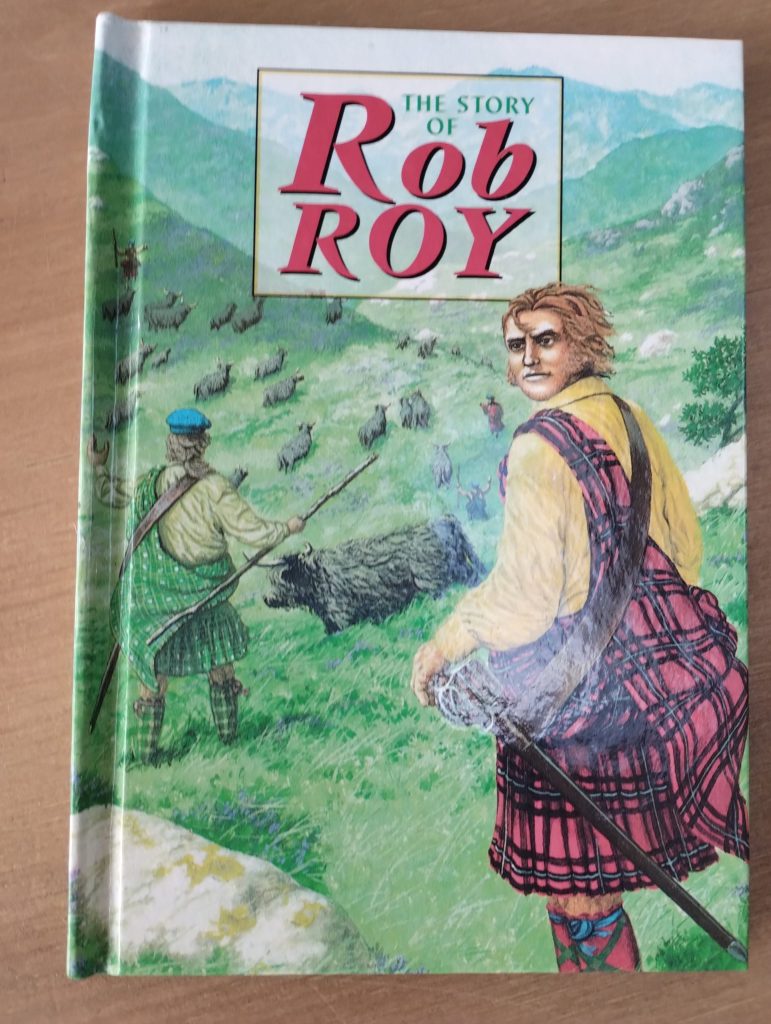
The Story of Rob Roy (Corbie Biography)
David Ross
Quite a change from the Covenanters! This is another Corbie biography in the Ladybird style, with simple text and lots of pictures. It covers the life of the famous outlaw Rob Roy, who was born under the monarchy of Charles II and lived through a tremendous amount of national change and upheaval. The story is also a nice introduction to Scottish clans.
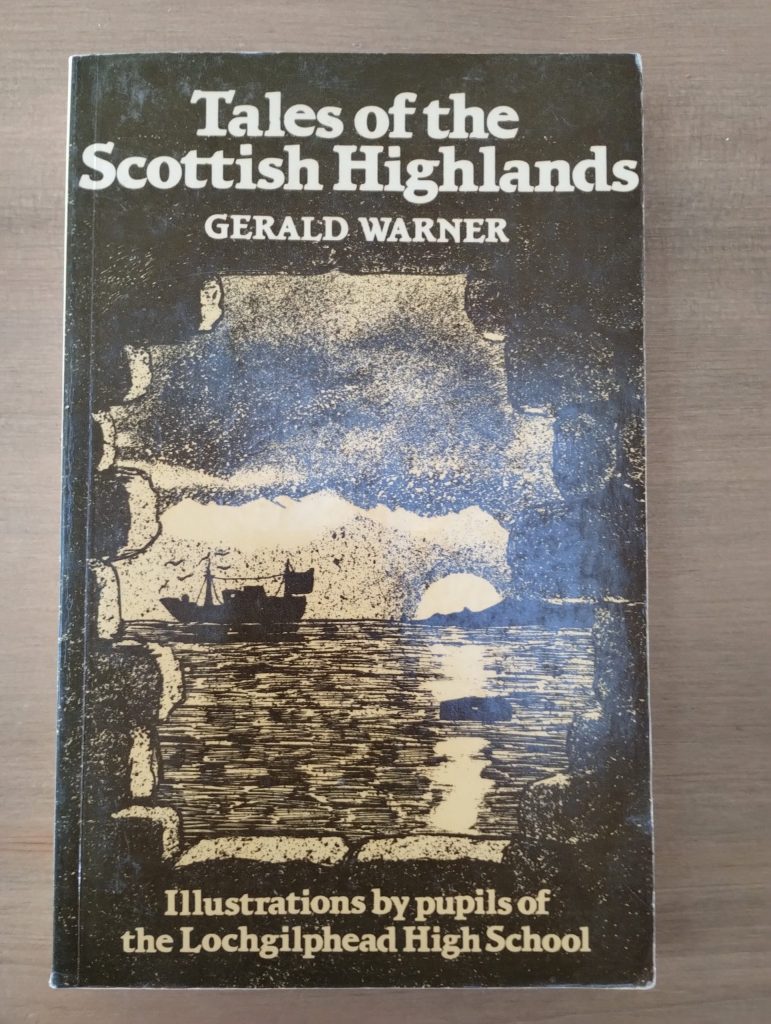
Tales of the Scottish Highlands
Gerald Warner
This is a book of short stories covering both the history of the Highlands and its clans, and also local legends, myths, fairy and ghost stories. The book is divided into sections so that it is easy to find what you are looking for. I haven’t read the fictional sections, having purchased this for its historical content. The stories are quick reads, and mostly pretty easy to follow, though sometimes some historical context is needed to fully understand them. There is a longer section about Bonnie Prince Charlie, containing some colourful details that might be missing from other biographies, such as the Rout of Moy, and the Culloden Bagpipes.
I would say that the language is a bit more complex than Tales of the Scottish Clans mentioned above, and we have not used this book as much as I had hoped.
Bonnie Prince Charlie And All That
Allan Burnett
This series by Allan Burnett is very accessible, written in a Horrible Histories style with plenty of illustrations and comics. I was impressed with the amount of detail it contains about the life of Bonnie Prince Charlie. The story is a good one, and it works well in this format.

The Reluctant Rebel: A Jacobite Adventure
Barbara Henderson
More historical fiction by Barbara Henderson, this time exploring the Jacobite cause. The book opens with the Battle of Culloden, as witnessed by two children, and then their subsequent flight. There are lots of historical tidbits along the way, including the moving story of Roderick MacKenzie who was a look-alike to Bonnie Prince Charlie and possibly saved his life by masquerading as the prince even to death. A fast paced and exciting adventure story.

Scotland after Culloden
There are a number of children’s books available on famous Scottish individuals in this time period, but I have found very little by way of more general history books.
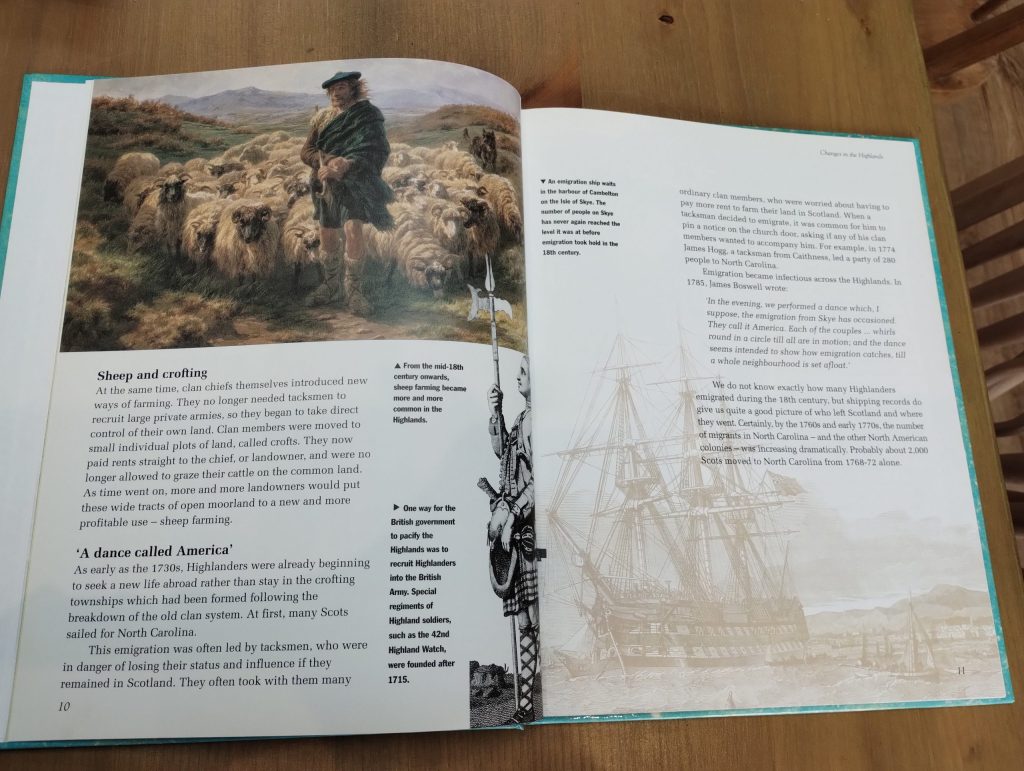
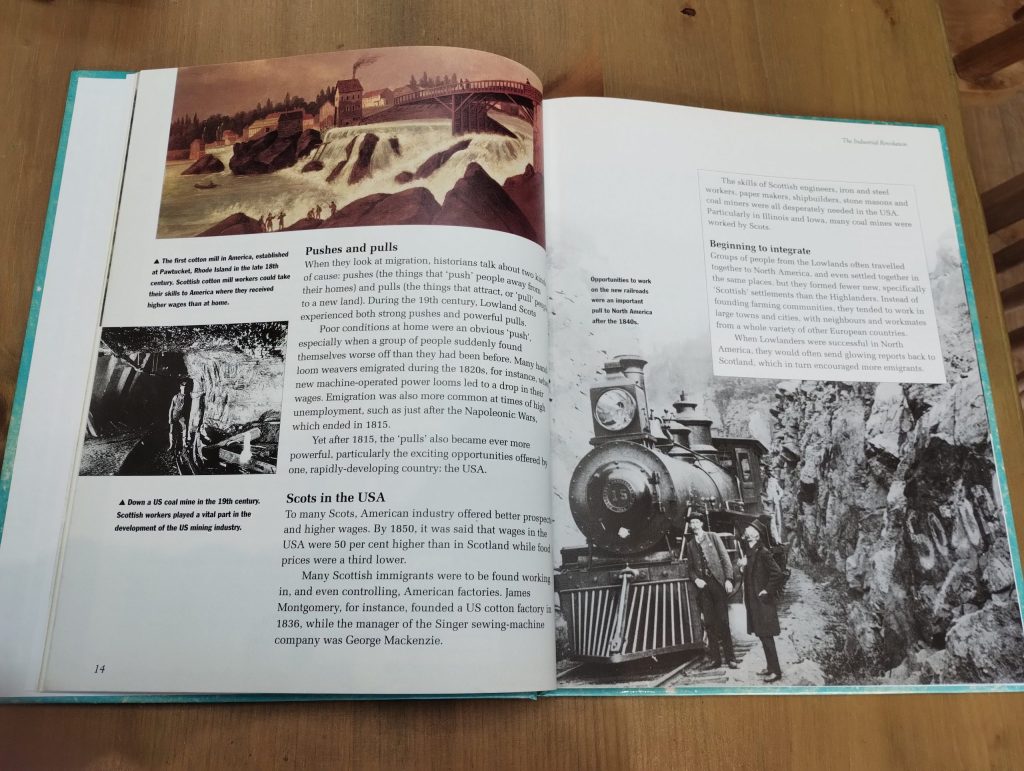
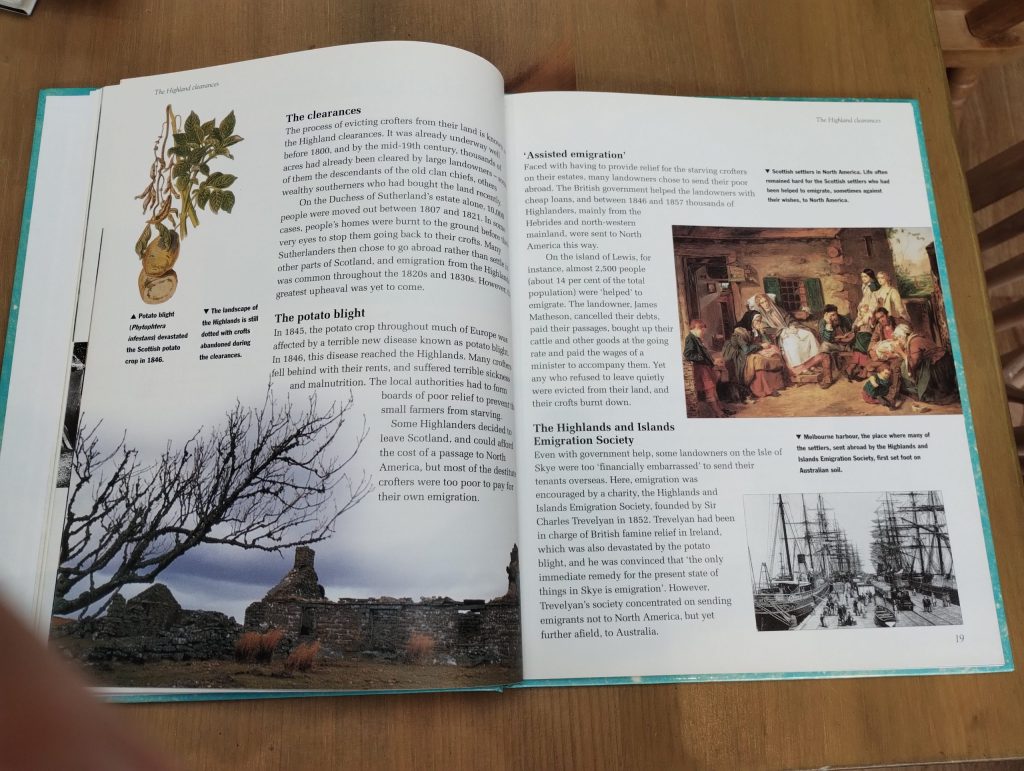
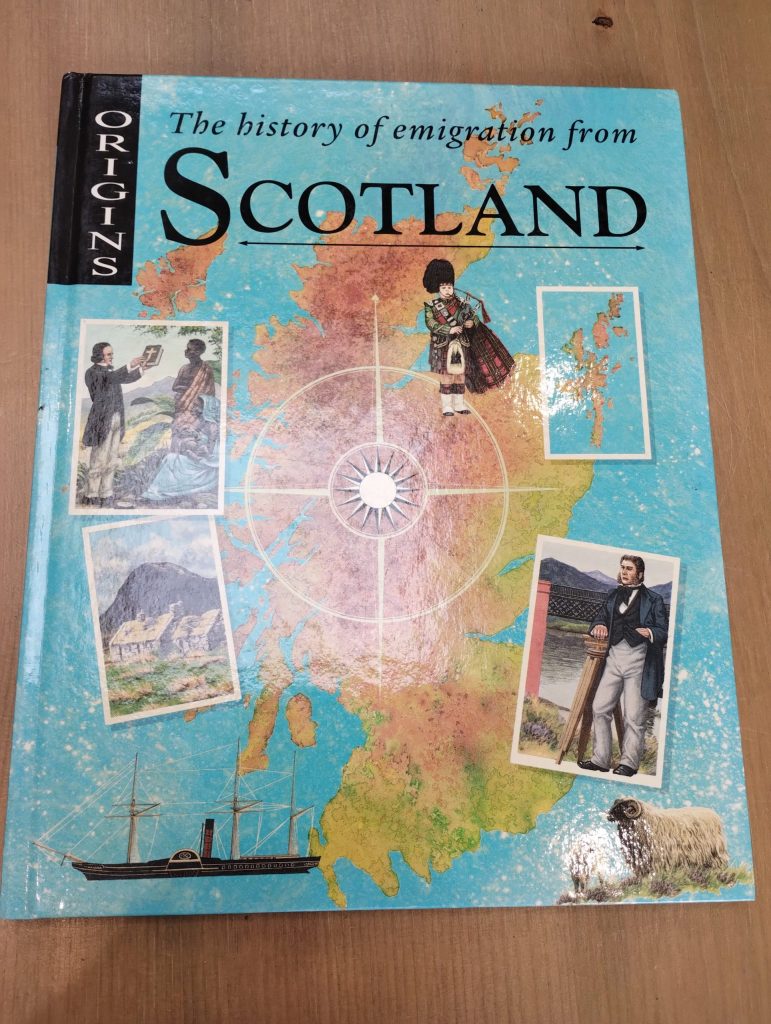
Origins: The history of emigration from Scotland
Mike Hirst
A non-fiction text covering the theme of emigration from Scotland, including the Highland Clearances, but also economic migration. This is one of the only children’s books on the clearances that I have been able to find. I thought it was very helpful to view the clearances as part of a bigger picture of outbound migration, and to look at push and pull factors. I would love someone to write a more ‘living’ account of the Clearances, whilst still maintaining historical accuracy, but this is the best I have been able to find at the moment.
It is not a particularly emotive account; if you are looking for personal stories of being cleared, this is not the best choice. But there are some good individual quotations which give a feel for the awful circumstances of the time:
- ‘I am clearly of the opinion that, if the potatoes continue to fail, the inhabitants of Lewis cannot be made self-sustaining unless a considerable number of them remove elsewhere.’
- ‘I got my hands burnt taking out the poor old woman from amidst the flames of her once comfortable though humble dwelling…[she uttered] piercing moans of distress and agony, in articulation of which could only be understood, “Oh Dhia, Dhia, teine, teine” (“Oh God, God, fire, fire”).’

Robert Burns and All That
Allan Burnett
Another book in this series of children’s biographies by Allan Burnett, written in a Horrible Histories style with pictures and cartoons. Although this book is about the life of the famous poet Robert Burns, there are some more general references to Scottish history as part of the context for some of his poems.

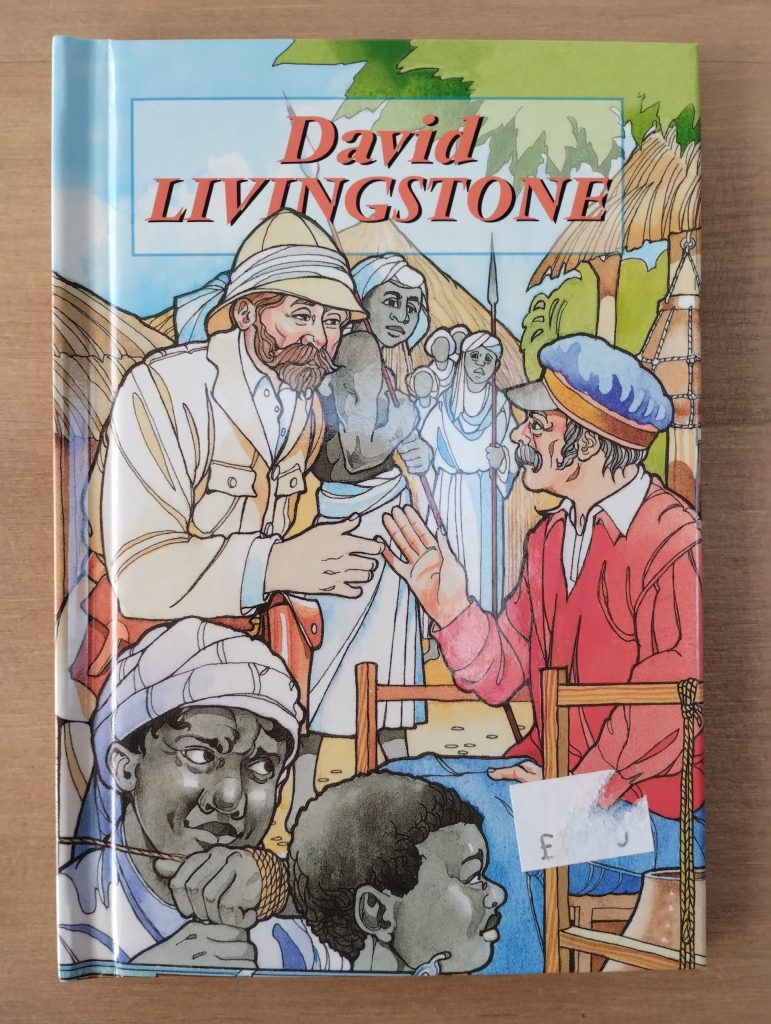
David Livingstone (Corbie biography)
David Ross
A short biography of David Livingstone in the Corbie biographies series. There is a lot to cover in a short amount of space, so the book moves rapidly through Livingstone’s life. There are some dramatic events, including a lion attack, multiple droughts, and deaths. I did not enjoy this book as much as others in this series. I found myself wanting to dwell a little longer than the book allowed on the motivations behind David’s decisions, and the personal costs to both himself and his family.
The Desperate Journey
Kathleen Fidler
This is a work of historical fiction telling the story of two children who are forced to leave Scotland with their family during the Clearances. They travel via Glasgow to Canada, but here their troubles continue. Life is very hard, and they get mixed up in attacks between different groups. All of this is based on historical events at the Red River colony. The Clearances are only the first part of the book, but that was the reality for cleared families, who had to forge a new life somewhere a long way from home.
Scottish Explorers
Antony Kamm
This book is in the National Museums Scotland series of information books for children. A good chunk of the book is devoted to polar and Canadian explorers, but there are also sections on explorers in Africa and Australia. I don’t think this would be an easy book to read at one sitting, it is very dense and there are an awful lot of different names! The polar section is perhaps the easiest to follow. There are plenty of pictures and diagrams, and it is a useful reference book, but not an easy read.

Scotland in World War II
Richard Dargie
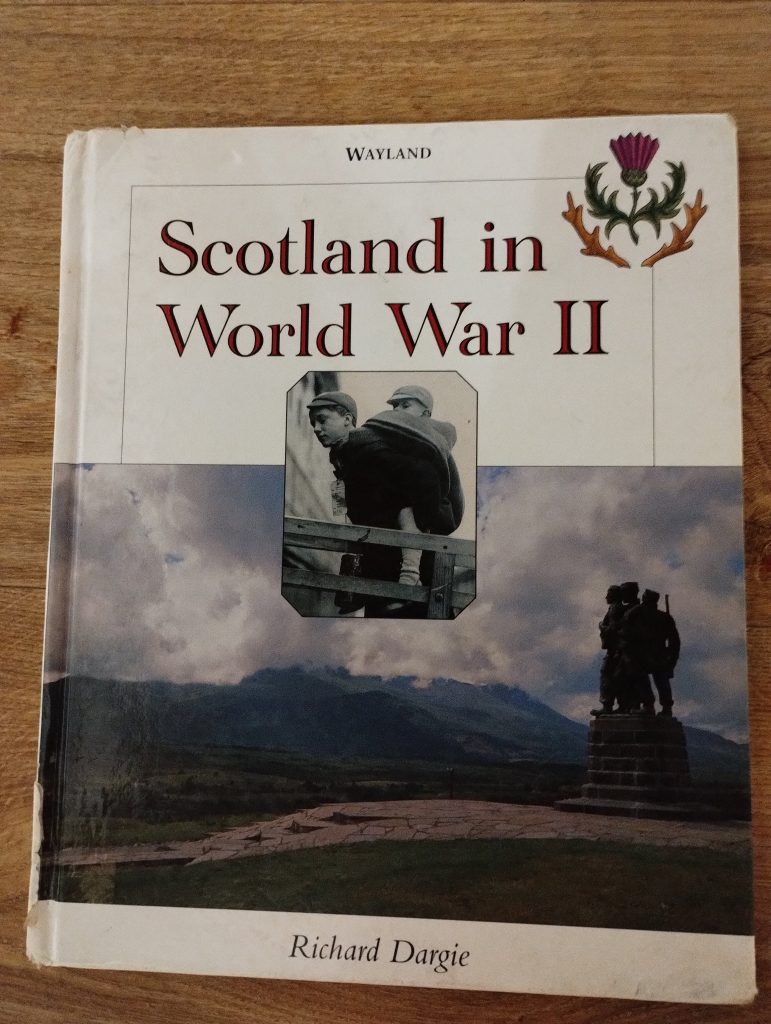
I have found it very hard to find books specifically about Scotland’s role in World War II. This information book has plenty of colour photographs from during the war, and touches on Scottish experiences such as the bombing of the Clyde, Lord Lovat’s Scouts, and the destinations and roles of various Scottish regiments. In all honesty, I was hoping for more Scotland-specific information. A good chunk of the book on blackouts, rationing, evacuation, etc reflects the experience of the whole UK, although Scottish photographs have been used. I enjoyed the pages on Rudolf Hess and the Italian chapel made by POWs in Orkney, but I was surprised to find very little on the British navy stationed in Scapa Flow, or the arctic convoys operating from Loch Ewe.