History books for children: WW1 and the Edwardian Era
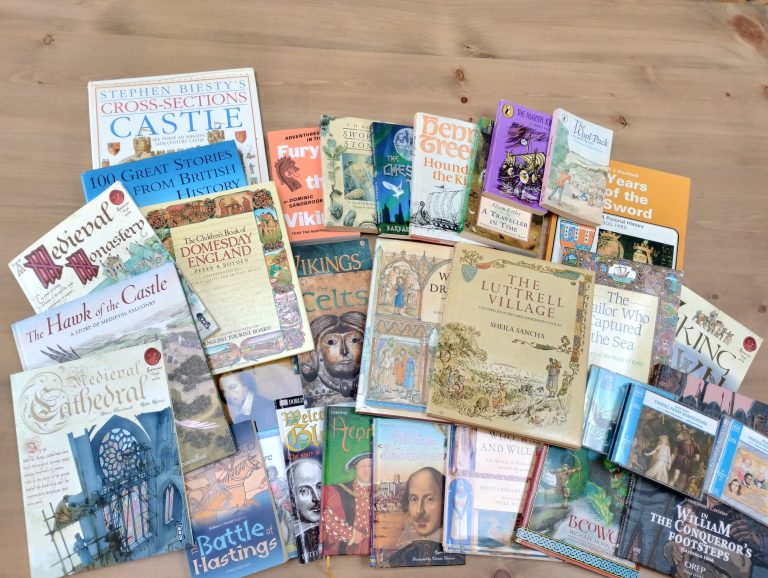
This post is part of a series of recommendations for children’s books on different eras of British history. You can read the overview post here. These book suggestions are for Britain from the death of Queen Victoria until the end of the First World War in 1918.
The WW1 suggestions do cover global aspects of the war, but are weighted towards the British perspective, particularly in terms of poetry and the impact on civilians. In general, WW1 is a difficult topic to cover, especially with younger children, because of the vast lost of life, and horrific injuries inflicted. I have tried to include information about how detailed each book is on these themes, so that you can gauge what will be suitable for your children.
The Edwardian Era is primarily covered by ‘topic’ based books, and the flourishing children’s literature of the period which gives a sense of what family life was like, though rather skewed towards the upper middle classes.
This post contains affiliate links. As an Amazon Associate, I earn from qualifying purchases.
The First World War
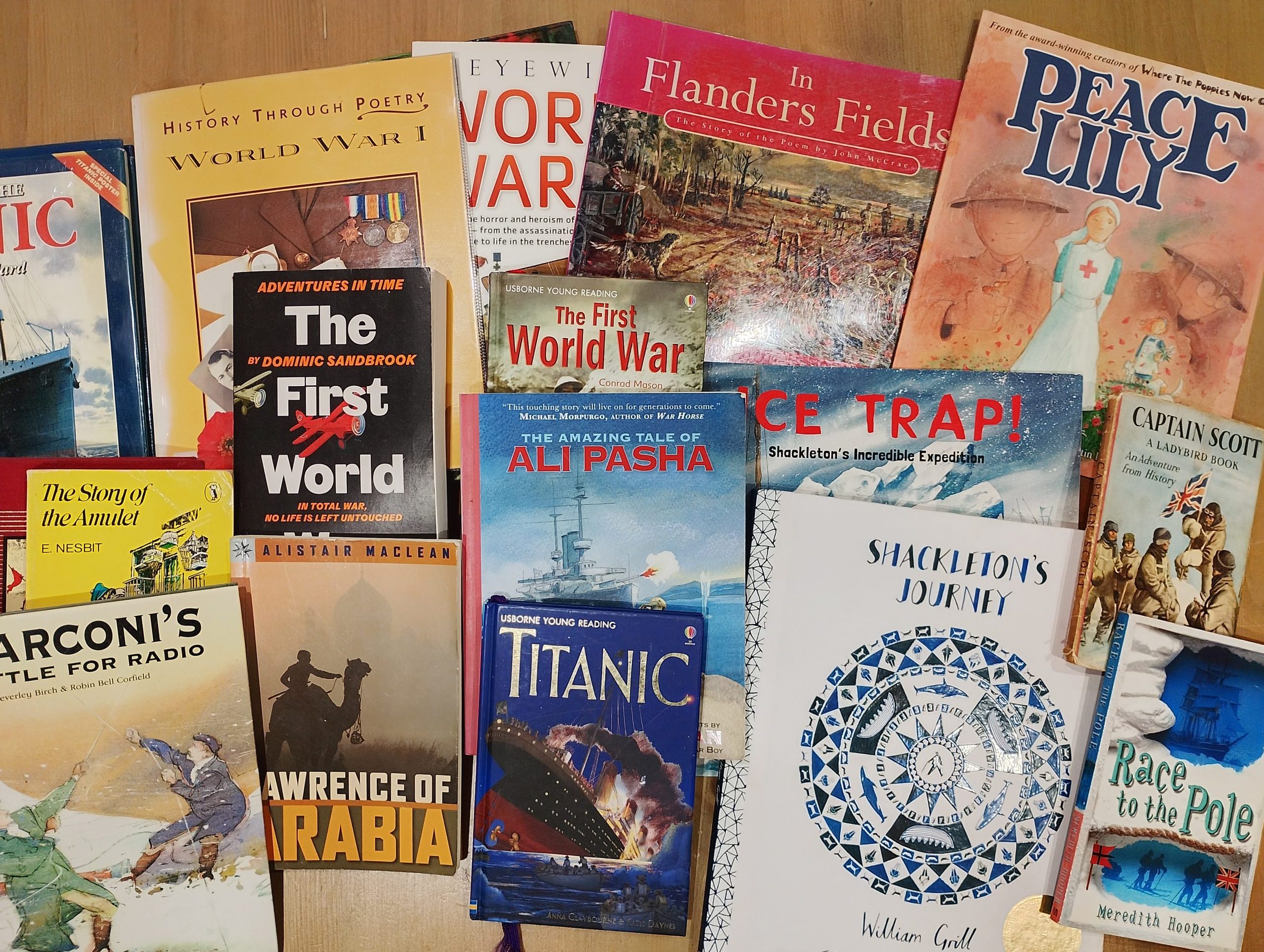
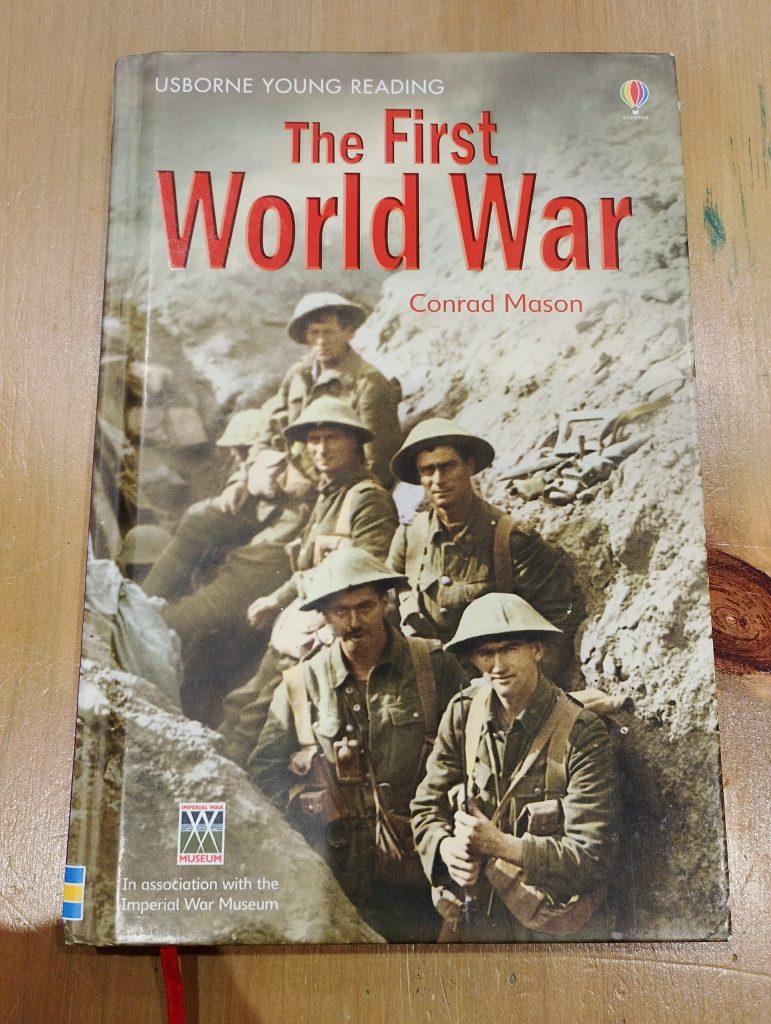
The First World War (Usborne Young Reading)
Conrad Mason
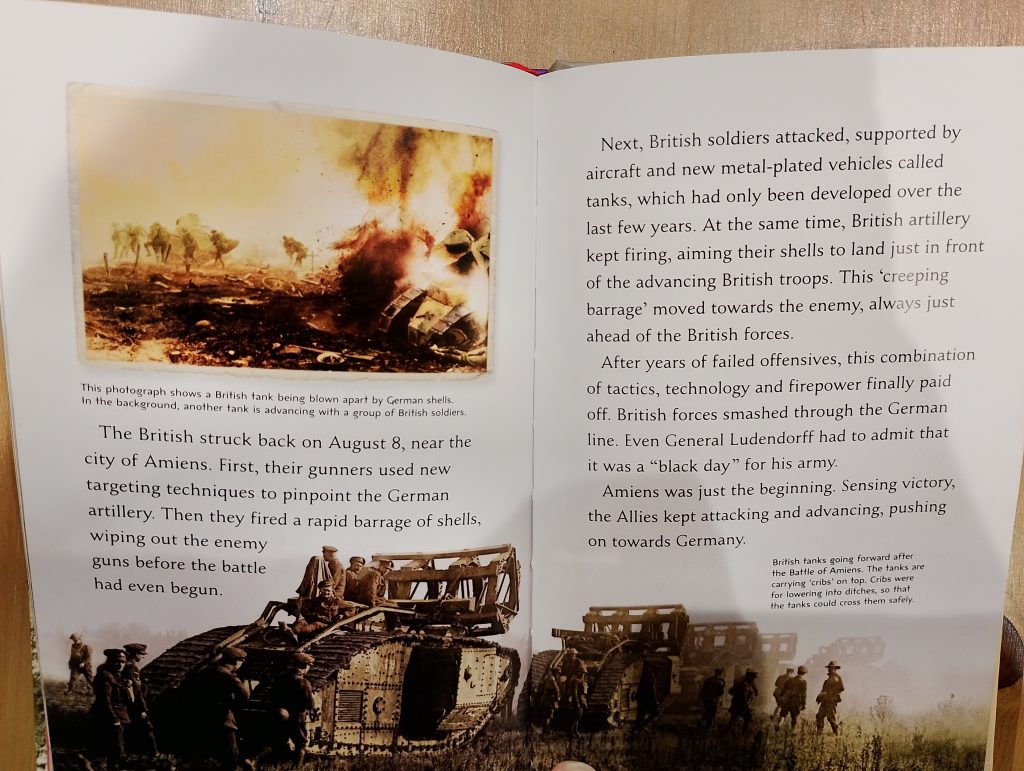
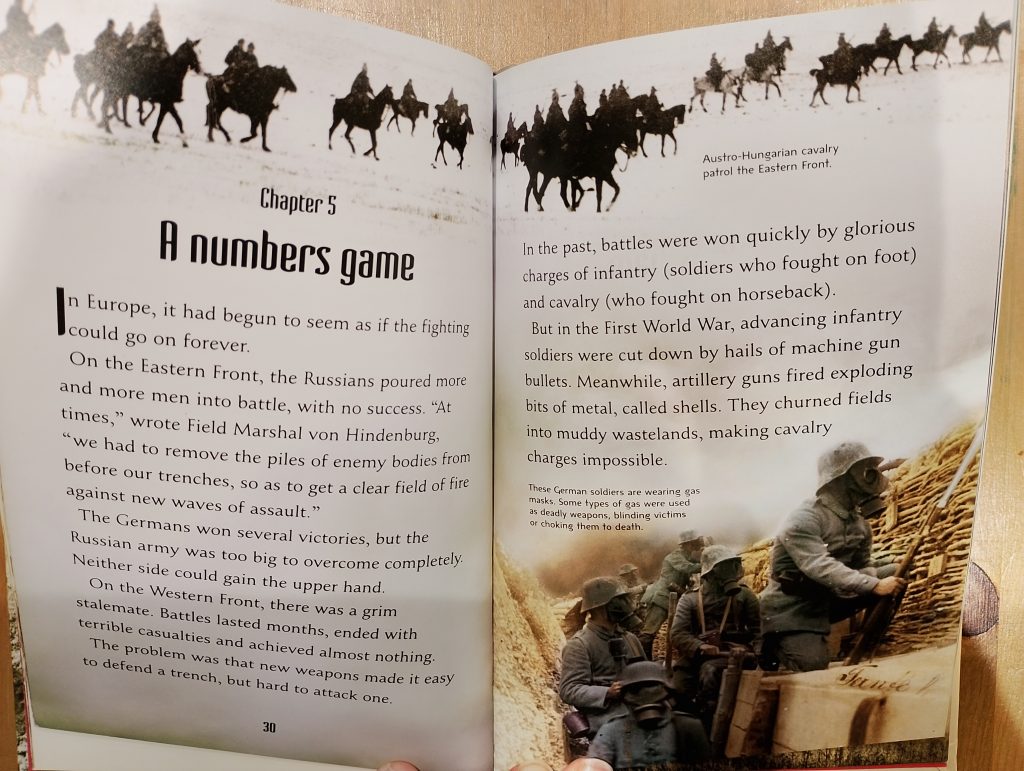
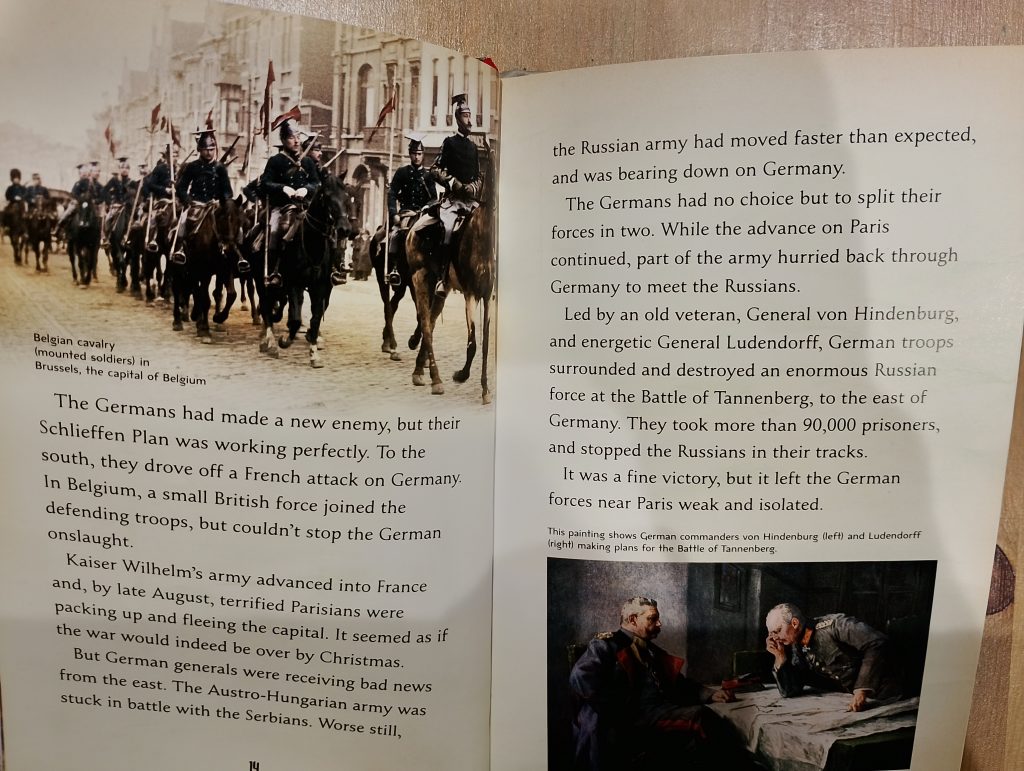
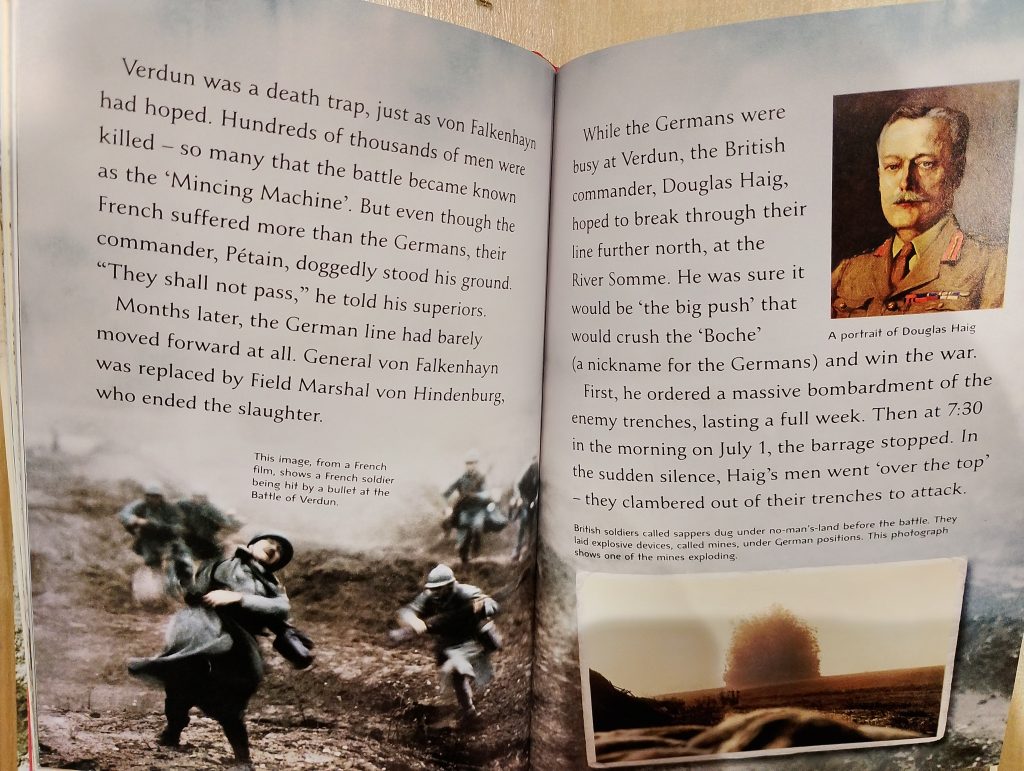
A very readable short history of the war, with maps and many colourised photographs. The book provides a good grasp of the main political events of the war, as well as covering what life was like in the trenches, and on the home front. It acknowledges that many people died, without being explicit or gory in description. There is one (blurry) photograph of a soldier being shot at Verdun (see photos below), for which reason I would say this is suitable for ages 8+.
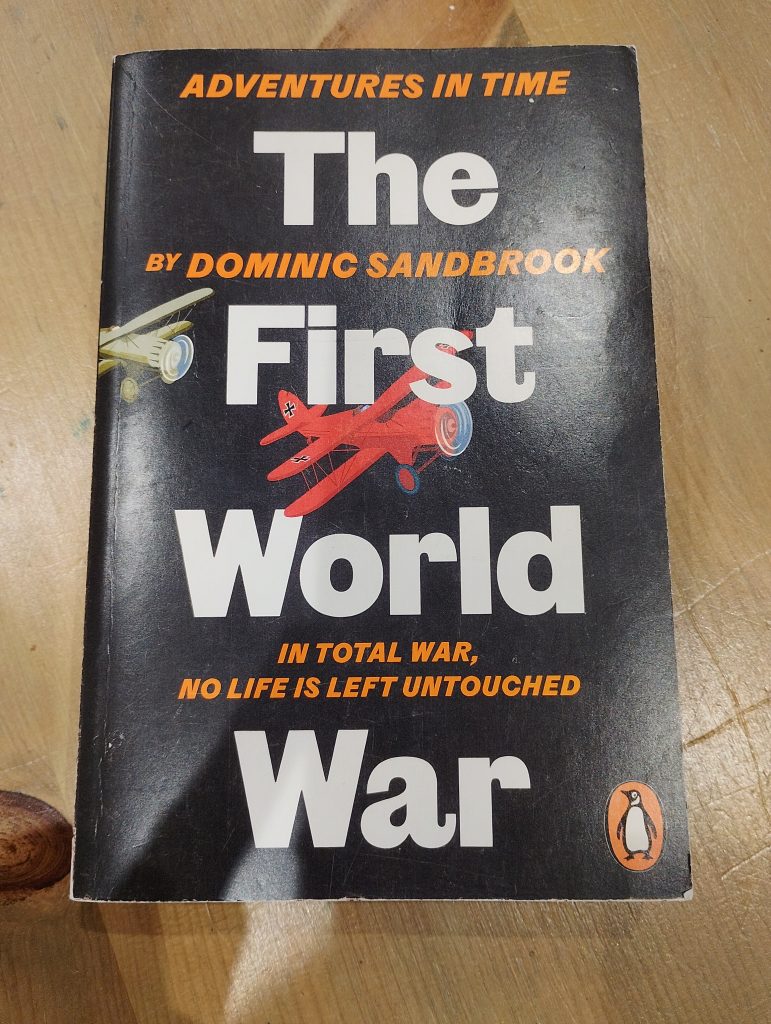
The First World War (Adventures in Time)
Dominic Sandbrook
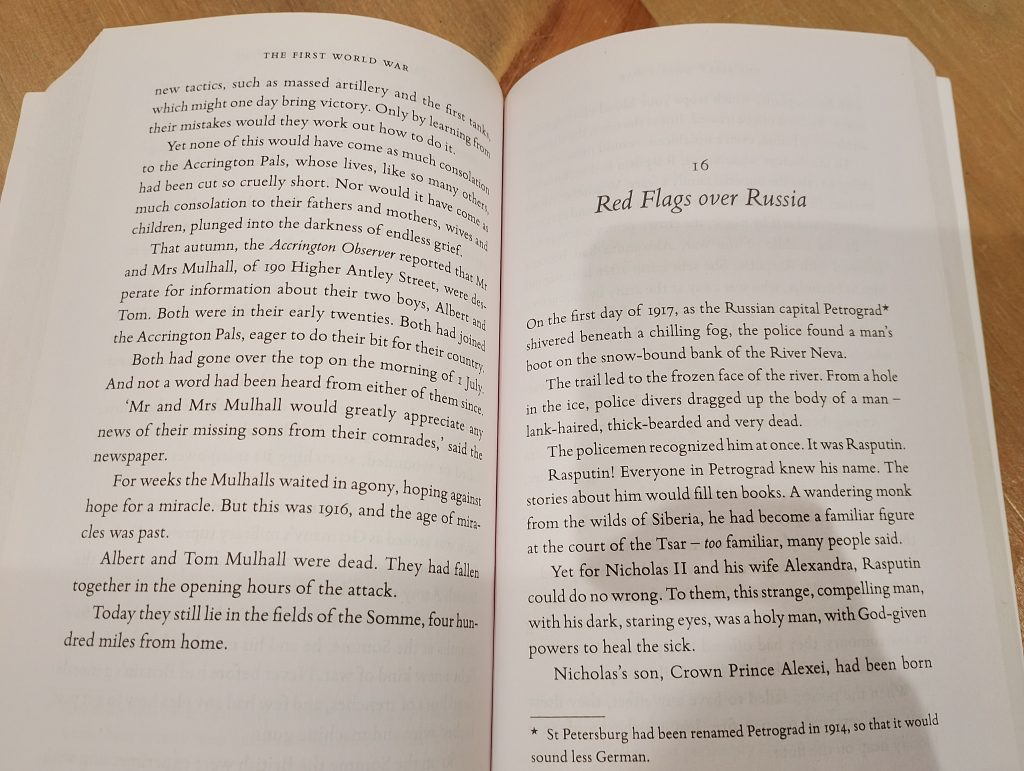
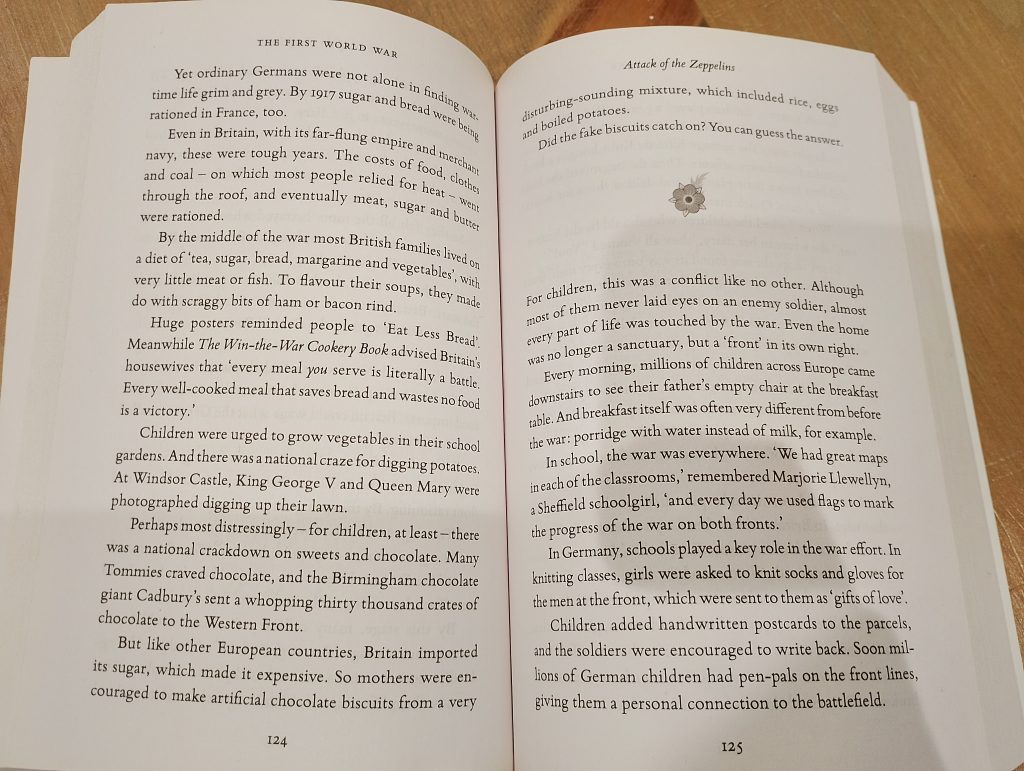
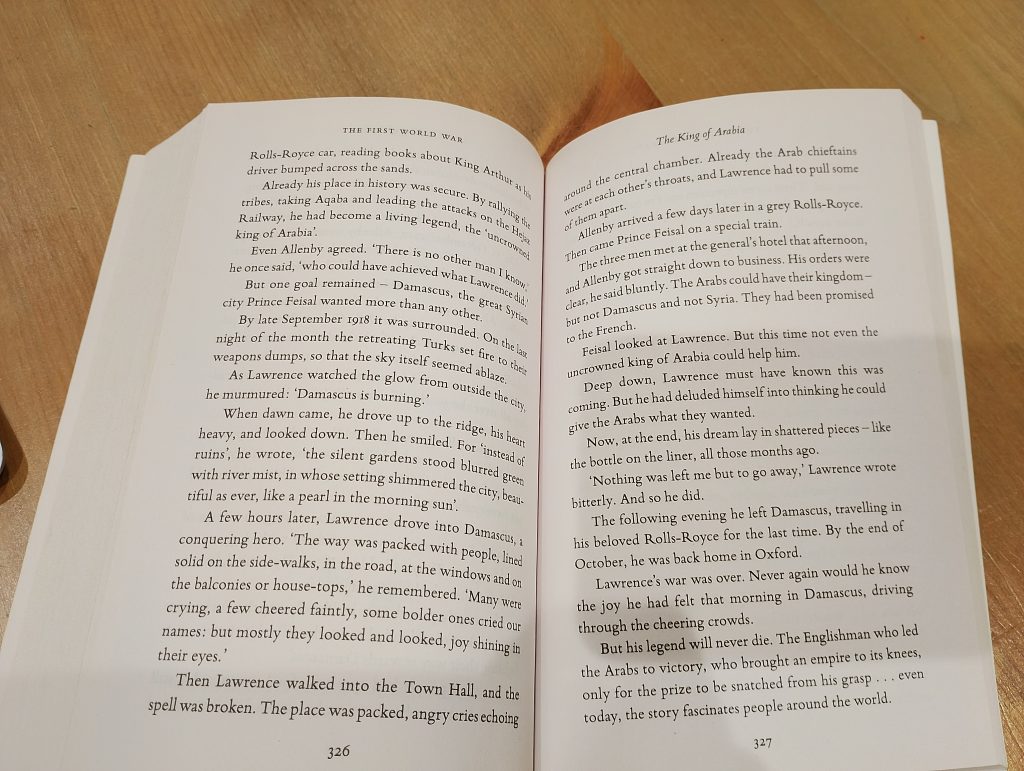
This is an excellent and extremely thorough treatment of the First World War, suitable for older children aged 10+, I would say. One of my children, who really loves the Adventures in Time series, found this one too sad and at points gory to be enjoyable, so you may wish to pre-read.
A description of a German cruiser attack on Scarborough, from an eyewitness account by Christopher Bennett: ‘His father, too, was standing up, breathing hard. But his mother was still in her chair, covered in blood, the two boys huddled lifelessly at her knees. Christopher dragged his mother and the children into the yard, but they were beyond saving. As for his brother Albert, he was covered in rubble. Horribly injured, he died in hospital’
The book is around 400 pages long, and covers many key topics thoroughly, including the outbreak of war, the trenches, the dreadnoughts, the Red Baron, the U-boats, Lawrence of Arabia and the Armistice. It is very readable.
P.S. The epilogue features some words from the final chapters of the Lord of the Rings, which reveal a key plot detail about the fate of a much-loved character, and thus should not be read if the child is still in the middle of the trilogy!
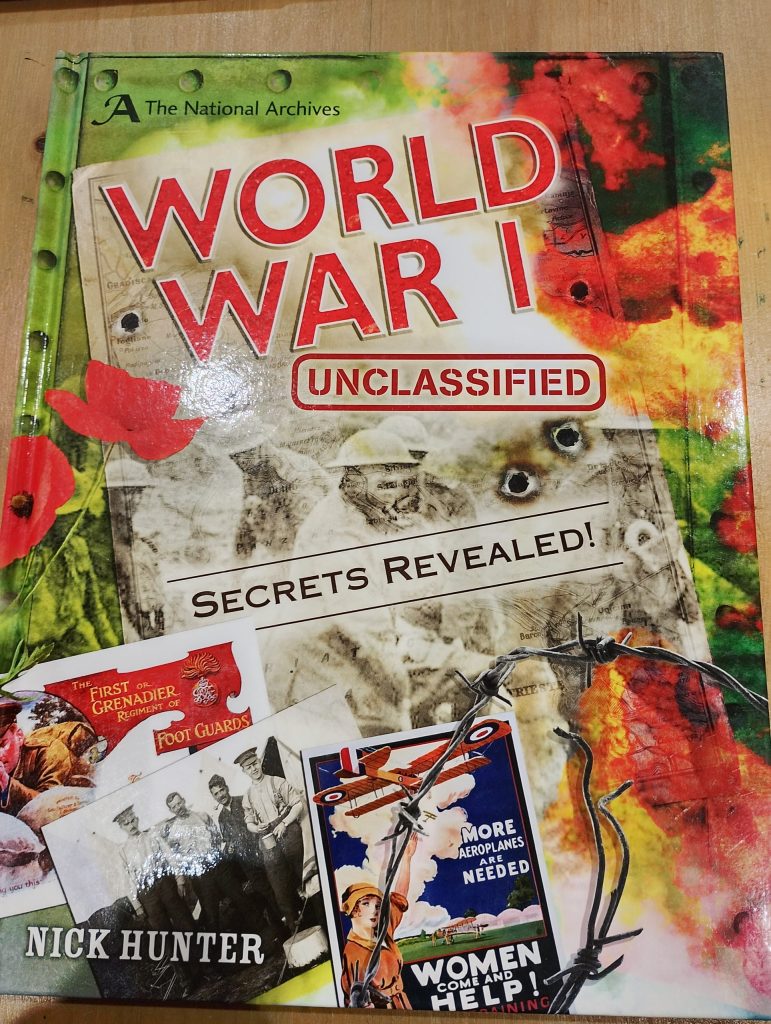
World War I (National Archives Unclassified)
Nick Hunter
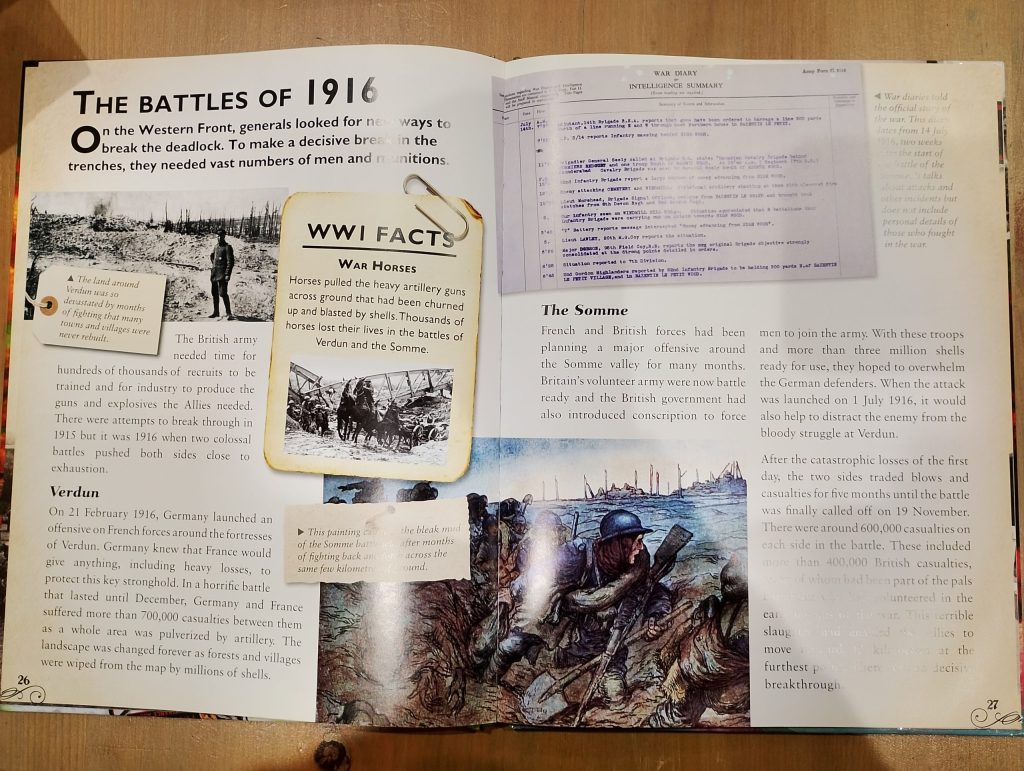
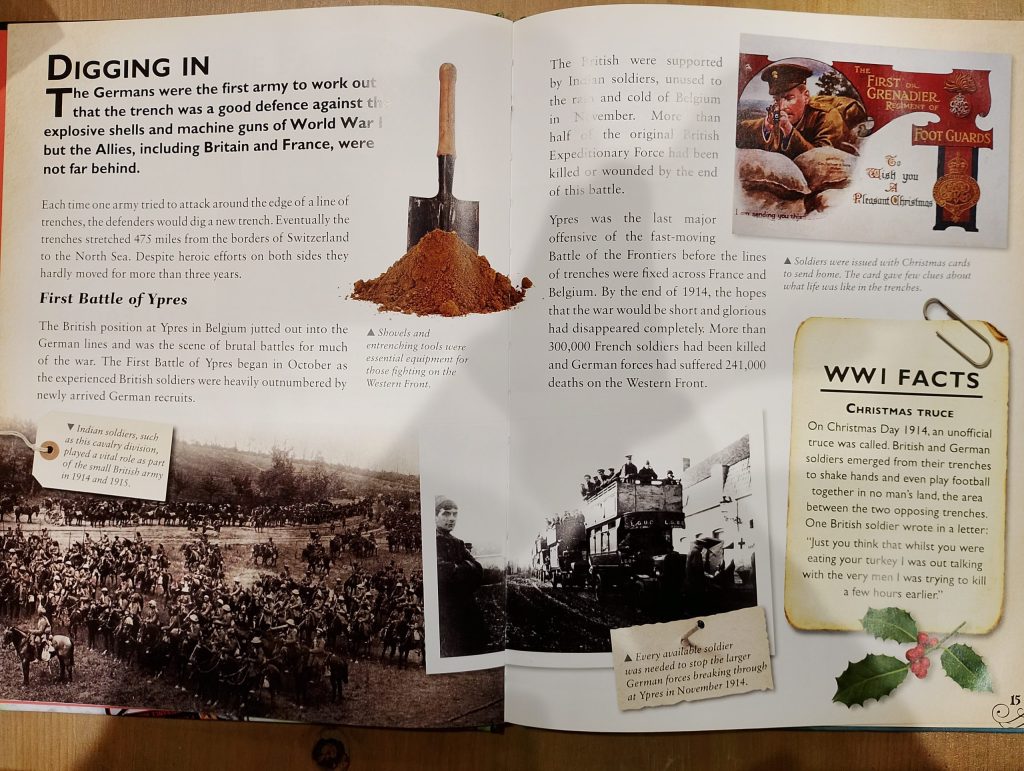
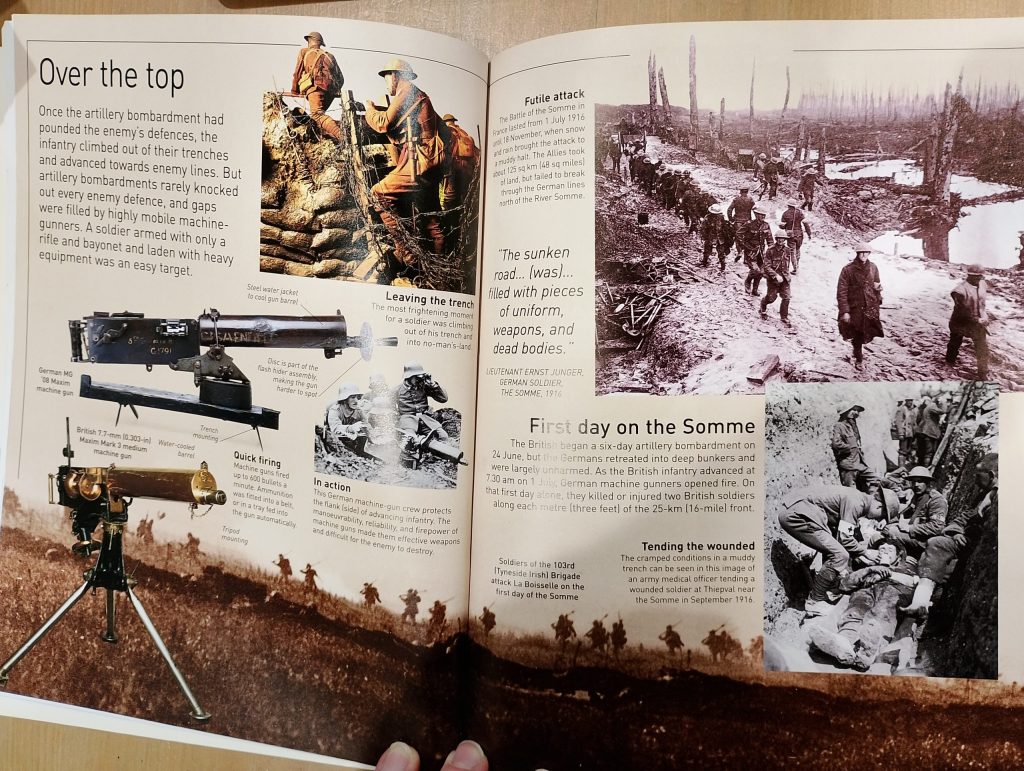
This non-fiction text provides a good overview of many of the themes of the war, whilst remaining high-level enough that it should be accessible to most children. There is a very small amount of description of the bloodshed, but this is minimal. There are many high quality photographs and documents from the war throughout the book.
The text is perhaps not as gripping as the narrative of Adventures in Time mentioned above, but this is more suitable as a resource for younger primary-age children, or those who are more sensitive.
World War 1 (DK Eyewitness)
Simon Adams
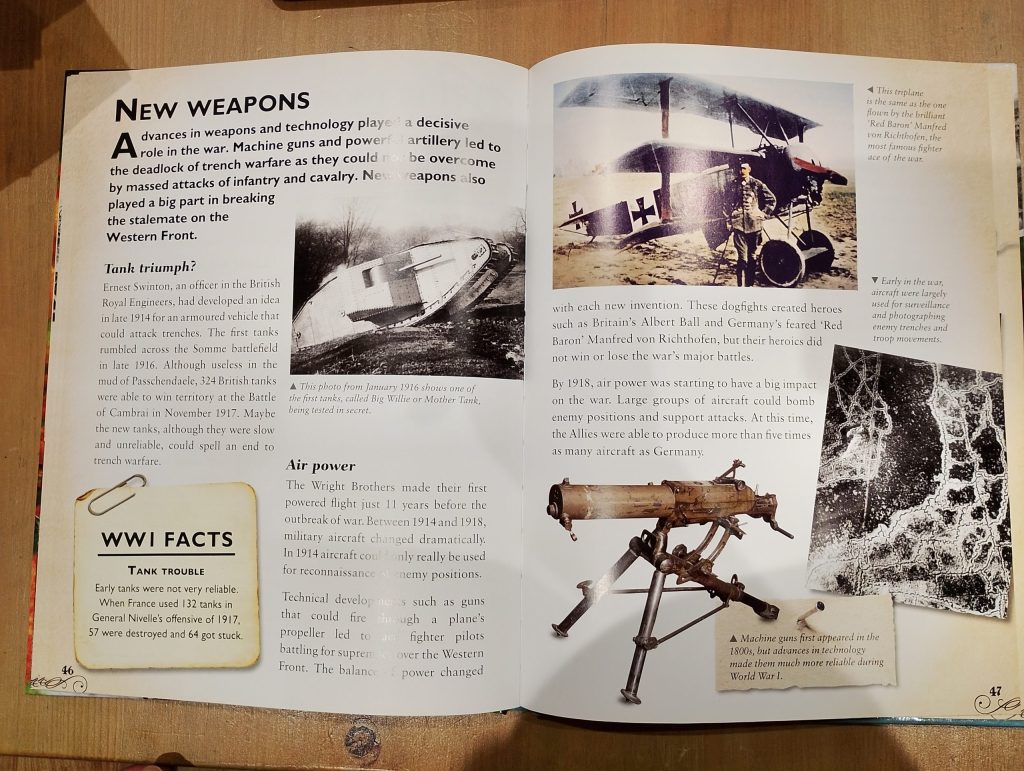
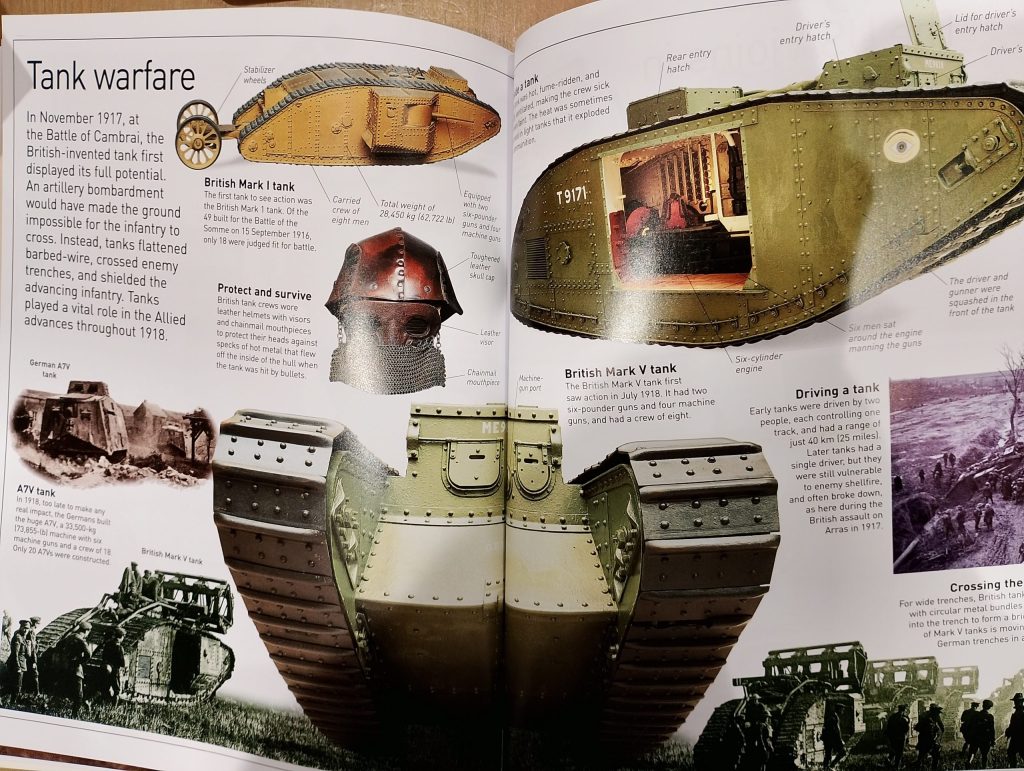
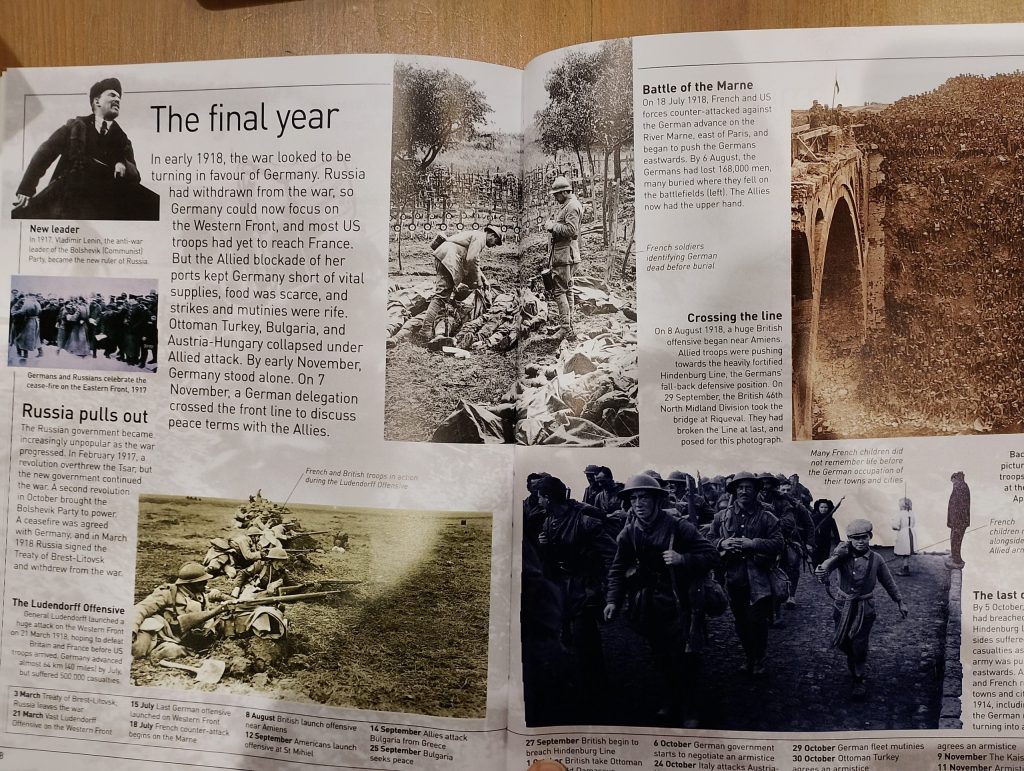
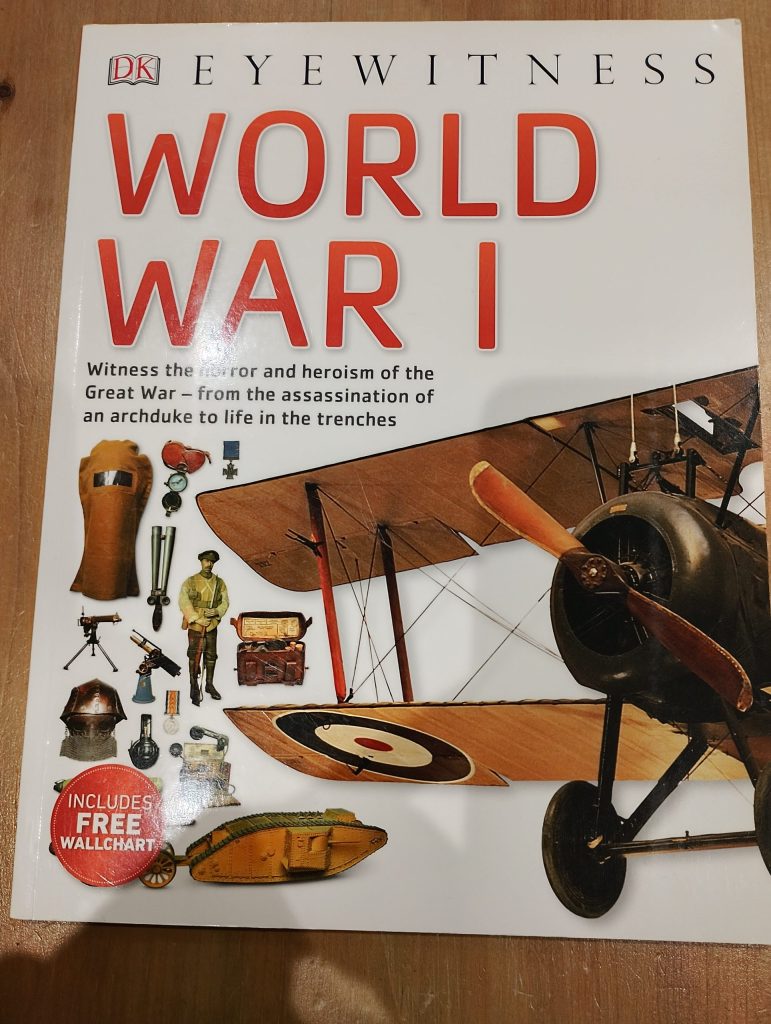
A classic DK Eyewitness with a theme for each double-page spread and plenty of photographs. There is limited narrative flow, but some children do really enjoy engaging with the artefacts pictured and short descriptions. The book contains the same photograph of a soldier being shot at Verdun as the Usborne above, and another of German dead soldiers being identified before burial. In general however it is not very gory.
World War I (History Through Poetry)
Paul Dowswell
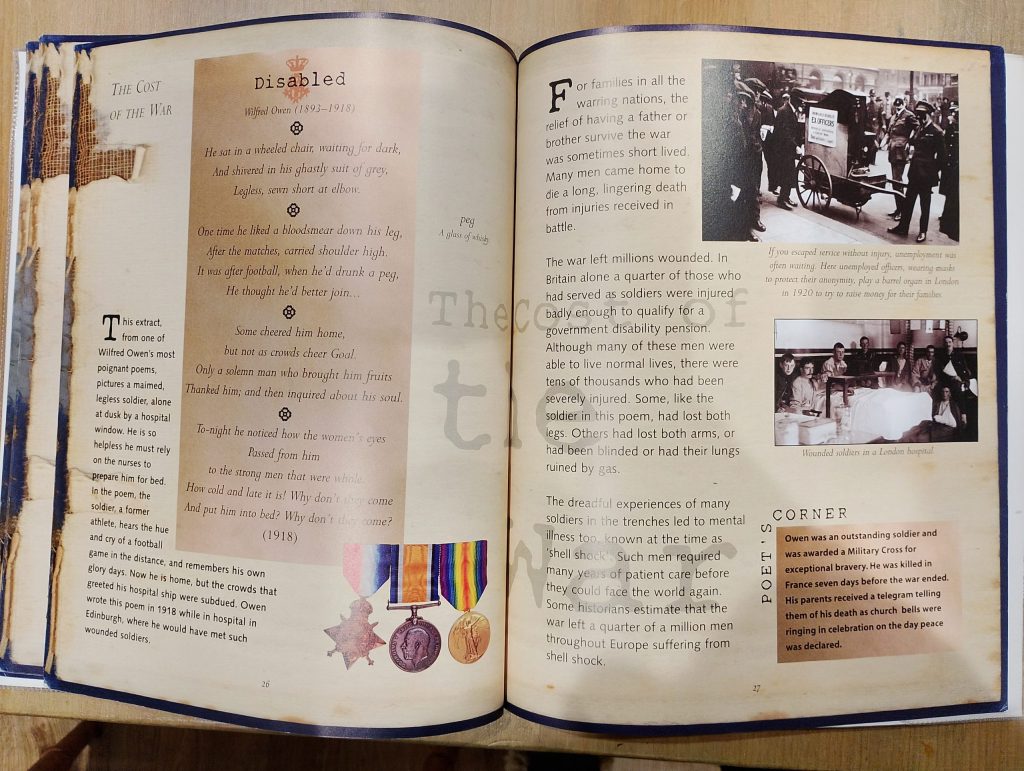
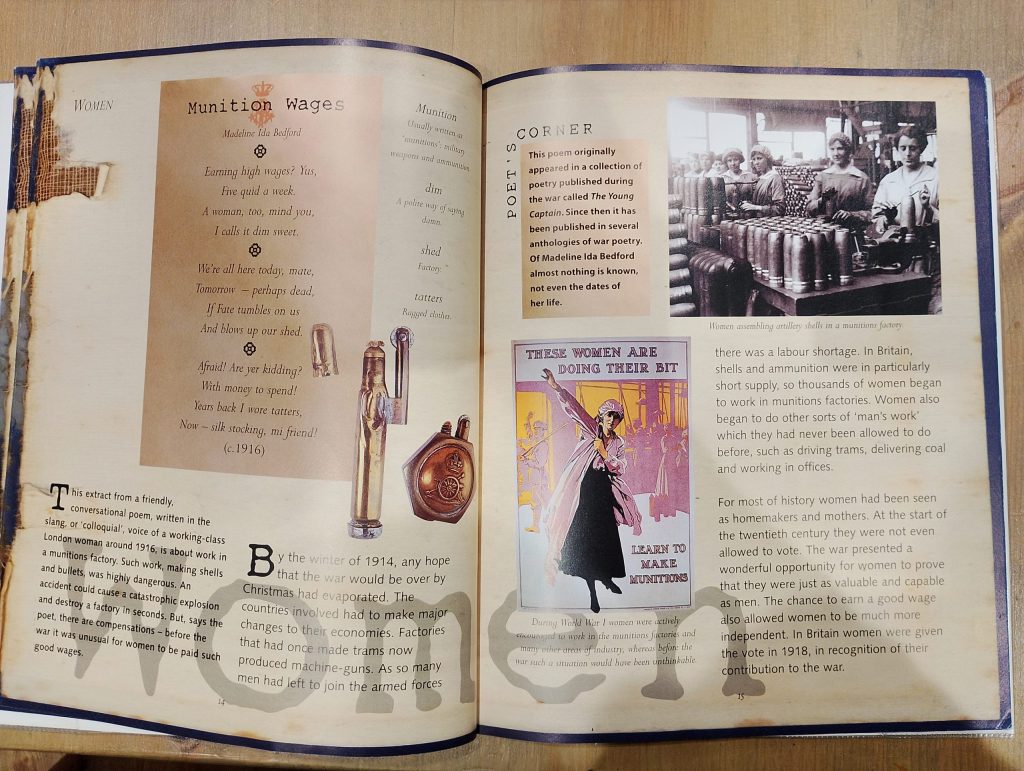
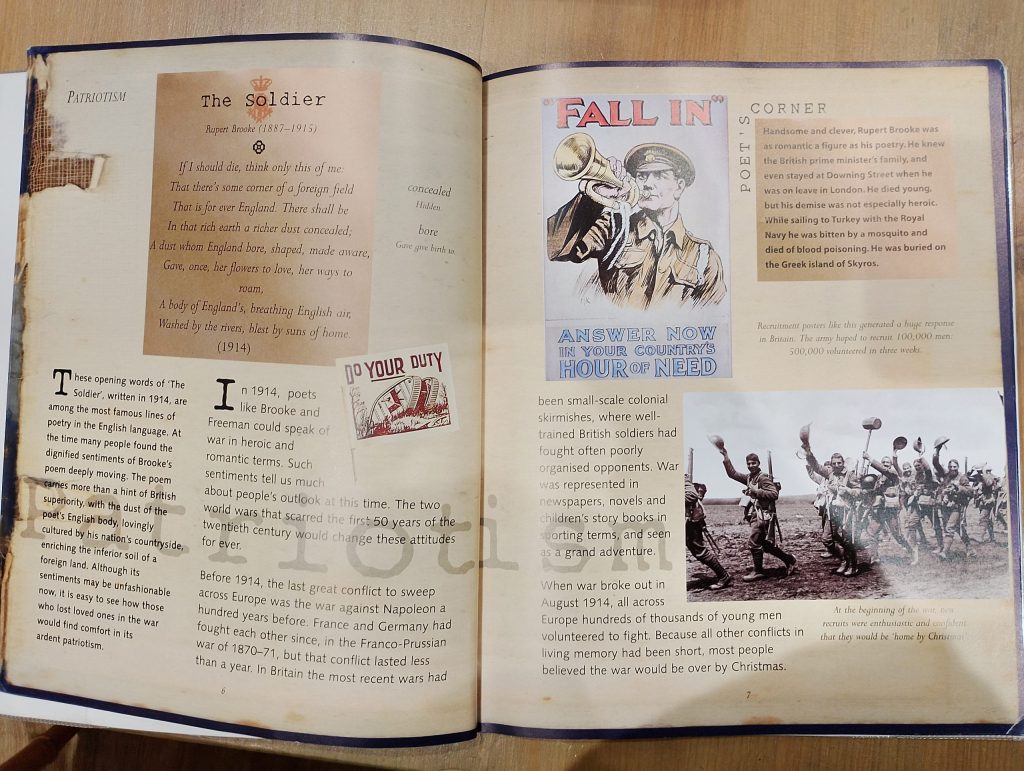
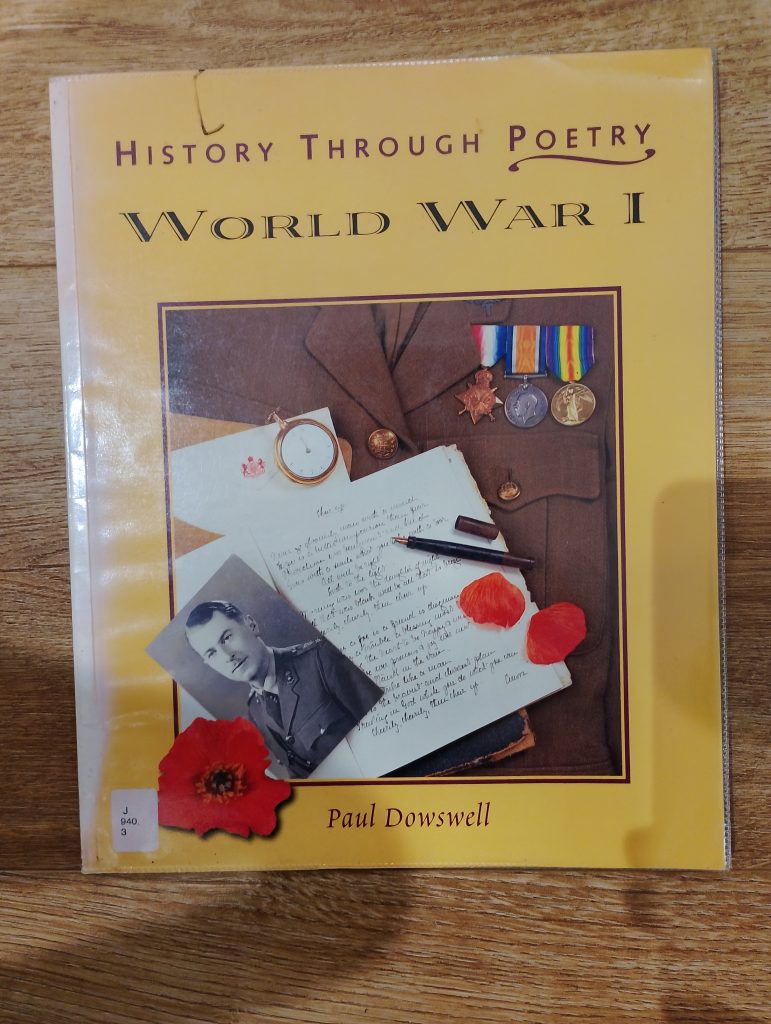
I really like this poetry series, and WW1 lends itself particularly well to study through the medium of poetry. Each double-page spread includes one poem on a historical theme, and then a short text explanation of the theme, together with photographs. For example, a poem about female munitions workers, coupled with an explanation of life in the munitions factories, and photographs of the women who worked there.
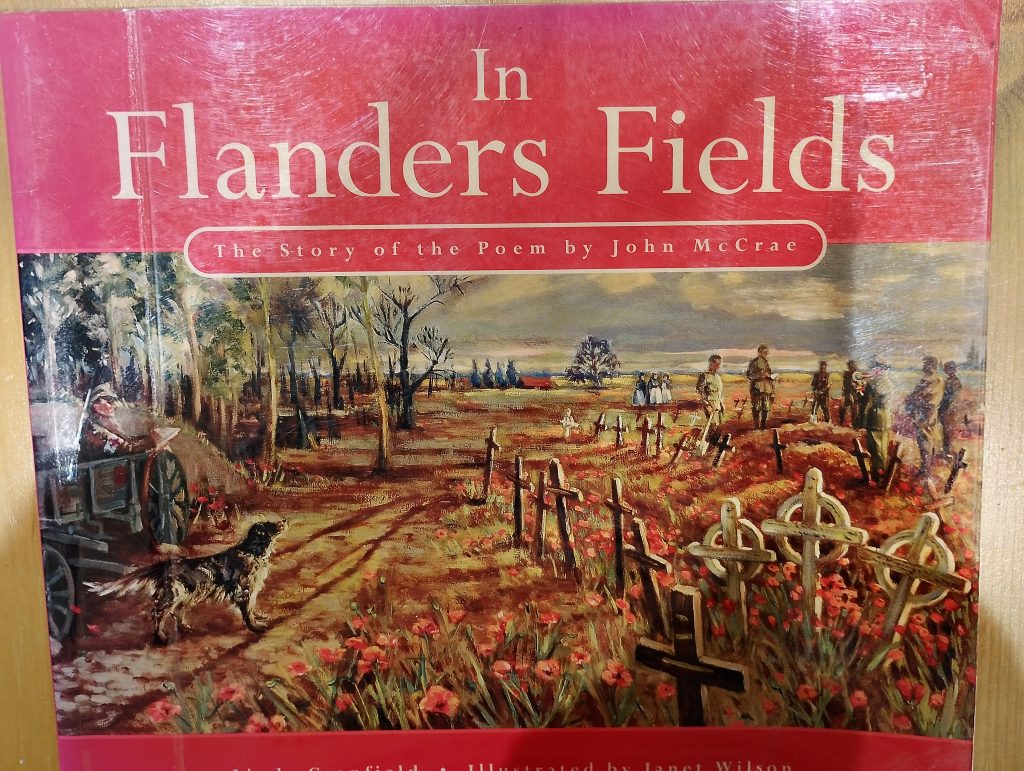
In Flanders Fields: The Story of the Poem by John McCrae
Linda Granfield
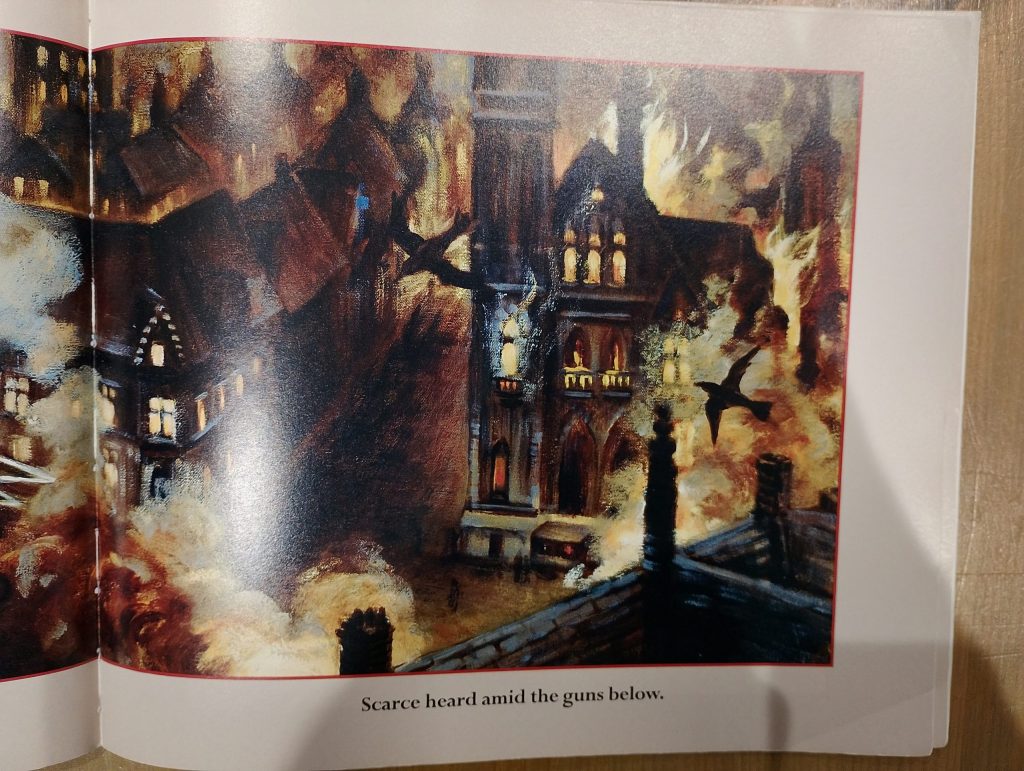
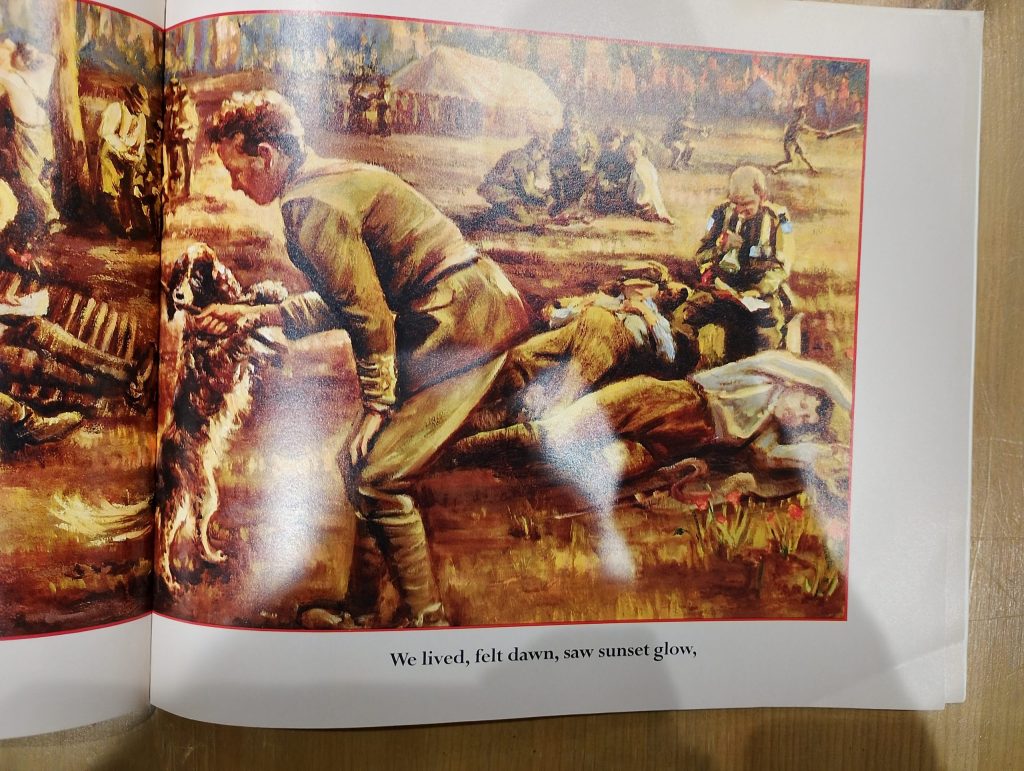
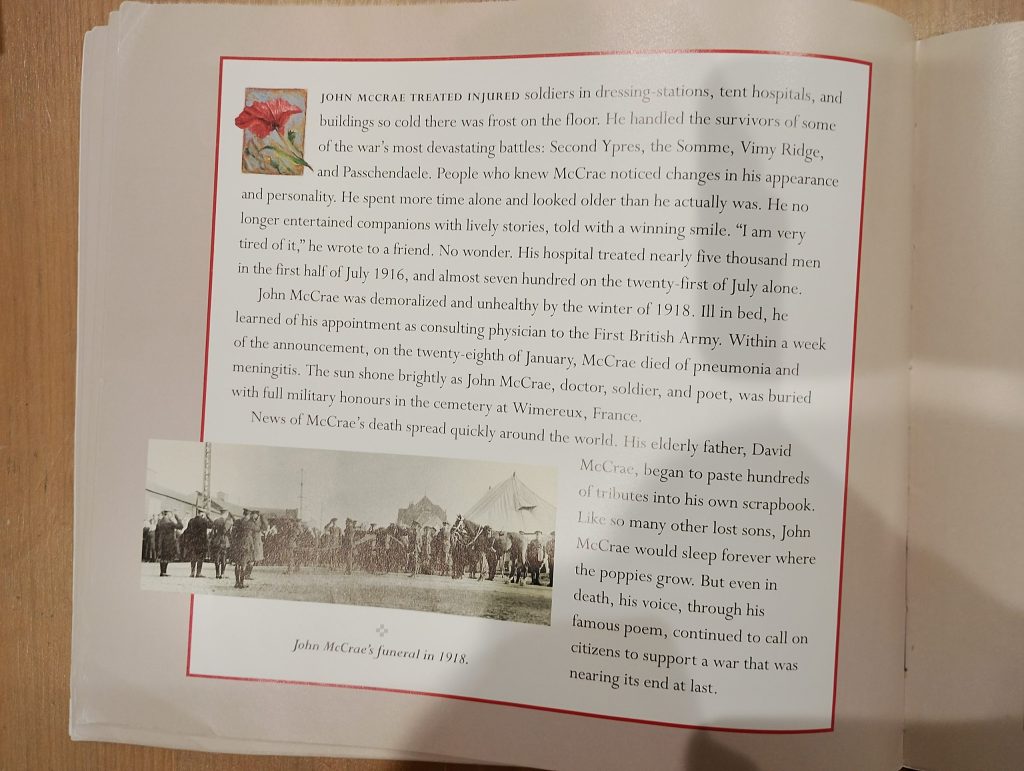
About half of this book is the poem In Flanders Fields, with one line per page of illustration. The other half of the book, interspersed, is full pages of text about the war, and John McCrae’s experiences as a field doctor, as well as the post-war tradition of wearing poppies on Remembrance Day.
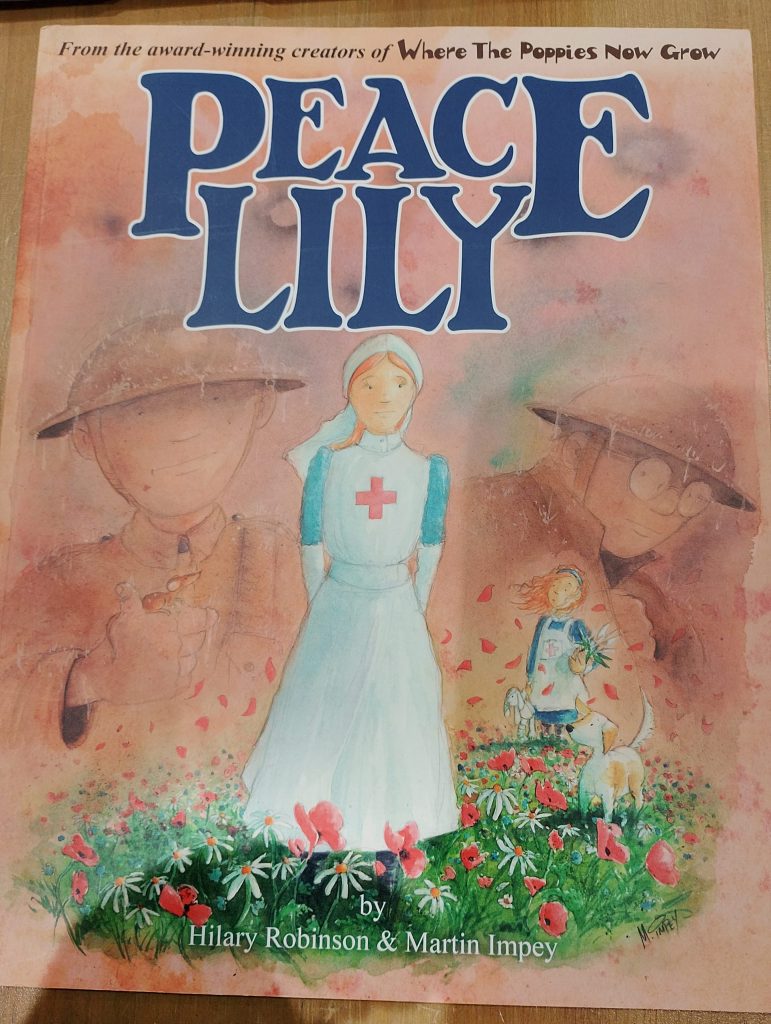
Peace Lily
Hilary Robinson and Martin Impey
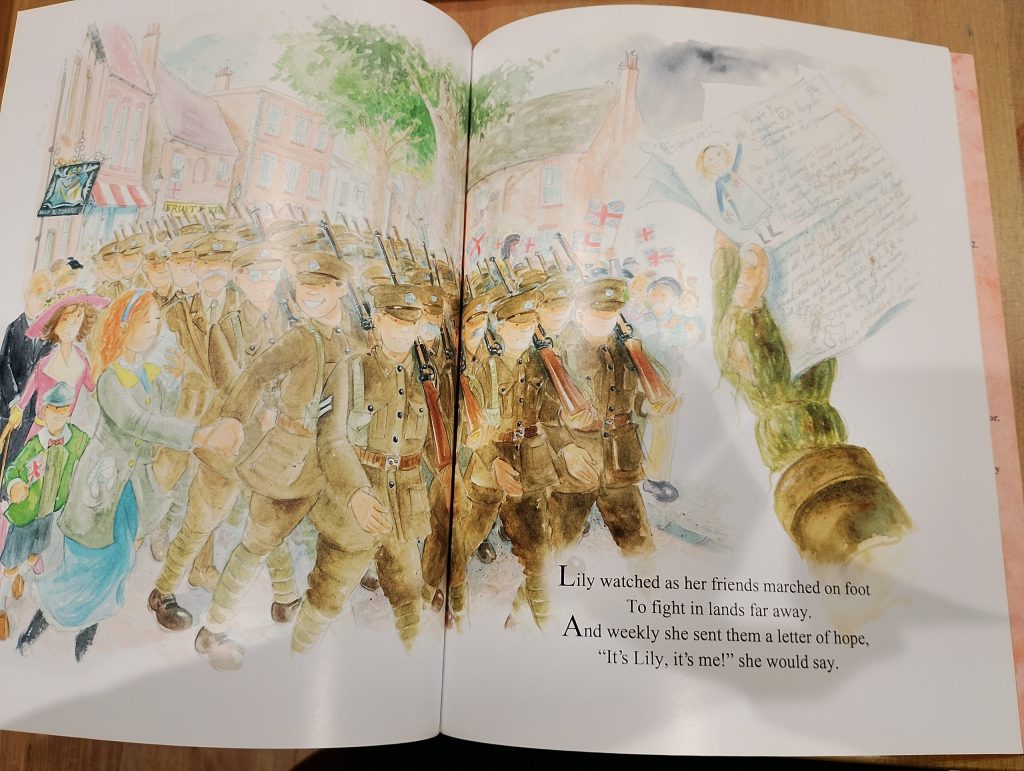
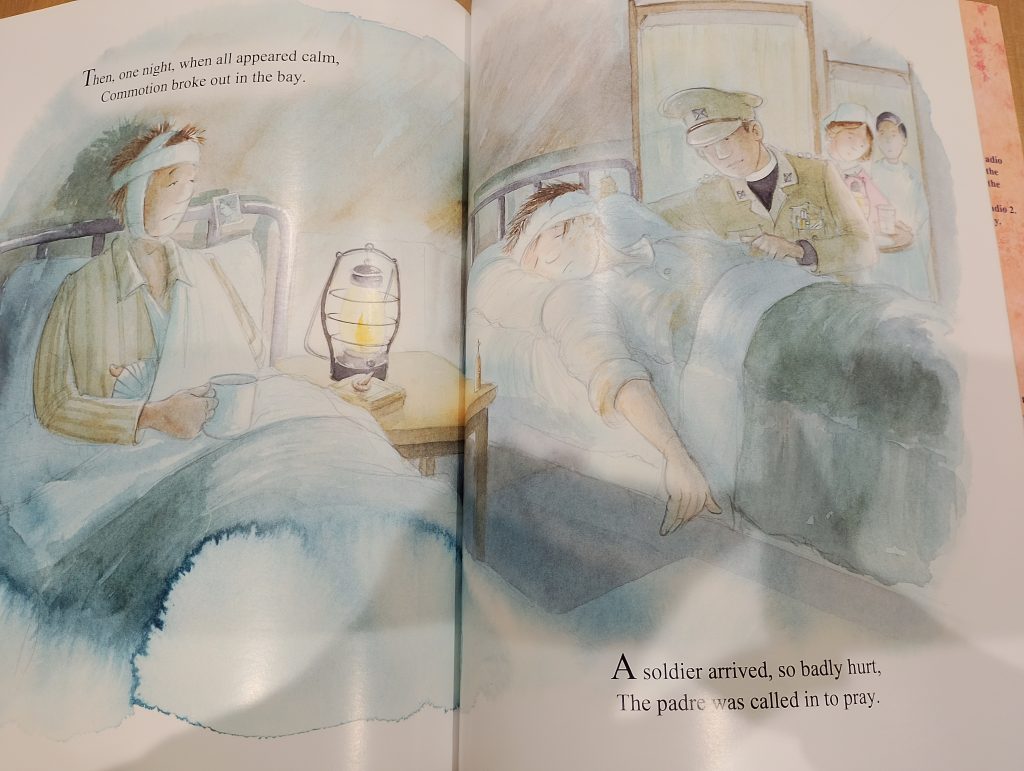
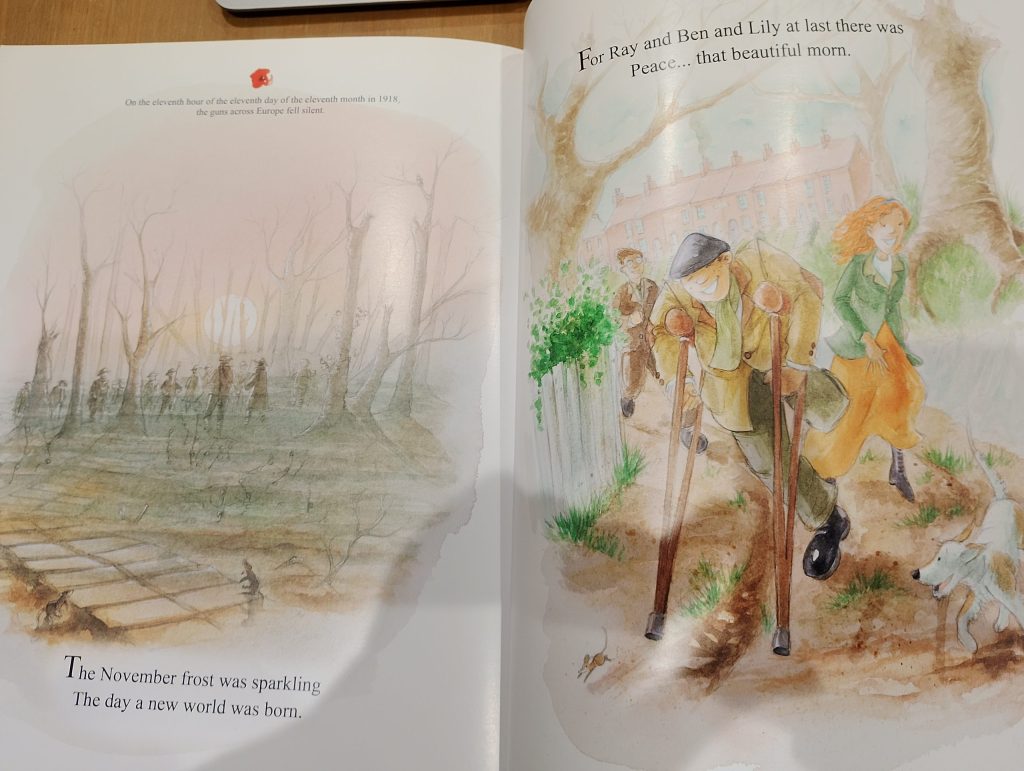
This is one of the few books I have come across that is suitable for younger children. It is a short, poetic story about a field-nurse. One of her friends has to have a leg amputated, but this is only referenced obliquely through the pictures, and he goes on to have a happy and full life.
There is not much detail here, and this book is probably most suitable for giving children an initial reference point for the First World War, or to have something to read aloud to younger siblings who cannot access some of the other content.
The Amazing Tale of Ali Pasha
Michael Foreman
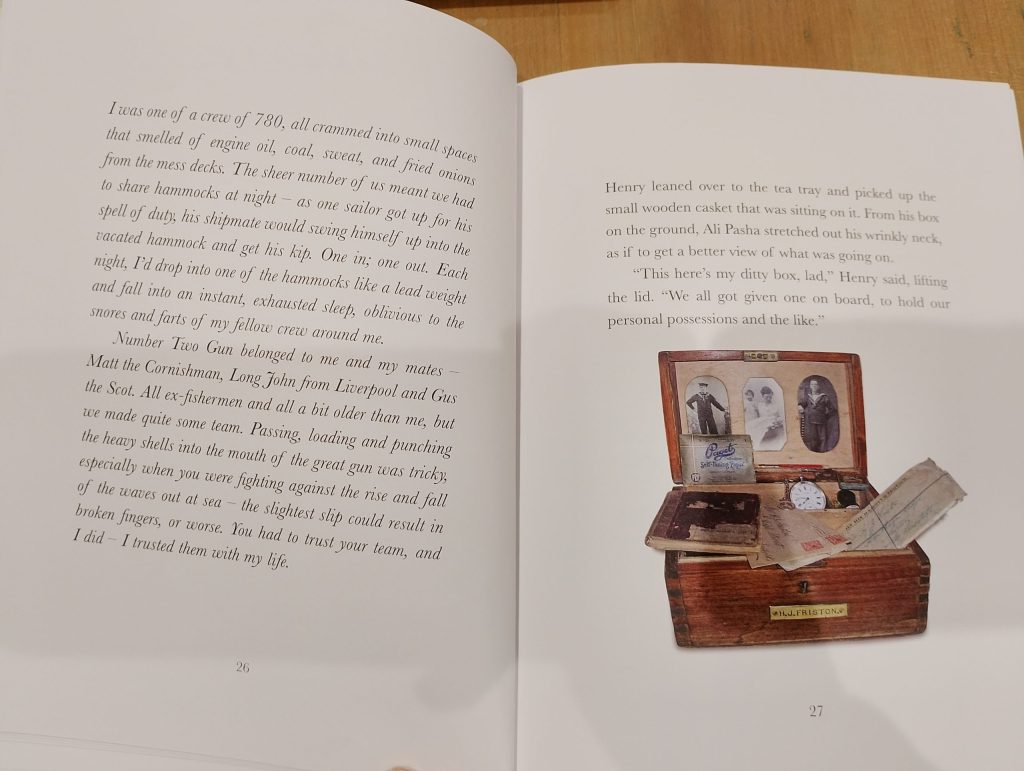
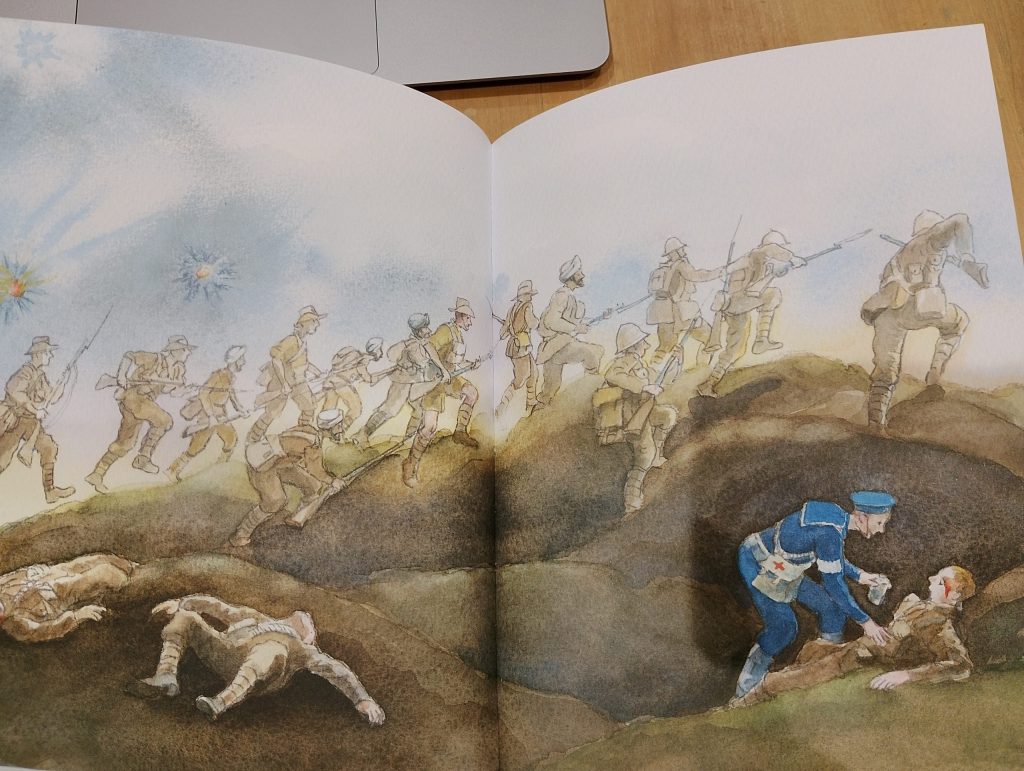
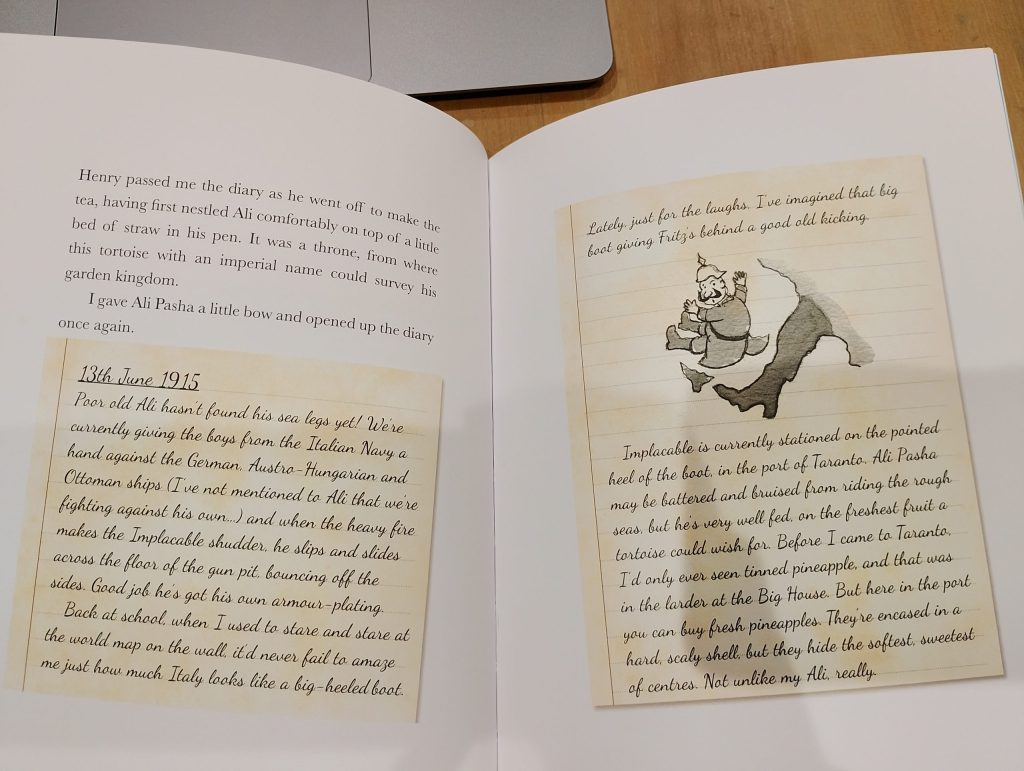
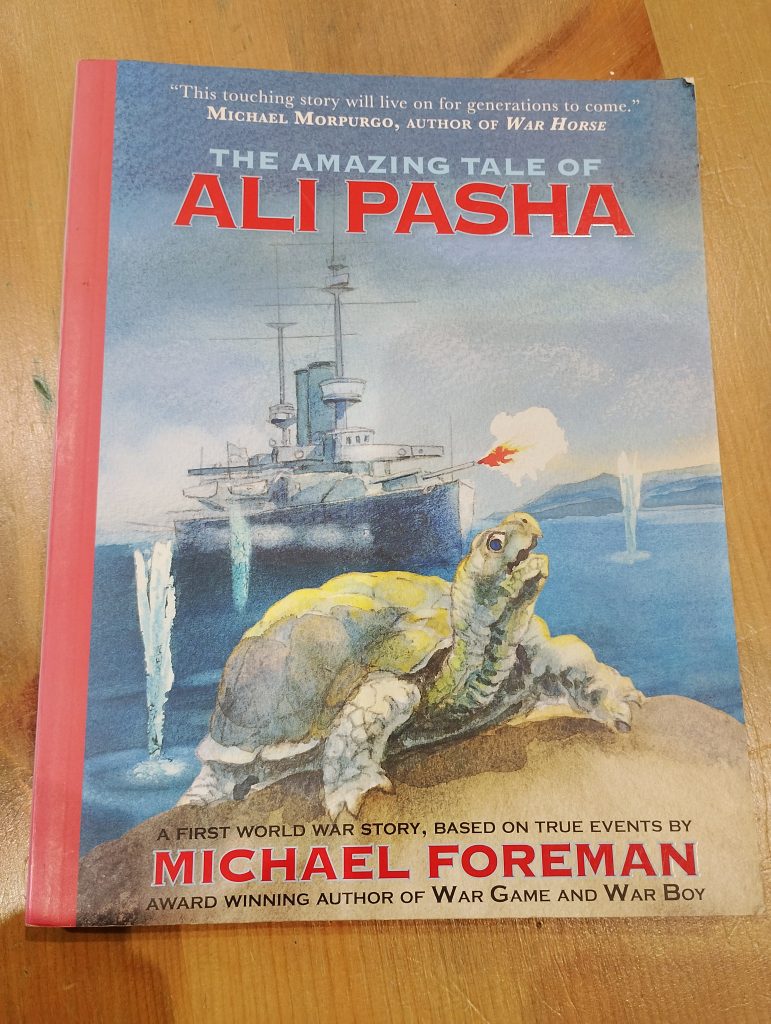
Written and beautifully illustrated by Michael Foreman, this book tells the story of Henry Friston, a sailor at Gallipoli. Along the way he acquires a tortoise called Ali Pasha, who becomes his mascot, and cleverly adds enough of a lighter tone to the book to make more suitable for children.
There are some moments which are (realistically) rather gory, but the majority of the book is not too dark, and I would probably say this one is suitable for 8+.
One of the saddest sections: ‘I swear the sea was made of blood that day. In place of the usual flotsam of seaweed and wood, we were wading through the floating corpses of dead men and supply mules. Those poor animals – they had it bad, just like we did.’
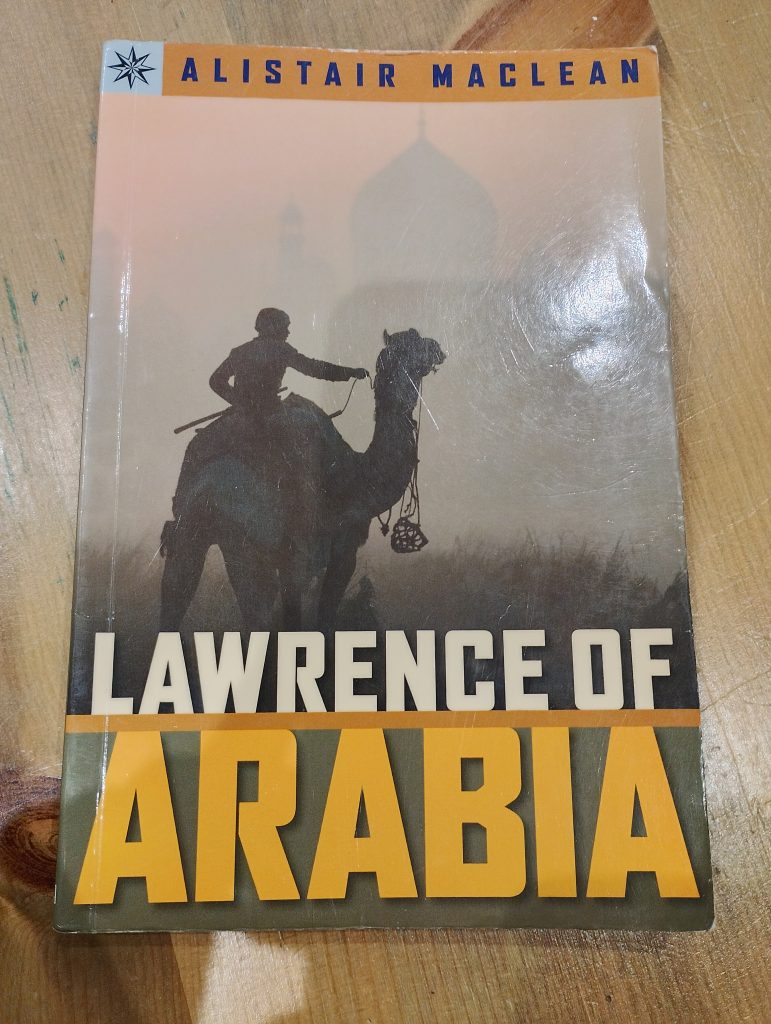
Lawrence of Arabia
Alistair Maclean
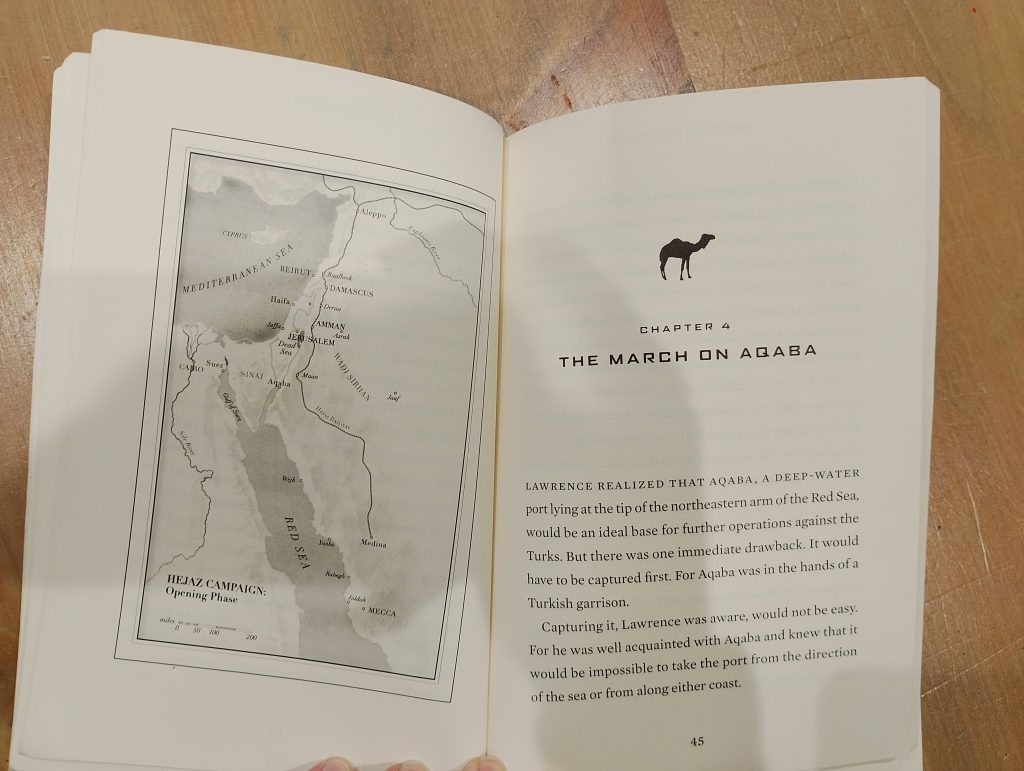
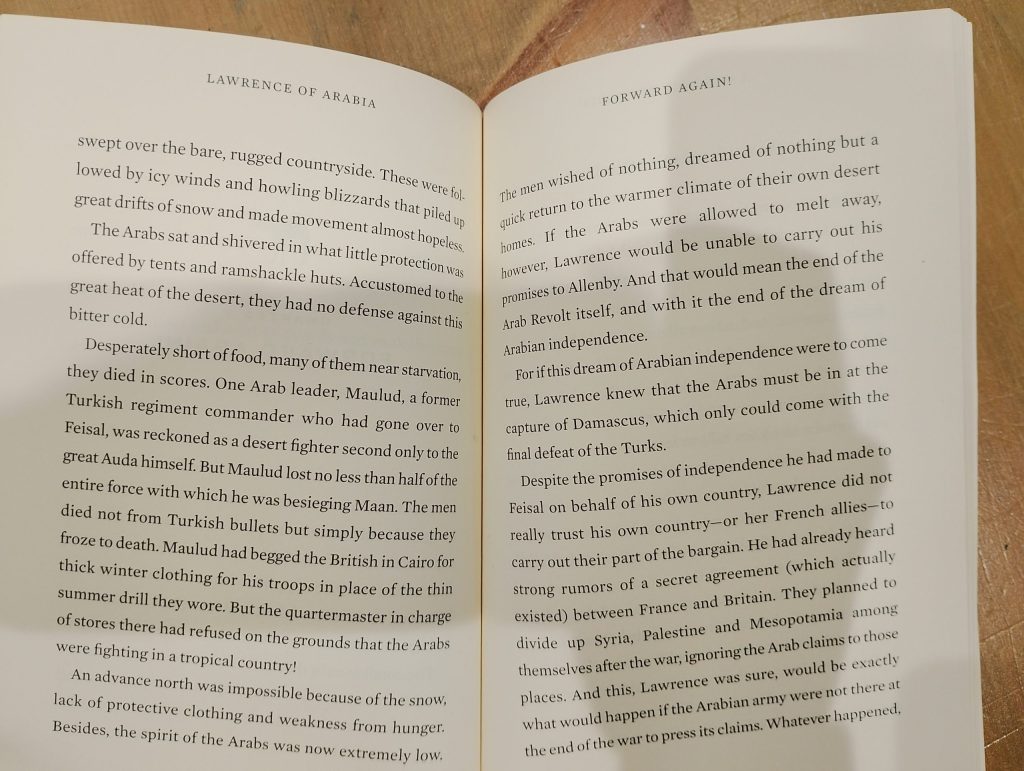
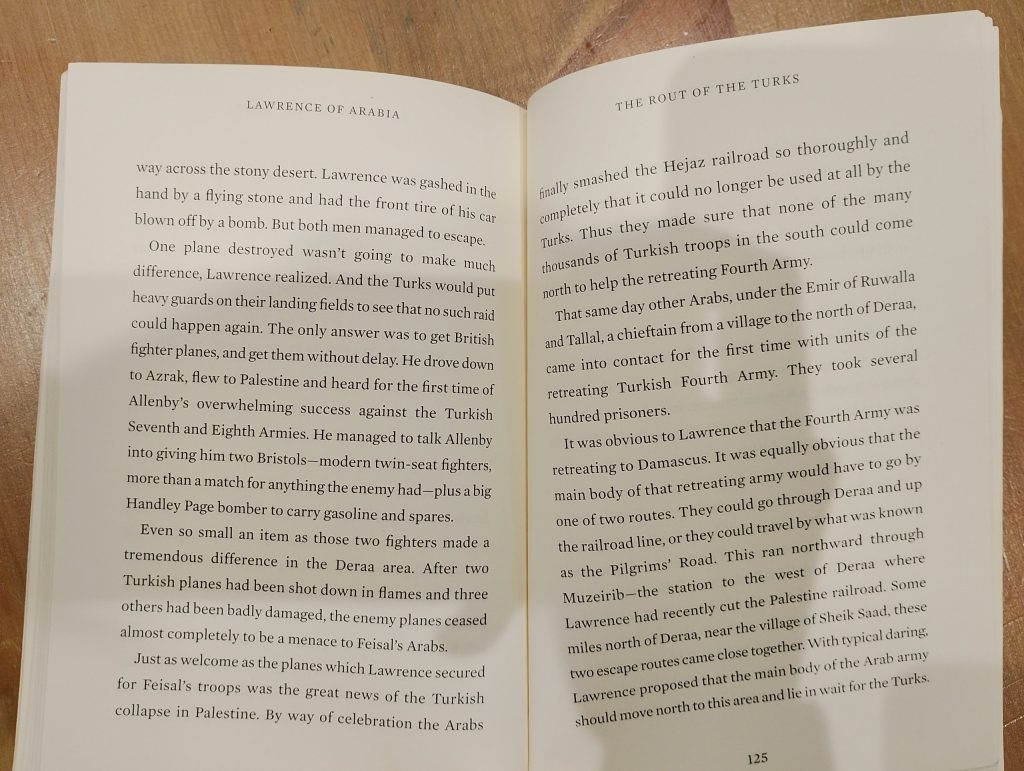
One for older children, this book is around 150 pages long, and almost entirely text with the occasional map. Written by a famous Scottish author and screenwriter, this was originally part of the Landmark series of history books for young people. This is primarily a thrilling tale of the (frankly remarkable) adventures of Colonel T. E. Lawrence in Arabia during the First World War. It is realistic about the bloodshed but not gory, and is generally sympathetic towards the Arabs. There is a small amount of political detail regarding the aftermath, but not much.
A good book for providing a very different angle on WW1.
The Edwardians: Everyday Life
I have not managed to find children’s history books specifically about the Edwardian era – please do let me know in the comments if you have ideas! However, I have found children’s literature from the period to be an good source of information about attitudes, education and everyday life in the Edwardian period.
Edwardian Children’s Literature
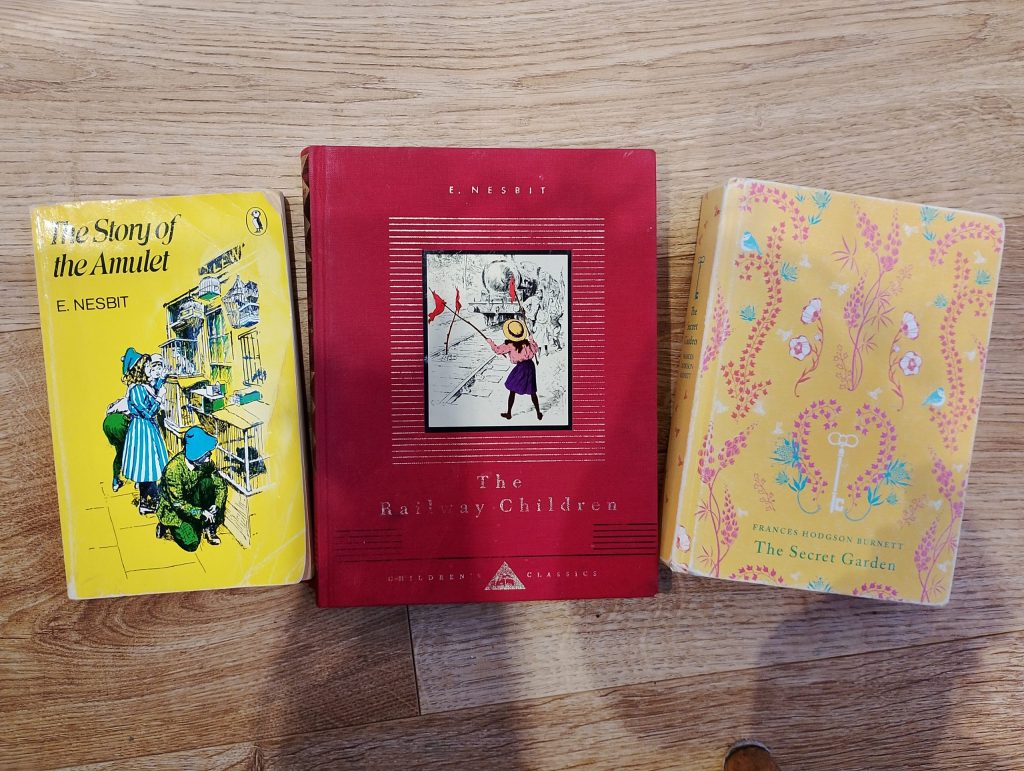
The Edwardian period was a heyday for children’s literature, and many of the books we consider classics today come from this era. Whilst these are not history books, you can get a good feel for what everyday life was like. The children in the stories tend to be from well-to-do families, but books such as The Railway Children and The Secret Garden also give some sense of what life was like for poorer children.
Marconi’s Battle for Radio
Beverley Birch and Robin Bell Corfield
I have included this short biography of Marconi as he did much of his work in the very late Victorian and Edwardian periods, and the development of radio was significant for WW1. This is a picture book biography, intended, I think, for younger children. The book is light on the science behind Marconi’s discoveries, it is more of an overview of his struggle to develop his ideas and receive recognition. When you consider that he had no formal education to speak of, his discoveries are all the more astonishing.


Polar Exploration
Polar Exploration really reached its zenith in the pre-war years, with successful attempts made to reach both the North and South poles, and a number of expeditions mapping and exploring the polar regions. I have a longer post with suggestions for children’s books about polar exploration, but here are a few key suggestions for the Edwardian period and for Shackleton’s Endurance expedition which took place during the first part of WW1.
On the 4th August 1914, as the Endurance prepared to sail for the Antarctic, Shackleton read in the British papers about the general mobilisation order given to British troops, in preparation for the possibility of war. He immediately recalled all the men to the ship and telegrammed to the Admiralty, offering the men, supplies and ships for the war efforts, or alternatively, requesting permission to proceed at once to Antarctica before the pack ice set in. An hour later he received a one word response from Winston Churchill, then First Lord of the Admirality, simply saying ‘Proceed’.
Ice Trap!
Meredith Hooper and MP Robertson
This is a wonderful book which I would highly recommend. It tells the story of Shackleton’s Endurance expedition, and the audacious rescue mission on one of the ship’s lifeboats to reach the whaling stations of South Georgia. There is a useful map in the front and plenty of colour illustrations. It is a very exciting and inspiring story.
Content warning: there is one brief mention of toes needing to be amputated due to the difficult conditions.

Shackleton’s Journey
William Grill
Another beautiful picture book about Shackleton’s expedition on the Endurance. Compared to Ice Trap, this book has more detailed information on e.g. equipment and ship design, and includes an interesting map of South Georgia. There is also some information about the Ross Sea party, Shackleton’s support mission on the other side of Antarctica. Both books are excellent, and the story is so gripping that it deserves telling twice.

Race to the Pole
Meredith Hooper
This is a short chapter book covering the various attempts on the South Pole by Scott, Shackleton and Amundsen. It is quite dramatic and fast paced, and gives a good overview of the circumstances leading up to Amundsen and Scott’s race to the pole.
I found the language rather choppy in places, with lots of short sentences. I prefer Hooper’s picture book Ice Trap! which seems to flow better. However, there aren’t many children’s books covering the race to the South Pole, and even fewer that cover the earlier pole attempts, so this is well worth reading.

Captain Scott – A Ladybird Book
L. Garde du Peach
This is a typical Ladybird longer picture book, focussing on the final South Pole expedition. Each full page of text is accompanied by a beautiful colour illustration. The story is gripping, and very moving.

The Titanic
The Titanic sank in 1912, and the story of the ship is in many ways reflective of the optimistic spirit of the pre-war years, part of a wave of technological advancement.
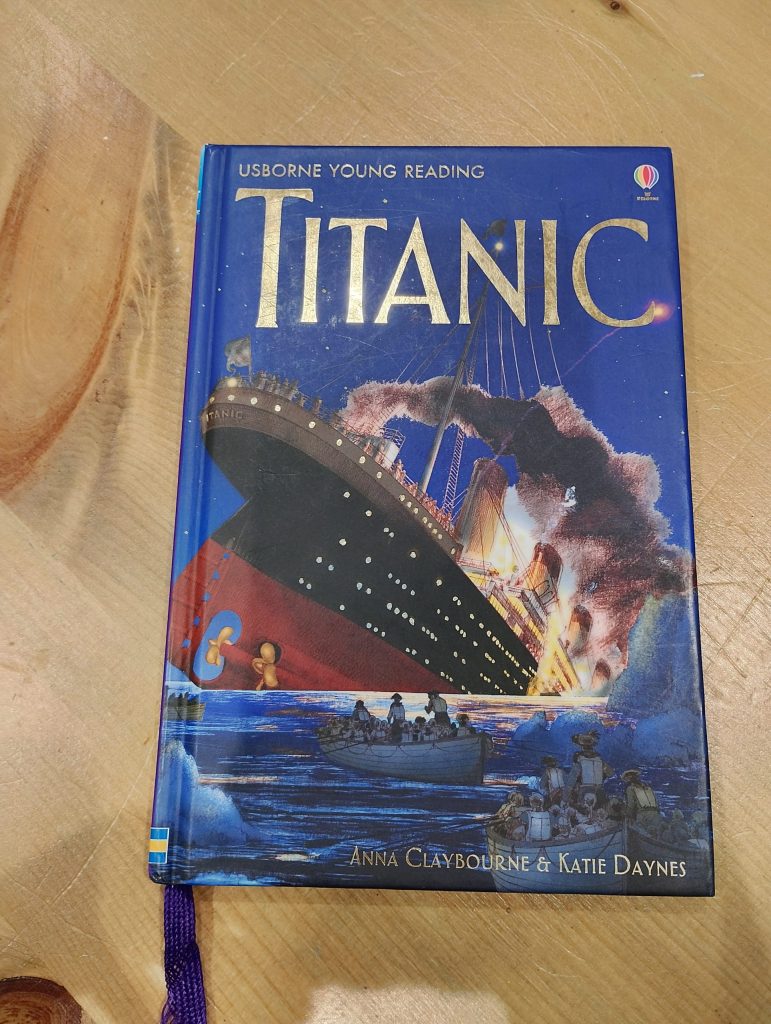
Titanic (Usborne Young Reading)
Anna Claybourne and Katie Daynes
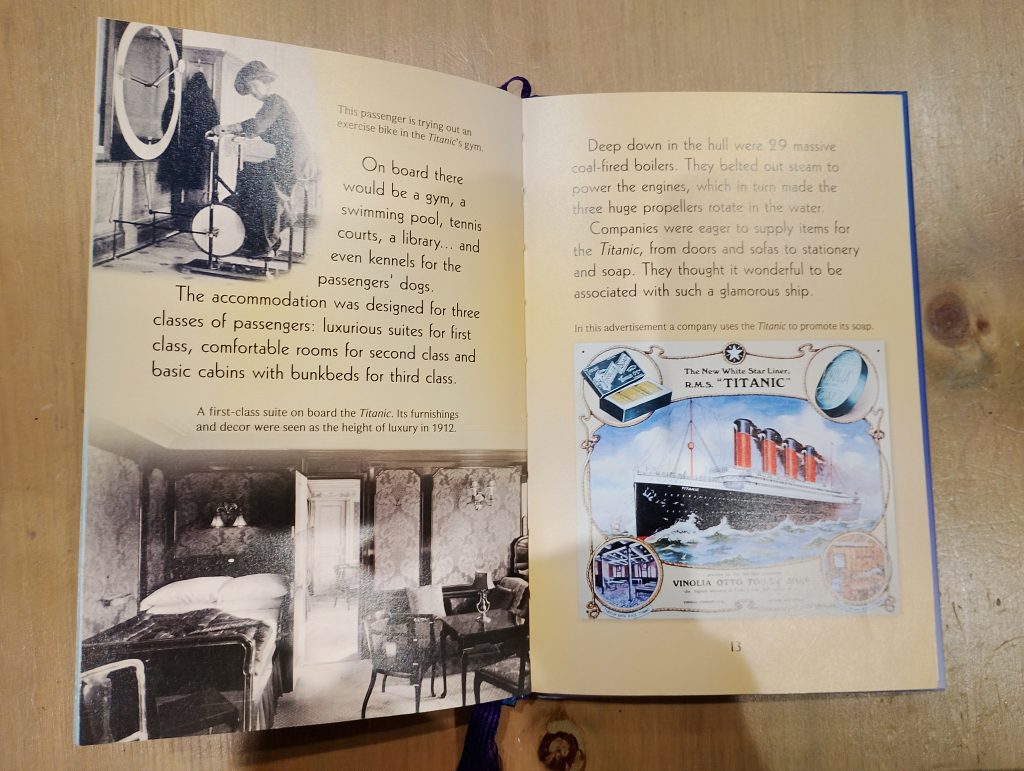
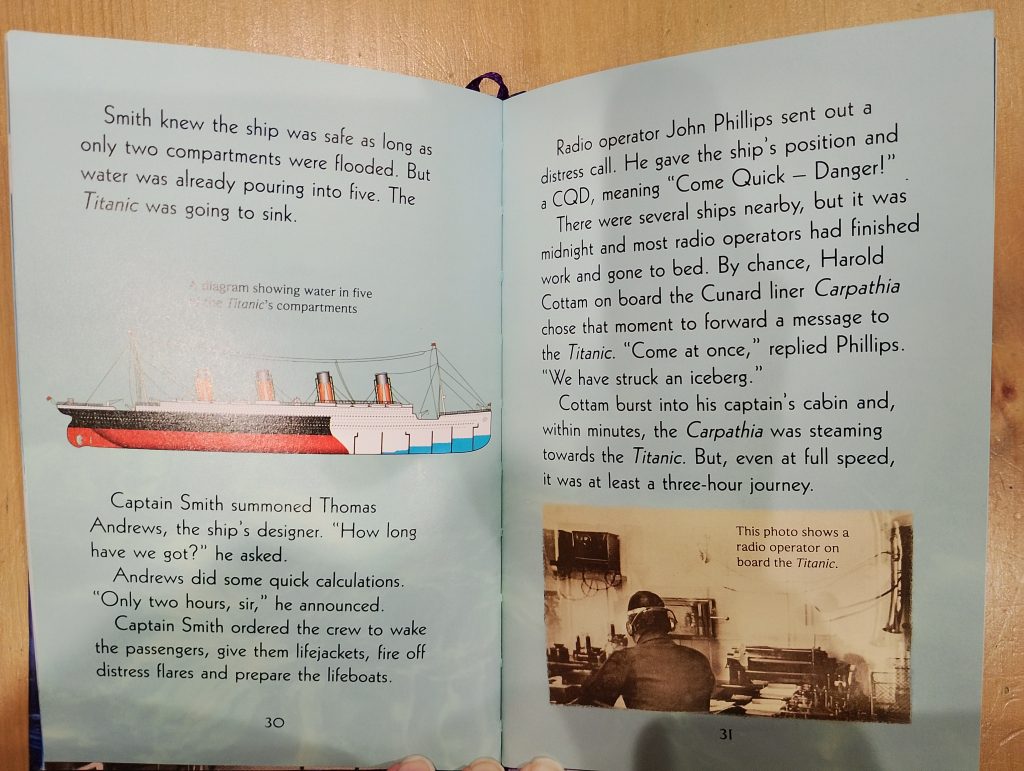
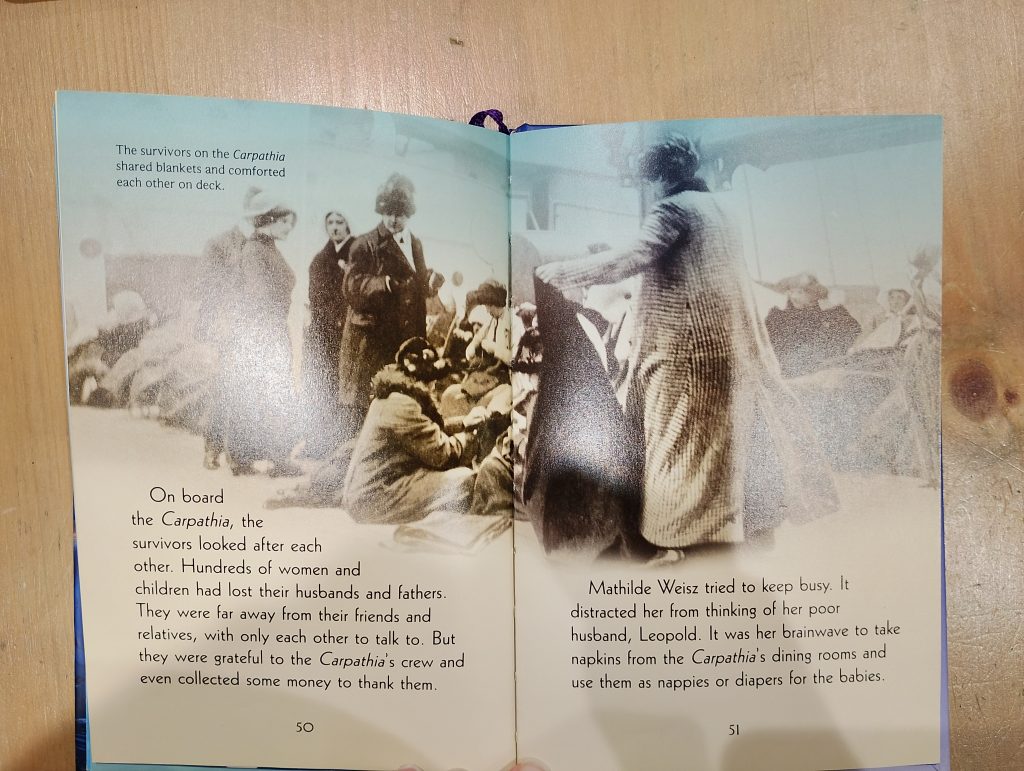
A very readable book with plenty of diagrams and illustrations. The sinking of the Titanic is obviously a very sad story, but this book is not too ghoulish, and should be suitable for older primary-school aged children to read themselves. The bluntest lines come just after the sinking: “Across the waves came screams and groans, each one weaker than the last. In the end, only one boat – containing Titanic crew members – went back to the scene. A few people were found alive and pulled to safety, but most of the bodies in the water were dead.
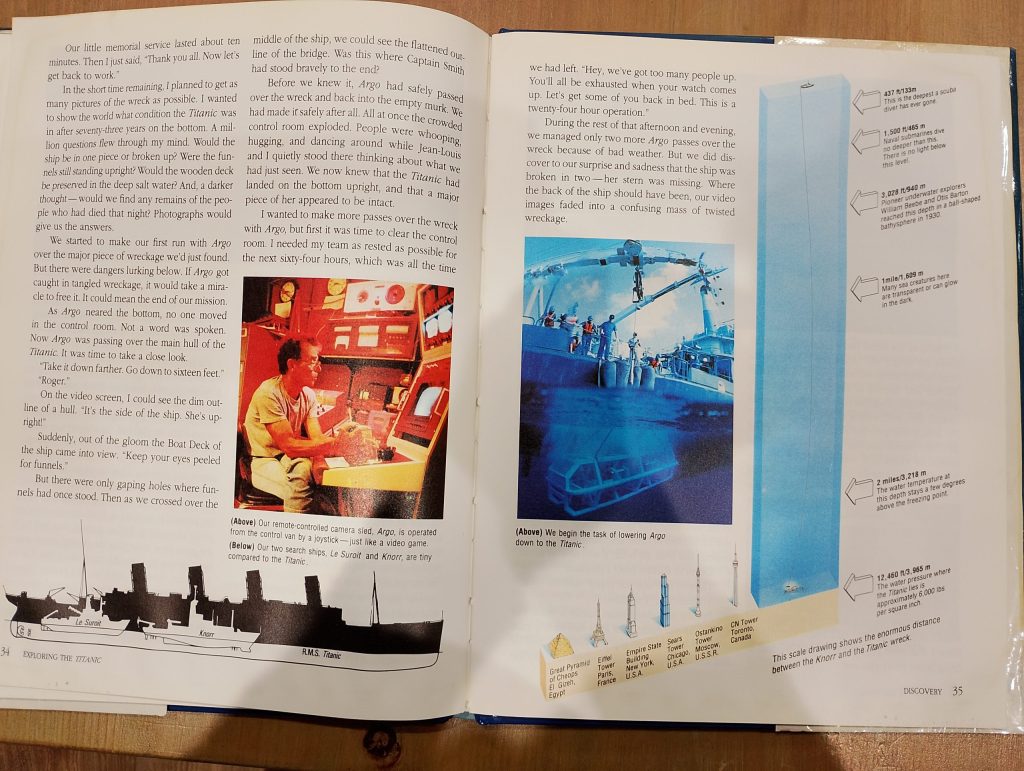
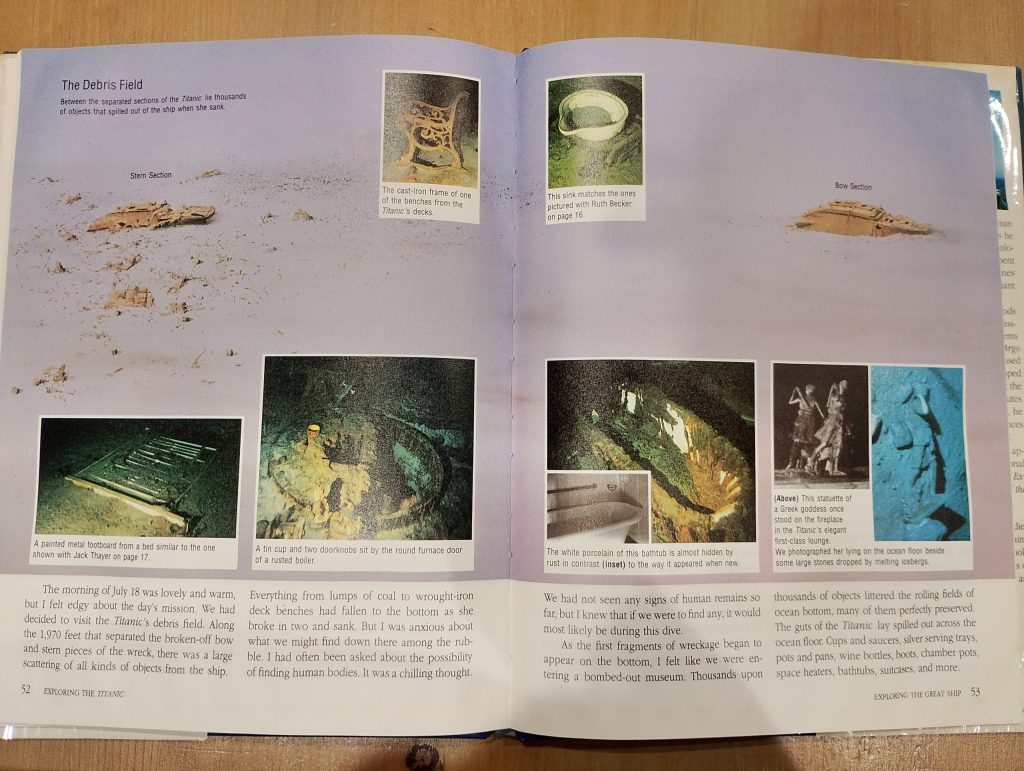
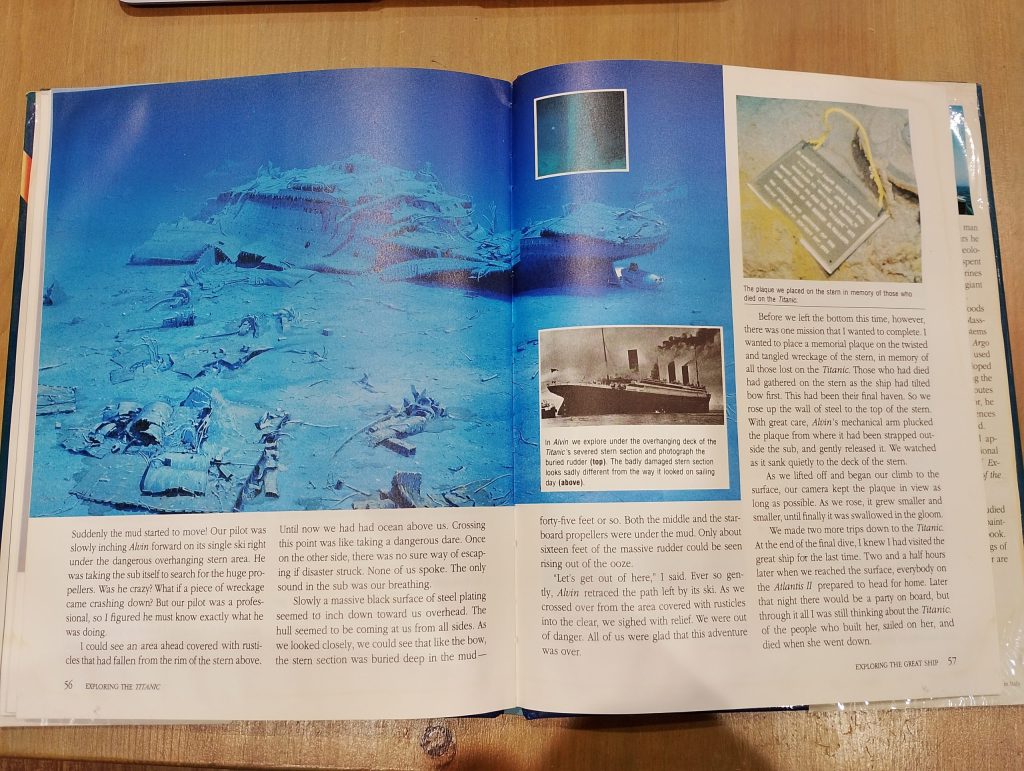
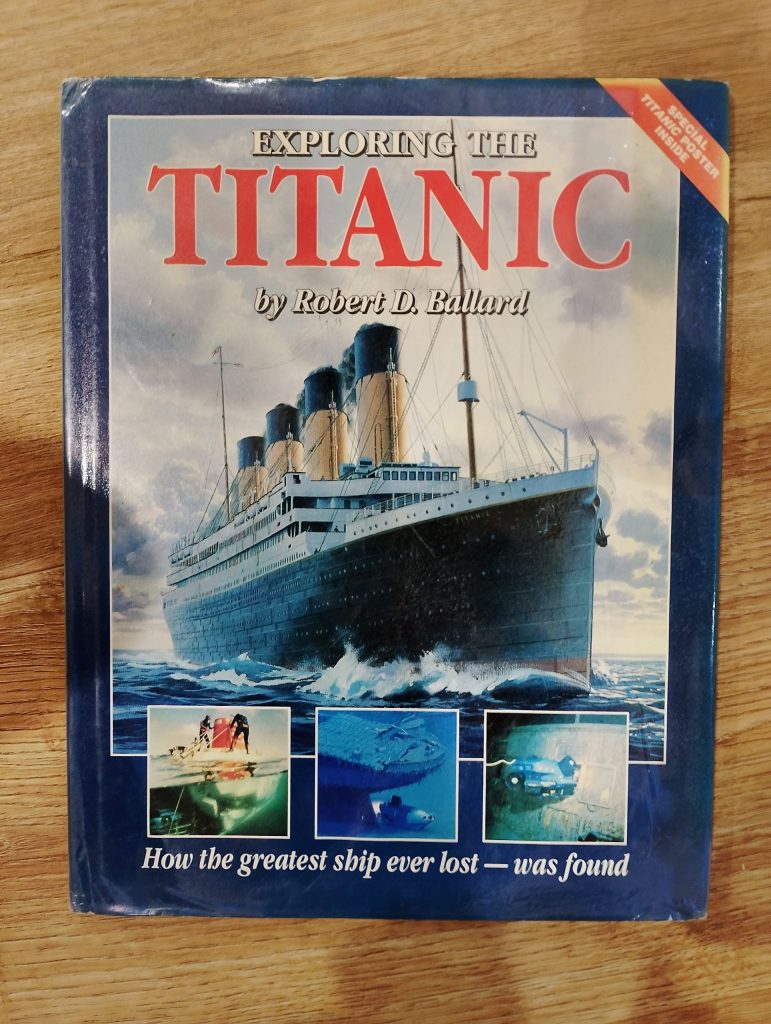
Exploring the Titanic
Robert D. Ballard
This is a fascinating read from the leader of the team which discovered the wreck of the Titanic, two and a half miles below the surface of the Atlantic. There are many pictures taken from the submarine of the shipwreck, and of the artefacts on the sea floor. About a third of the book covers the story of the Titanic herself, with the remainder being devoted to the discovery of the wreck. There are two similar titles available, but Exploring the Titanic is the children’s version.