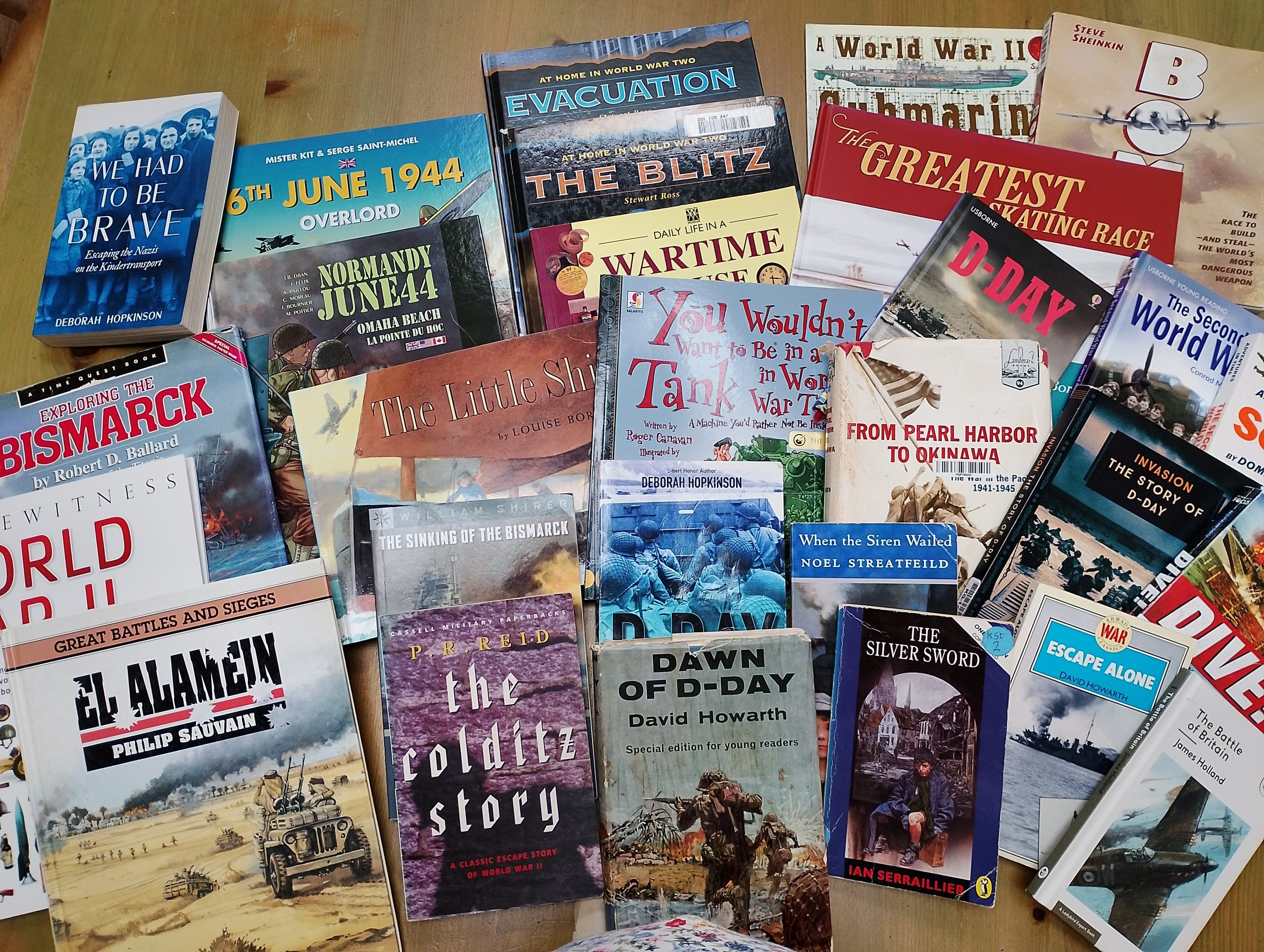
History books for children: World War II
Whilst going through the bookshelves looking for recommendations for this post, I realised that we have a lot of books about World War II! I have tried to organise them topically into sections, but within each section you will find a range of picture books and chapter books. This is generally a heavy topic, and the material skews more towards older children. The Home Front offers the most suitable material for younger children, and there are also several picture books in other sections which may be helpful.
This post is also part of a series of recommendations for children’s books on different eras of British history. You can read the overview post here.
- General books about WW2
- The Home Front
- Life under the Nazis
- WW2 Naval History
- D-Day Invasion
- Battles, military equipment and events
This post contains affiliate links. As an Amazon Associate, I earn from qualifying purchases.
General books about WW2
We don’t actually have too many generalist books on the Second World War, simply because this is a topic where it is easy to find rich, specific materials about particular themes. I have included a few suggestions here for those who are looking for an overview.
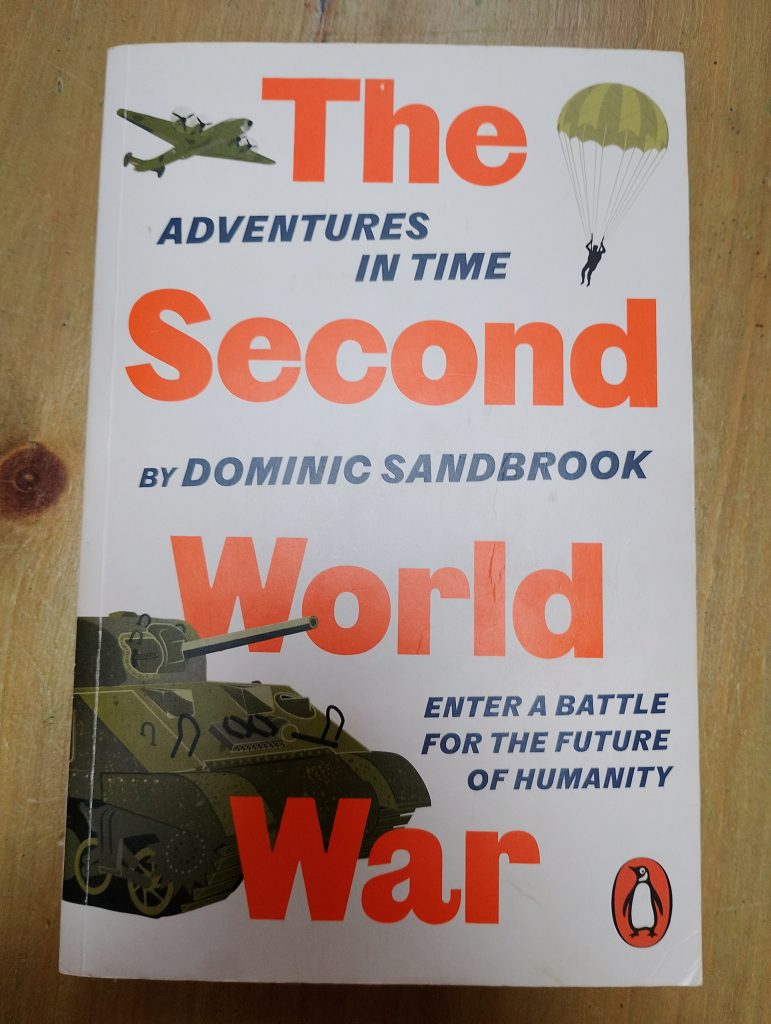
The Second World War (Adventures in Time)
Dominic Sandbrook
We are big fans of the Adventures in Time series by Dominic Sandbrook. This is definitely one for older children, with over 300pp of dense text. The book is long enough to cover many of the key topics of WW2, including a section on the causes of the war, and chapters on Dunkirk, the Battle of Britain, Pearl Harbour, North Africa, Enigma, and D-Day.
It feels less gory than the corresponding book on the First World War, but there are still many sad themes.
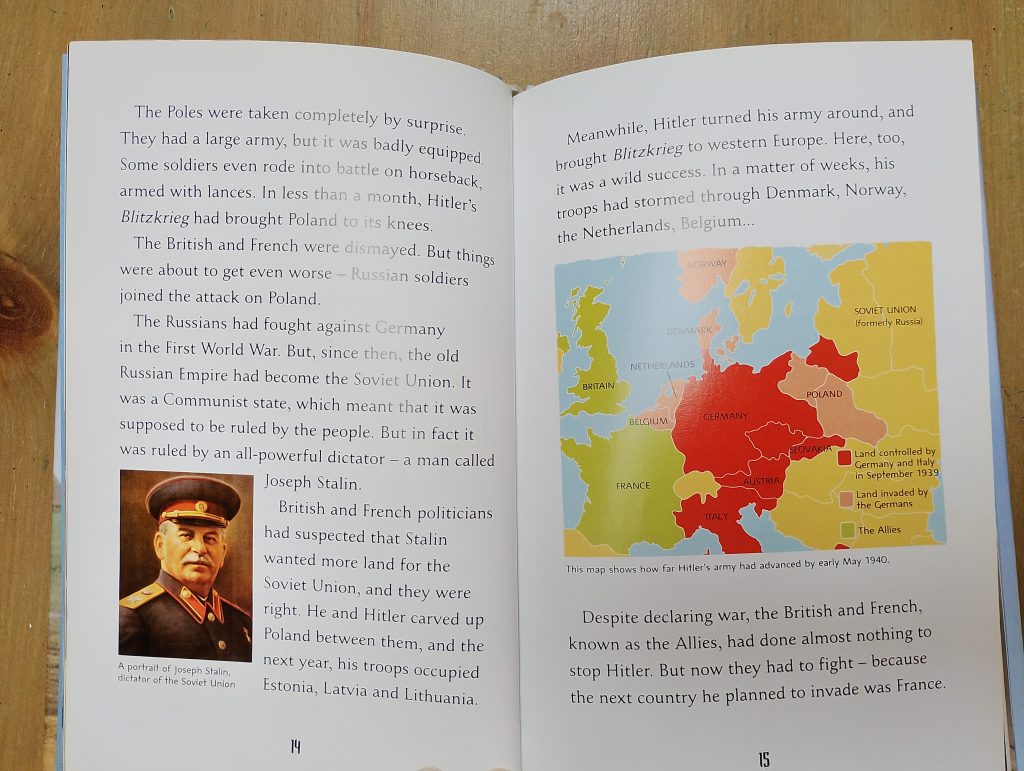
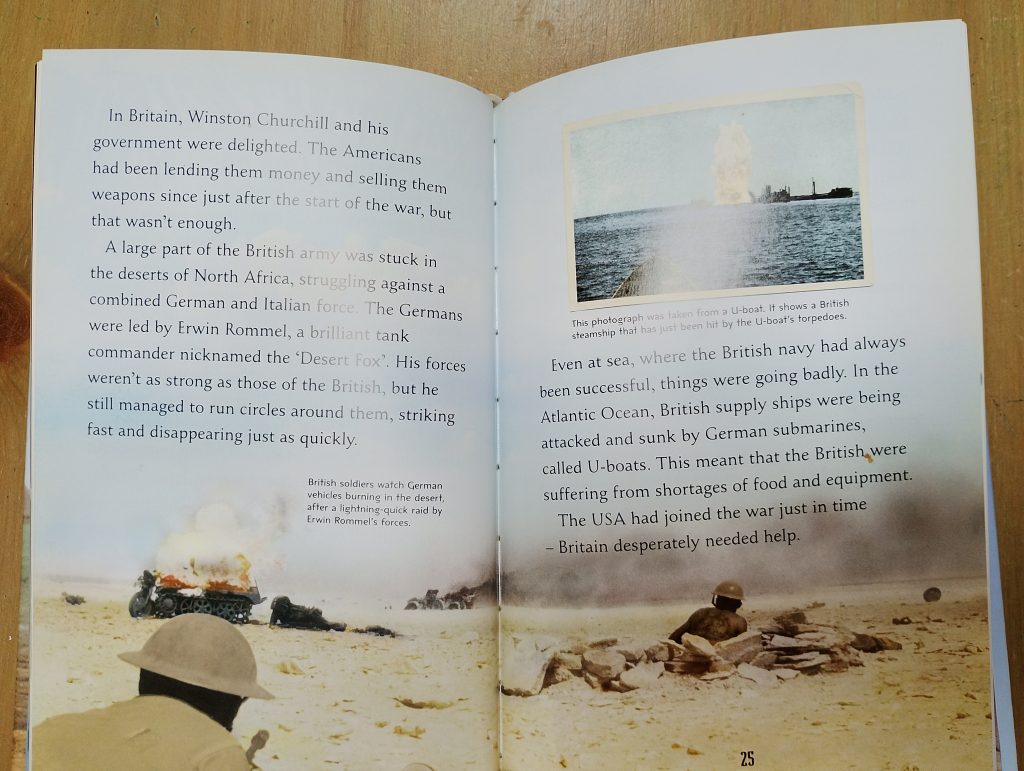
The Second World War (Usborne Young Reading)
Conrad Mason
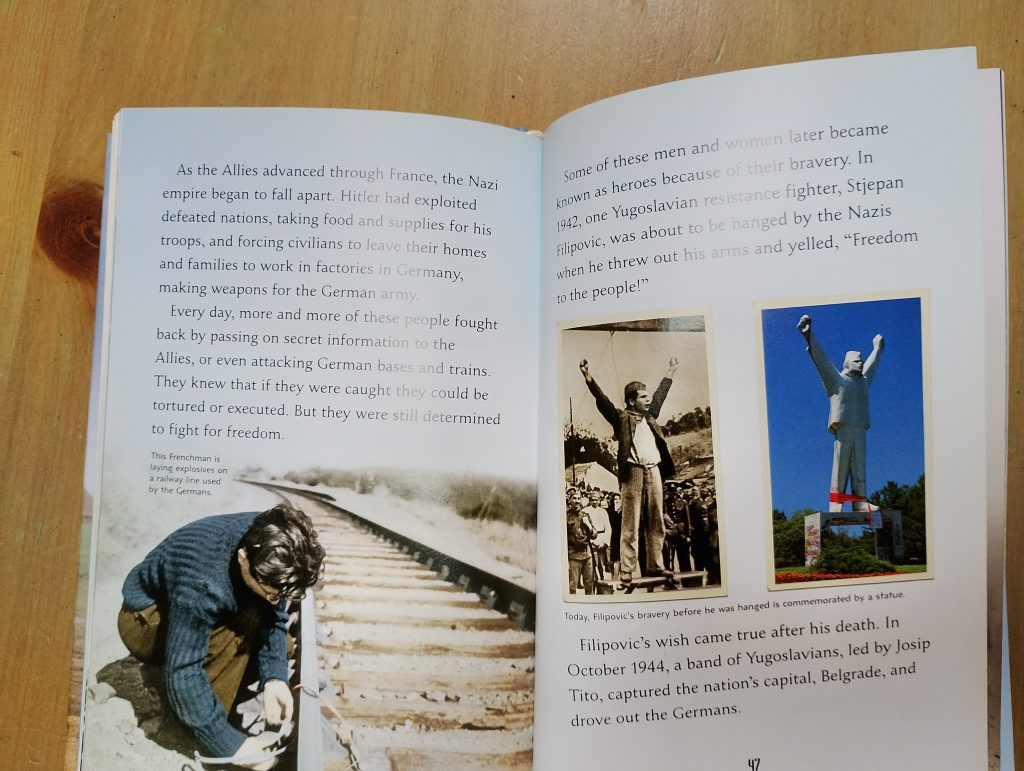
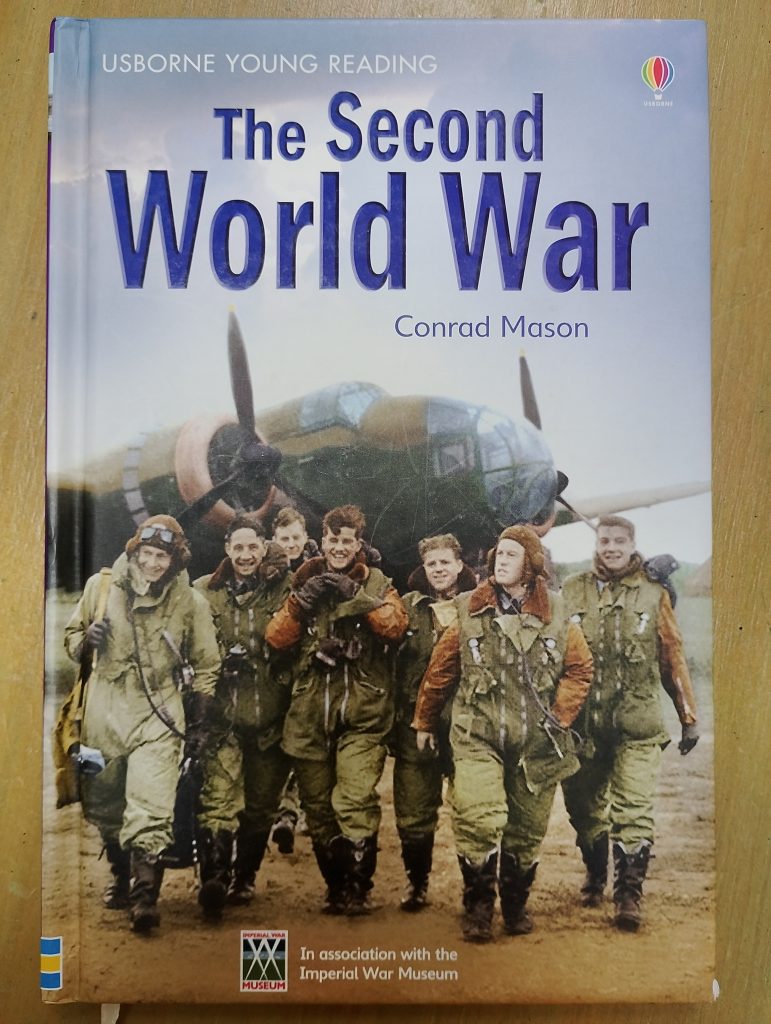
A simpler read, and suitable for children to read themselves, although the themes are such that I wouldn’t recommend it for very young children. It briefly covers topics such as the rise of Hitler, Blitzkrieg, Pearl Harbour and the Pacific, and D-Day. There is a short section on the Holocaust, including a large picture of German civilians being supervised digging graves for murdered Jews. The Allied soldiers had forced them to view conditions in the camps.
World War II (DK Eyewitness)
Simon Adams
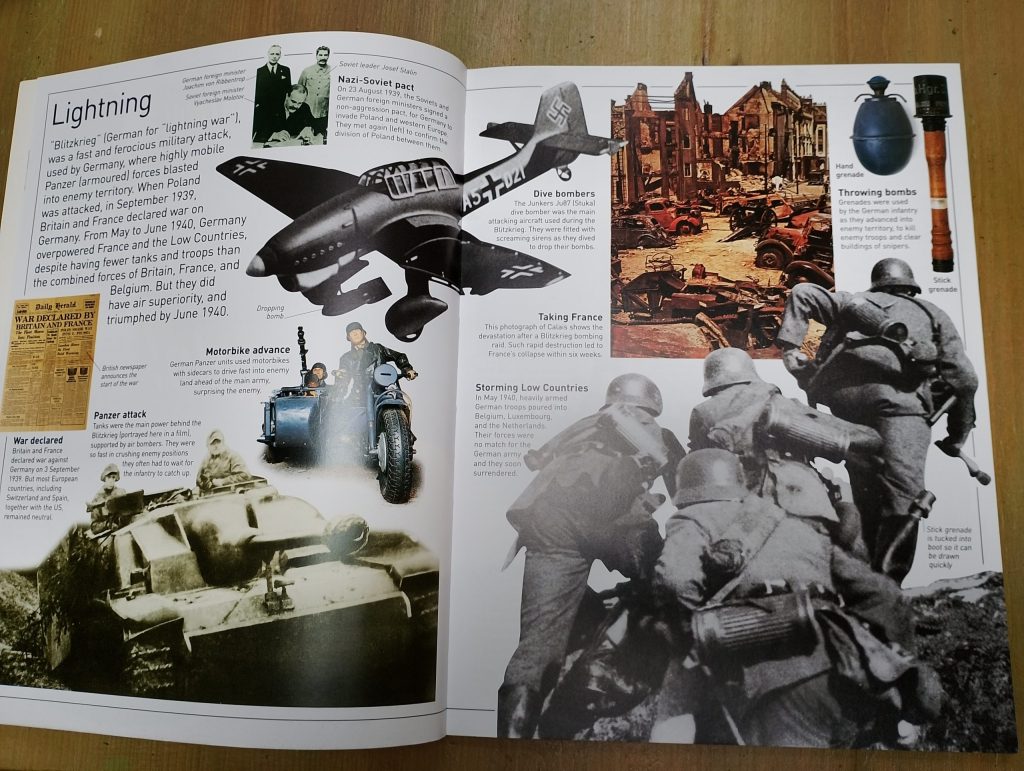
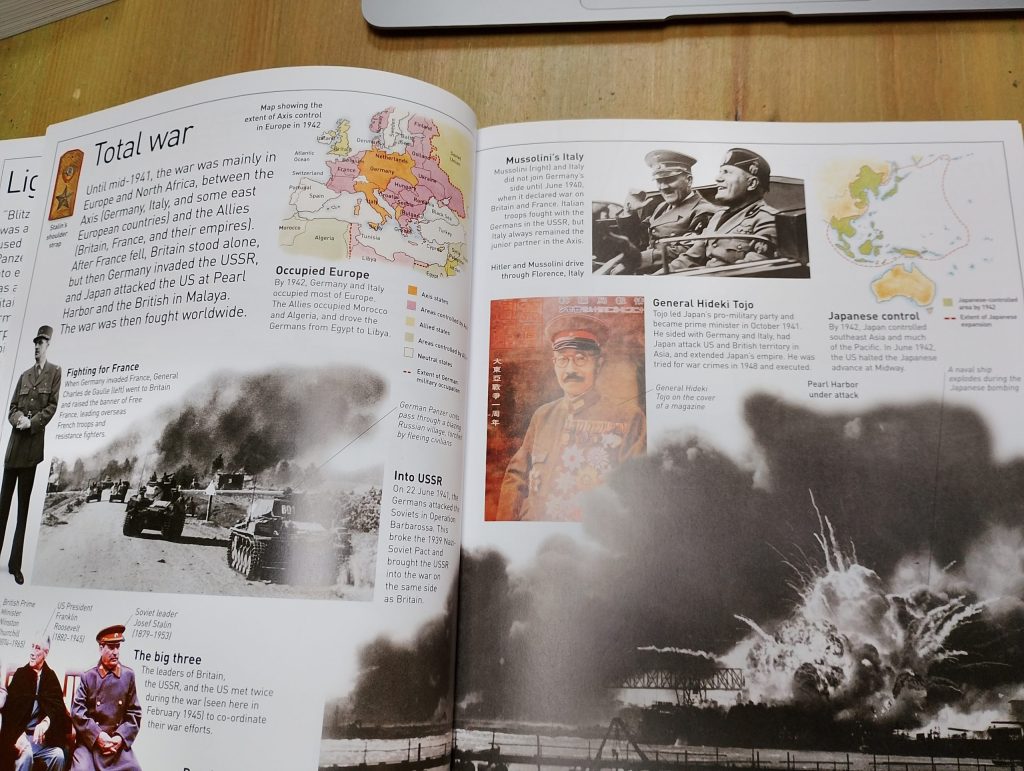
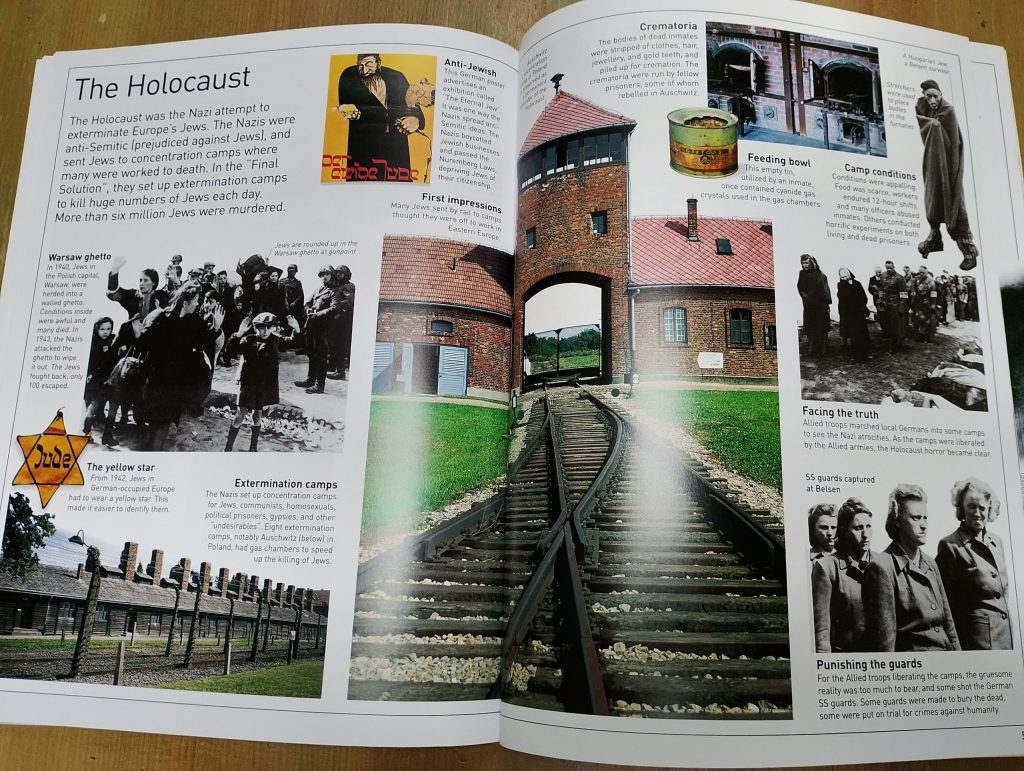
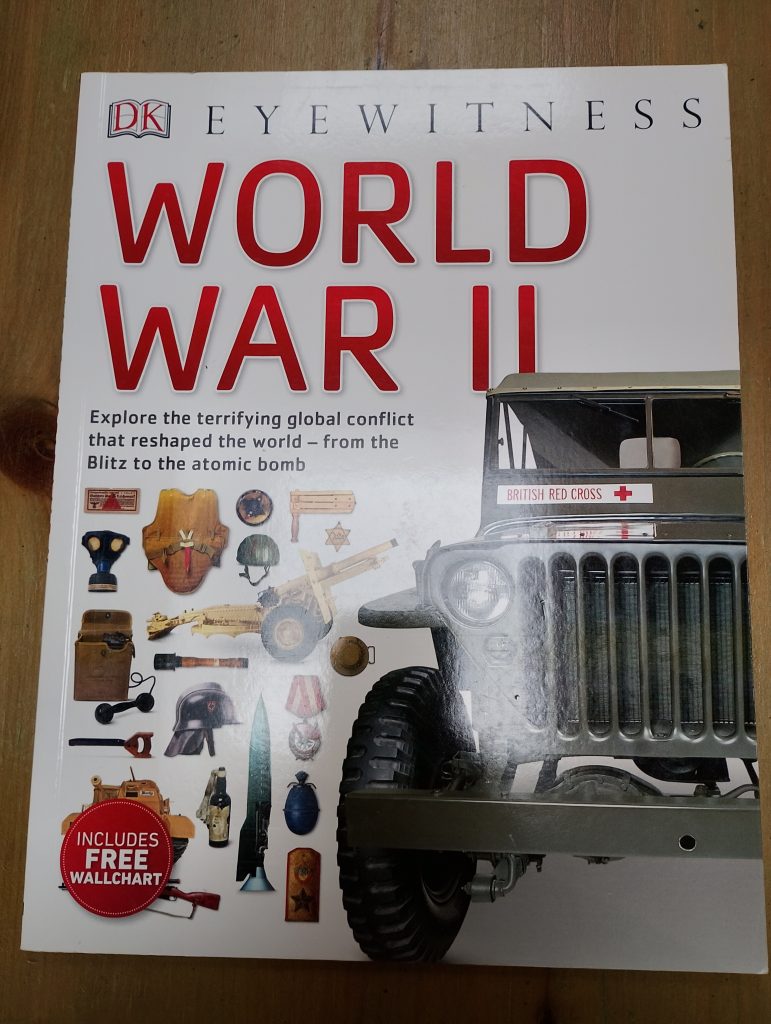
A typical Eyewitness book, with lots of photographs and small text boxes on a variety of themes. This could be a good introductory book. It does mention the large numbers of deaths during the war at various points, but there is little by way of explicit detail, either in text or photograph.
The Home Front
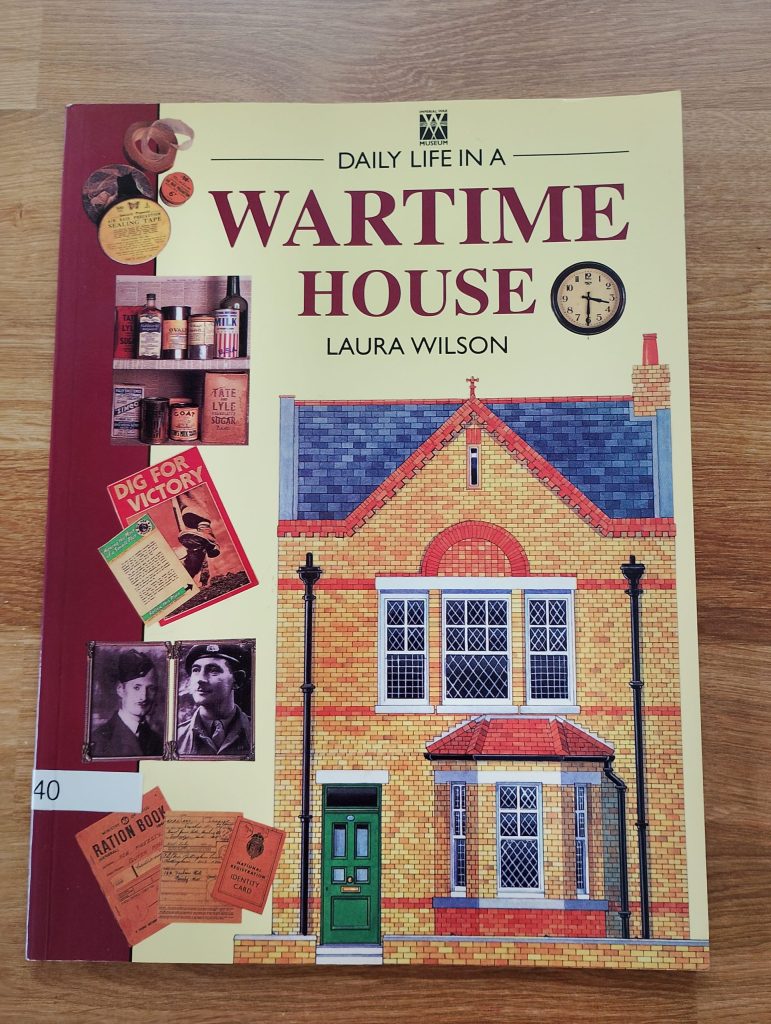
Daily Life in a Wartime House
Laura Wilson
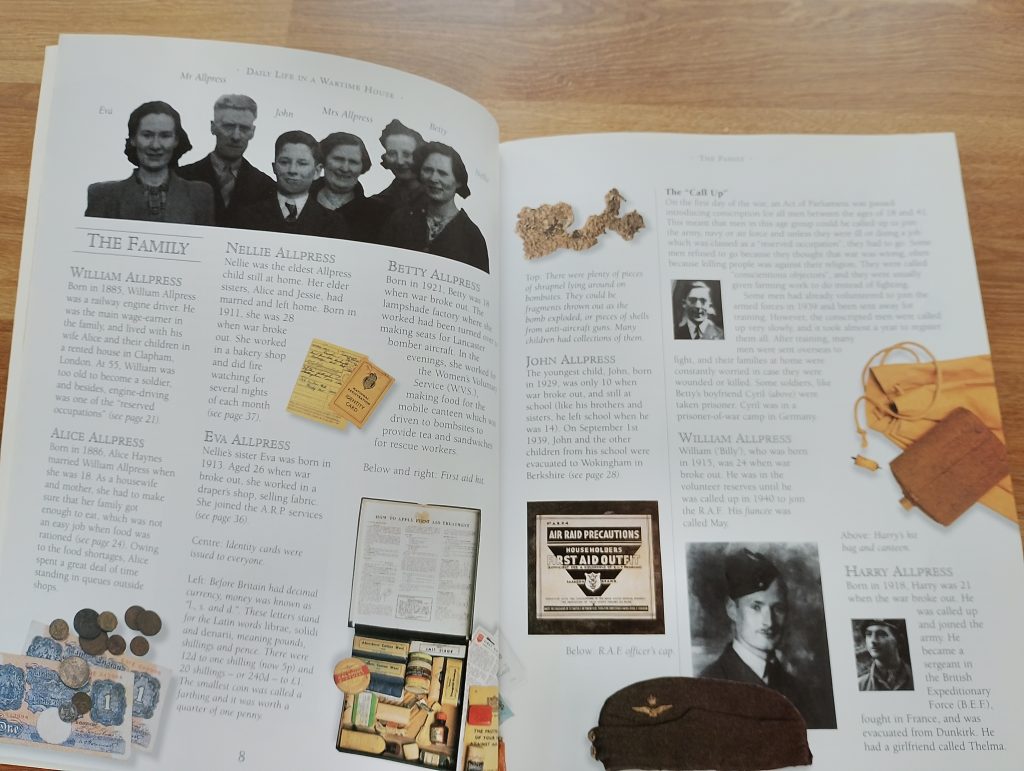
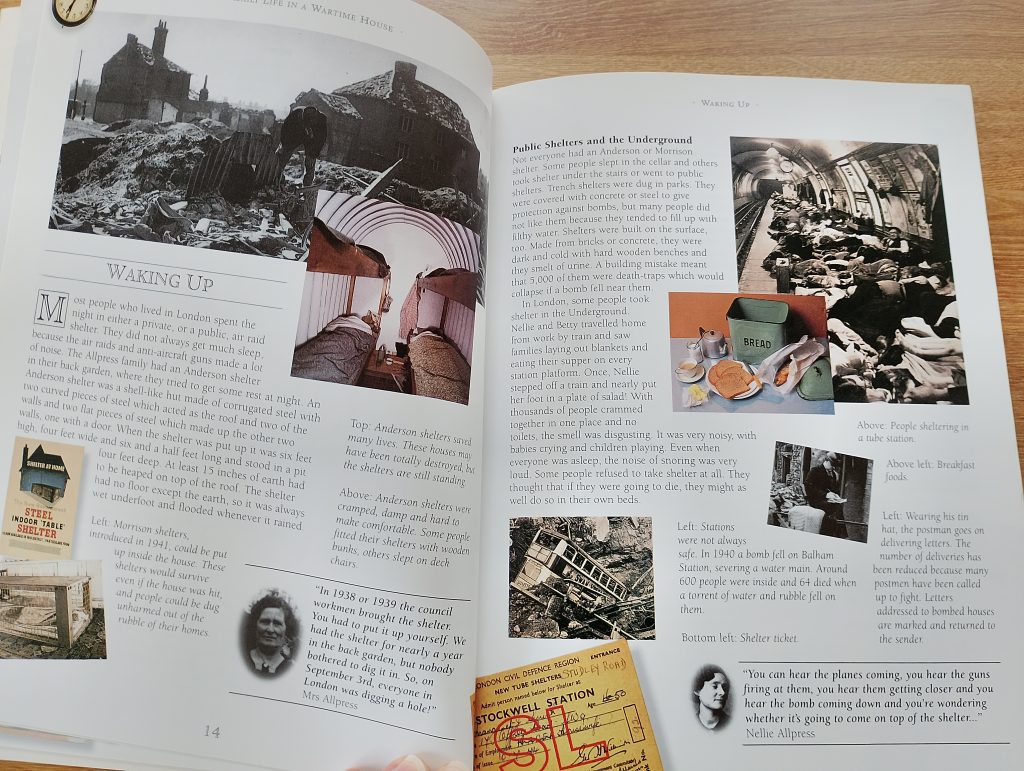
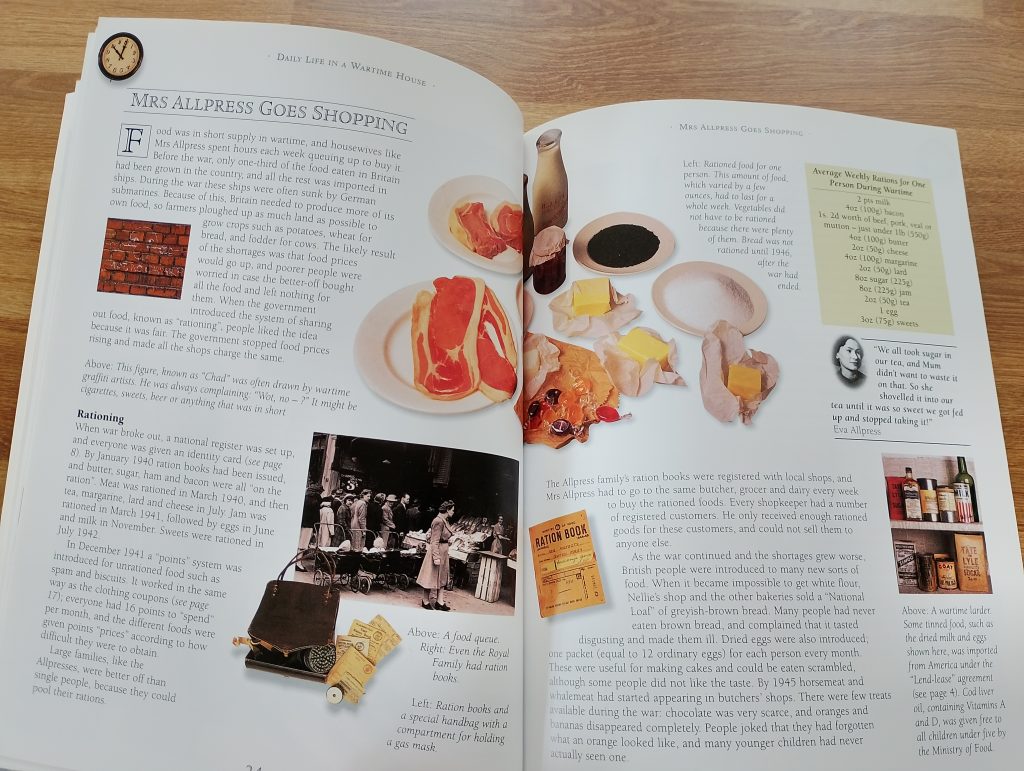
A favourite from my own childhood, this non-fiction book gives a good idea of what life was like for ordinary families in Britain during the Second World War. It is told from the perspective of a family (real or imaginary, I am not sure) called the Allpresses, and explains how different members of the family are impacted by wartime changes such as rationing, evacuation, air-raids and conscription. Lots of photographs of wartime objects, and wartime scenes such as families sleeping on underground platforms.
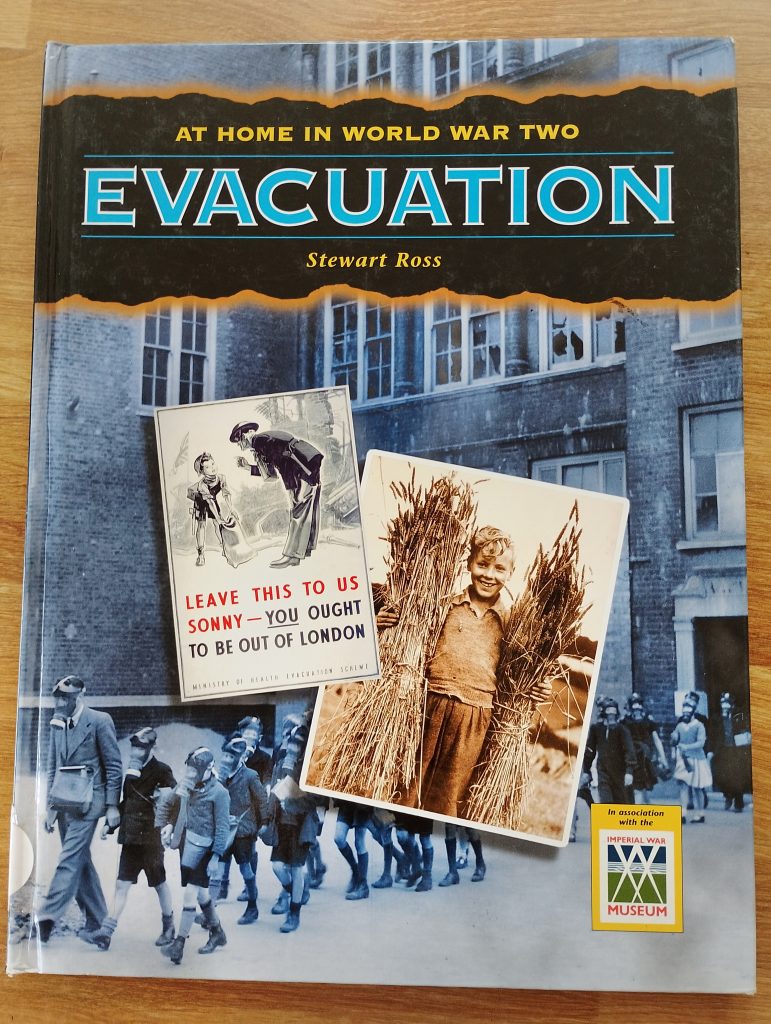
Evacuation (At Home in World War Two)
Stewart Ross
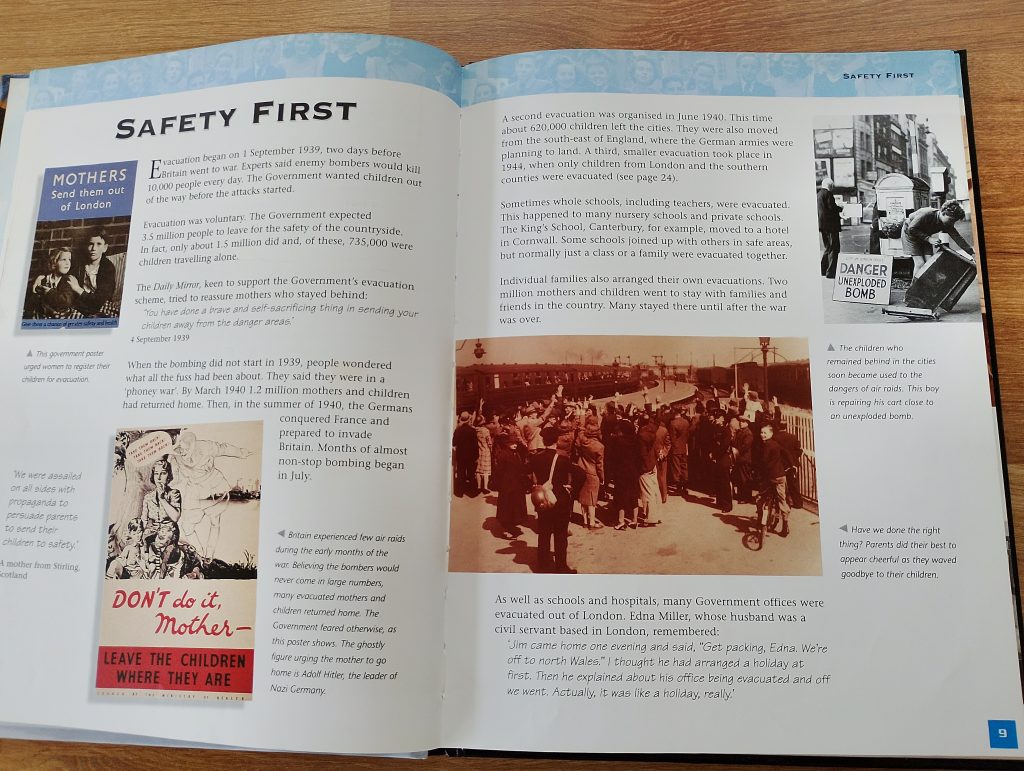
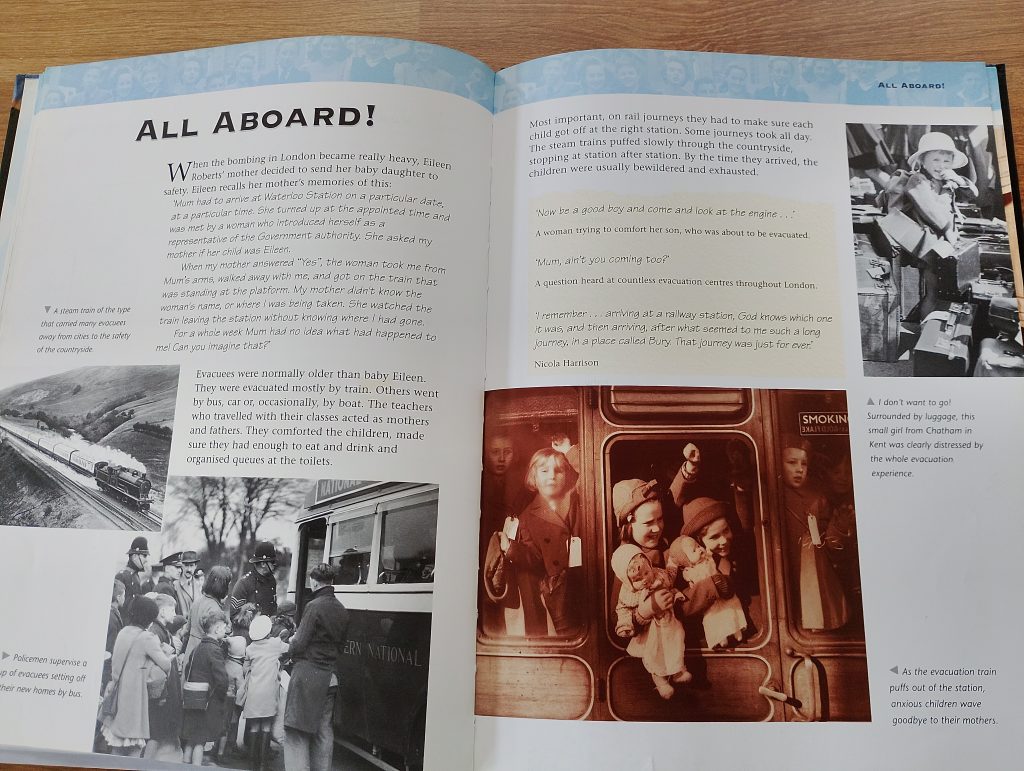
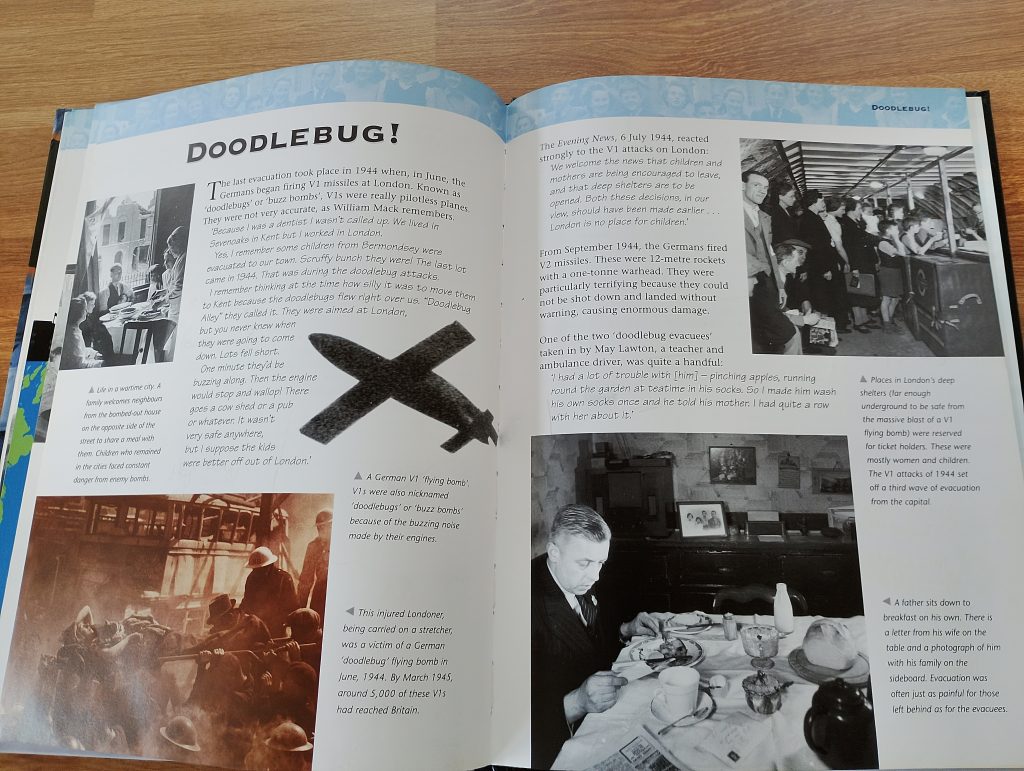
I stumbled across this series of older non-fiction and have been very impressed by them. We have used two of the books as read-alouds in our history lessons covering the Home Front, and my children have been very engaged, with lots of questions and thoughts about what life was like for families during the war. There are plenty of original photographs, and quotes from children and parents who experienced evacuation.
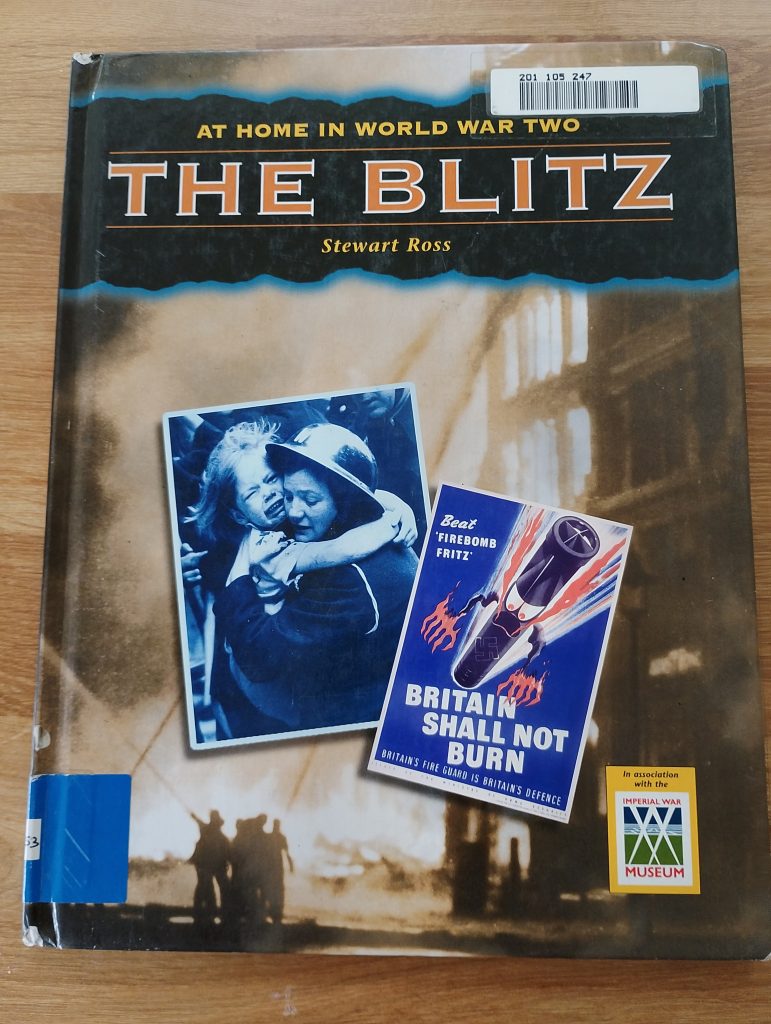
The Blitz (At Home in World War Two)
Stewart Ross
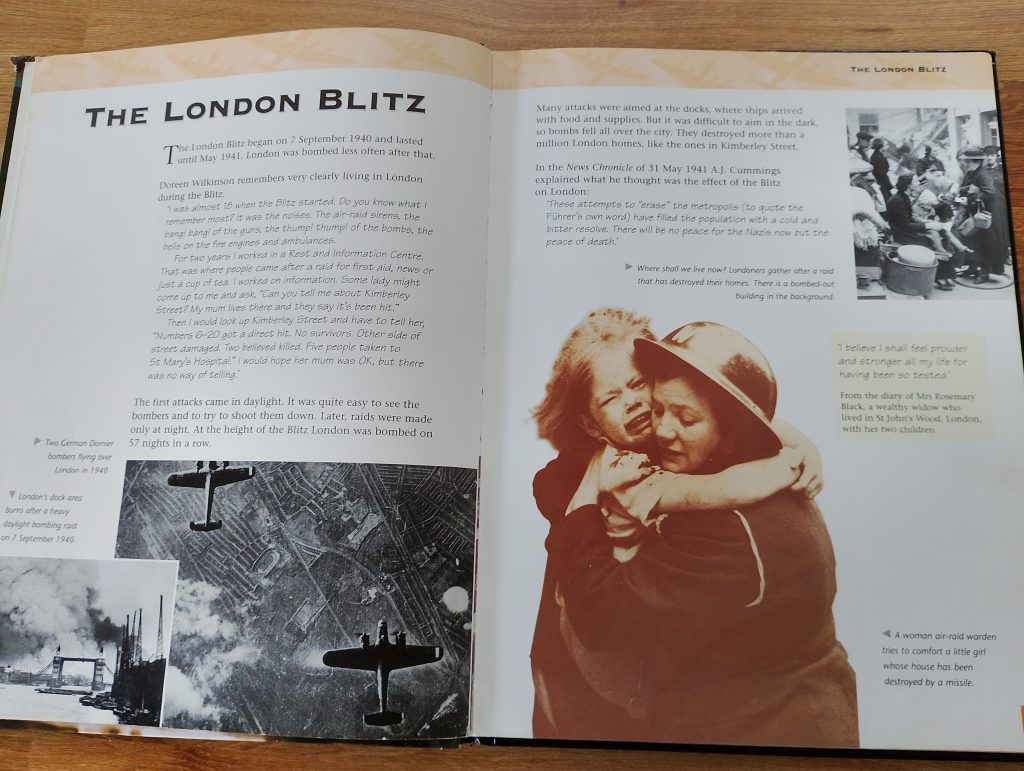
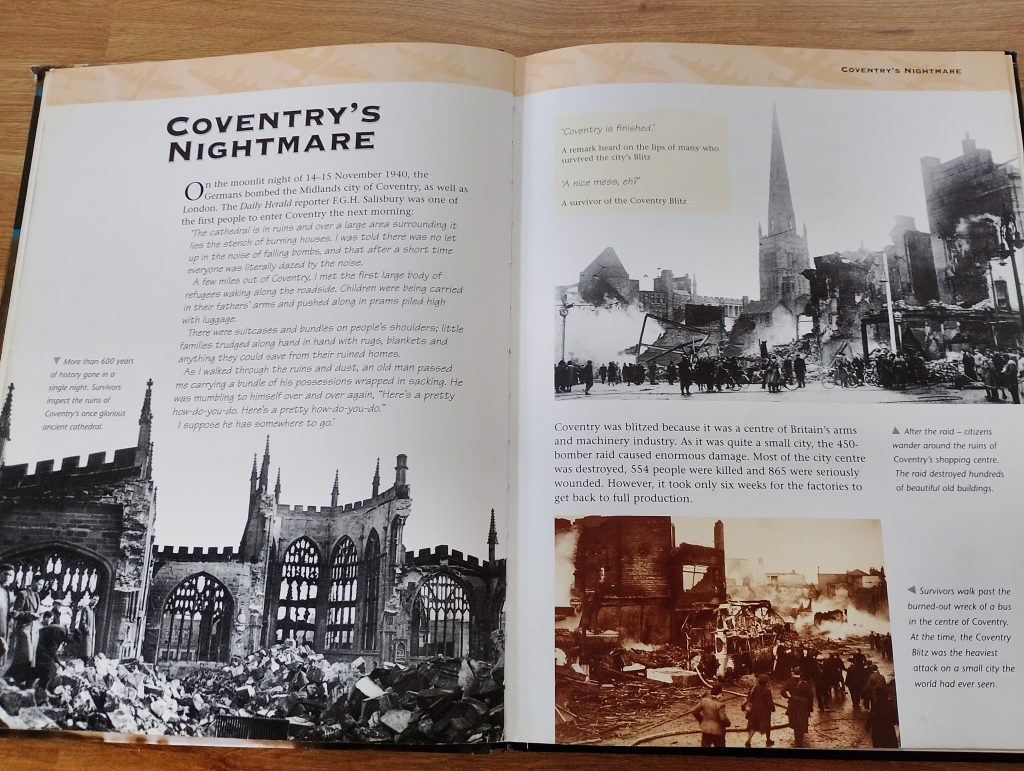
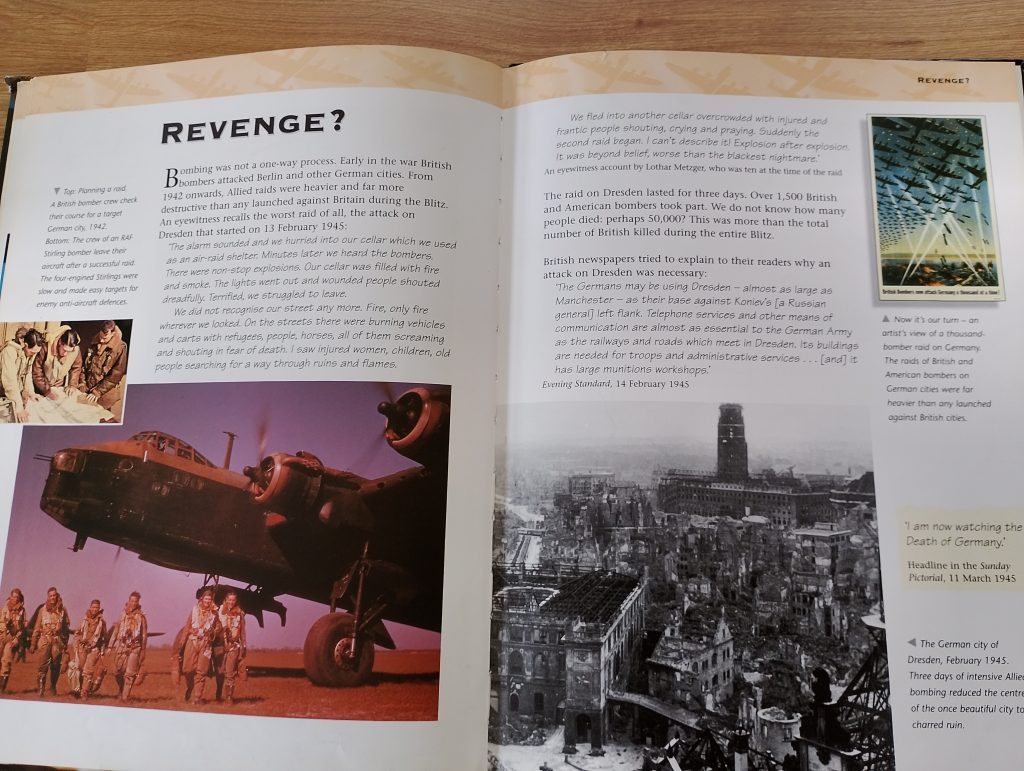
Another great book in this non-fiction series by Stewart Ross. My children were very engaged by this book, which explains what life was like in London and other British cities during the Blitz, with many original photographs. There is also an acknowledgement of our bombing of Dresden towards the end of the war, and the USA’s bombing of Hiroshima and Nagasaki. These pages sparked good discussion in our house about the ethics of war.
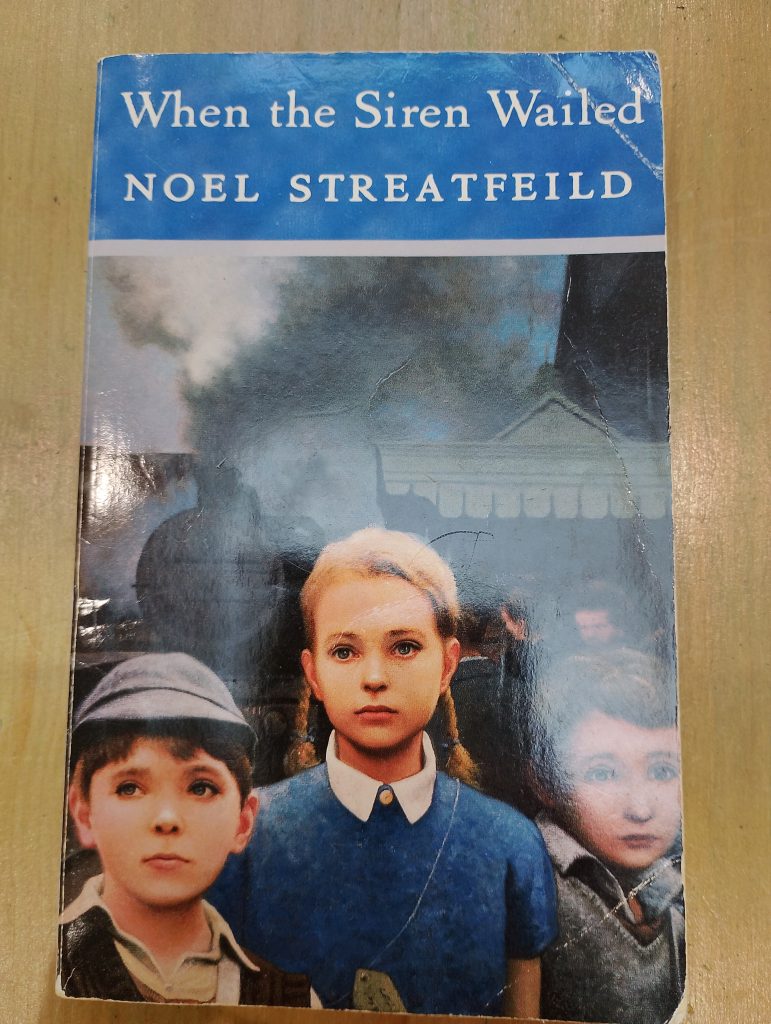
When the Siren Wailed
Noel Streatfeild
A historical fiction book about evacuation, giving insight into both life in the countryside, and also the children’s experiences when they return to London.
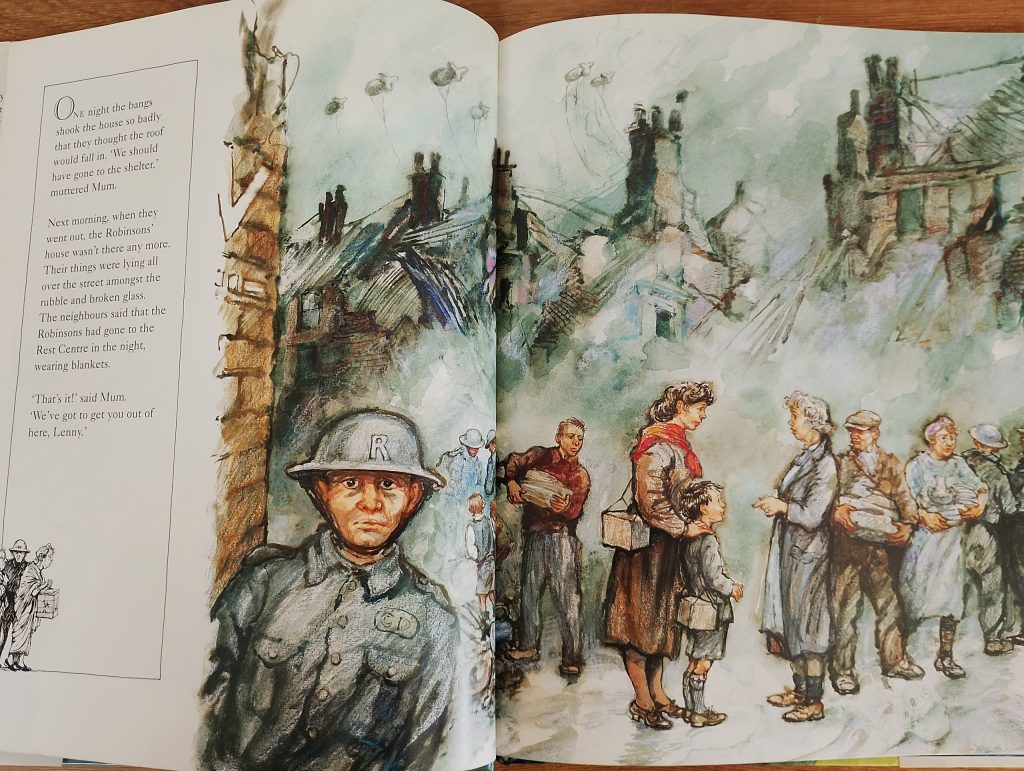
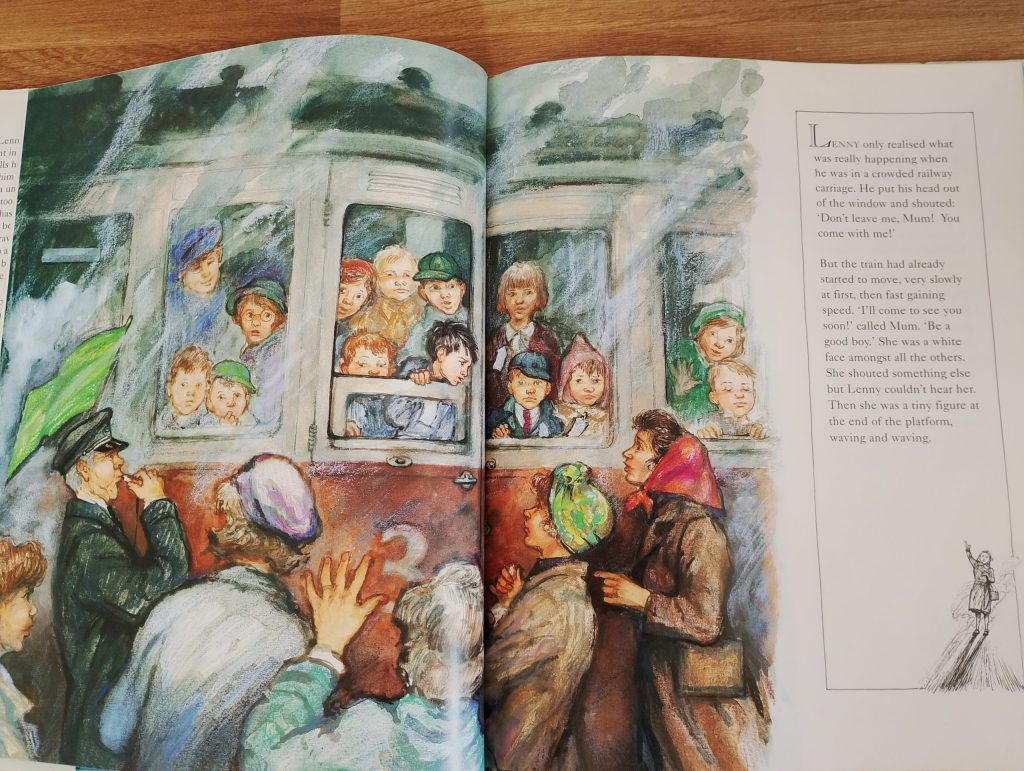
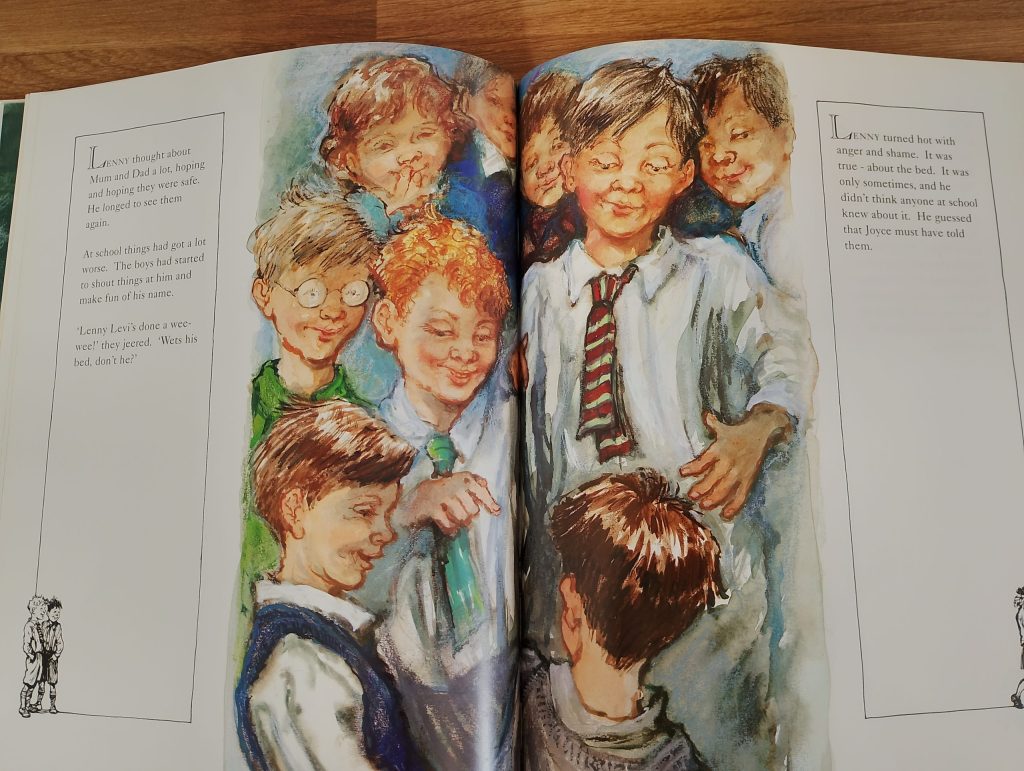
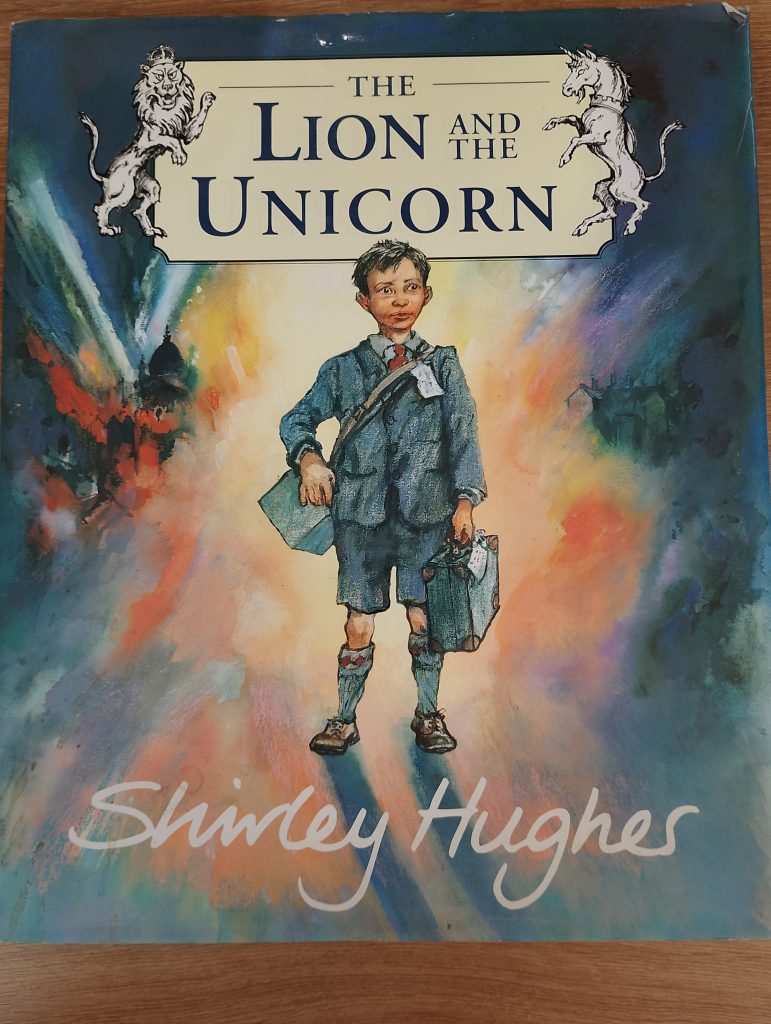
The Lion and the Unicorn
Shirley Hughes
This is a fictional picture book for younger children, about the experiences of a young boy evacuated from London at the start of the Second World War. It was written by the author of the Alfie story books (firm favourites around here!), although I would say this is pitched a few years older. A good book for helping children to think about what the experience of evacuation was like. There are some slightly harder themes to be aware of if you are using this book with young children. The protagonist meets an amputee soldier, experiences some issues with bullying, and struggles with bedwetting.
Life under the Nazis
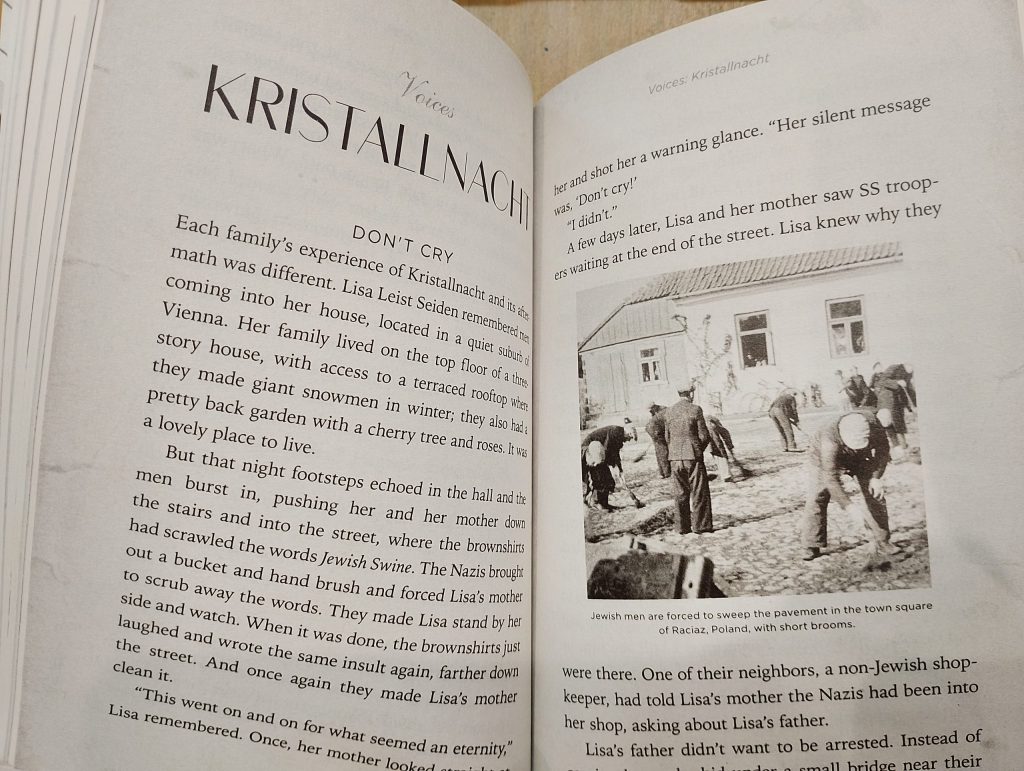
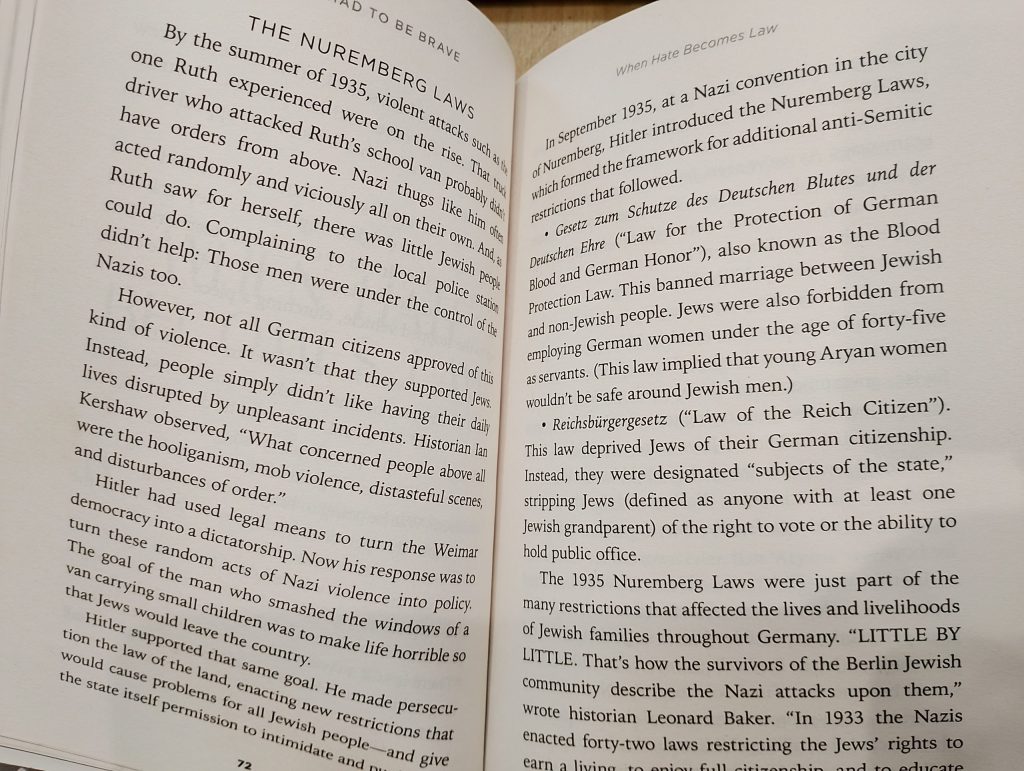
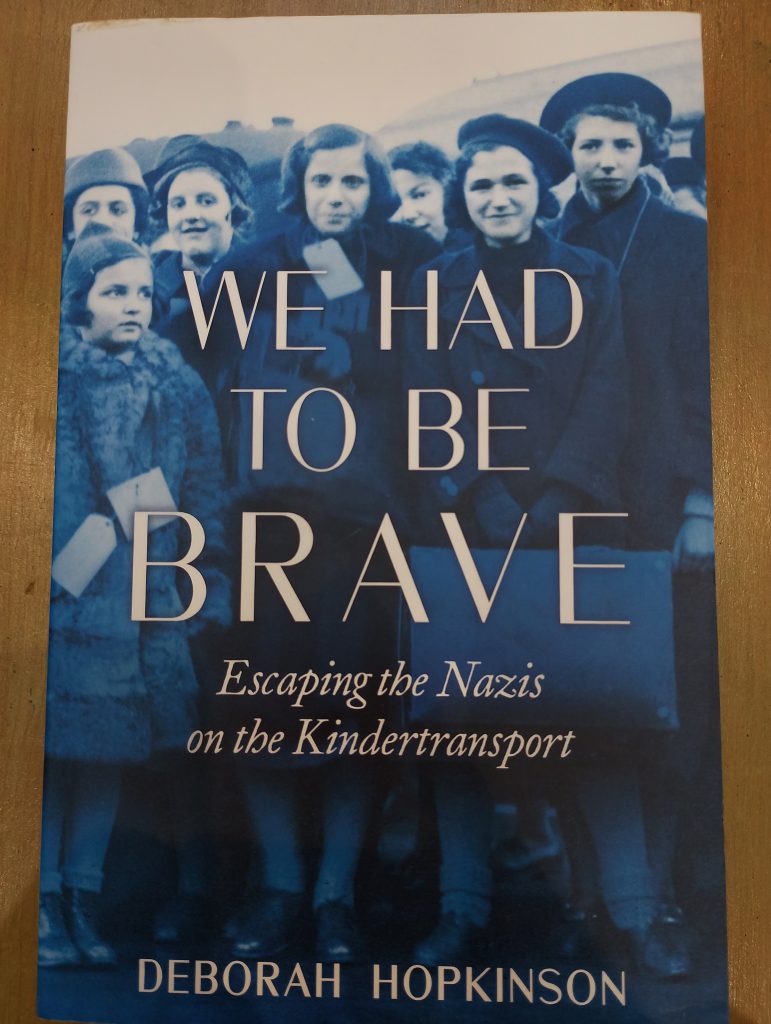
We Had to Be Brave: Escaping the Nazis on the Kindertransport
Deborah Hopkinson
This book explores the experiences of Jewish Germans in the years running up to the Second World War, including Kristallnacht, and the Kindertransport effort to rescue children and take them out of Germany to safe countries. It is quite a long book, but sensitively written, and with a number of interesting black-and-white photographs.
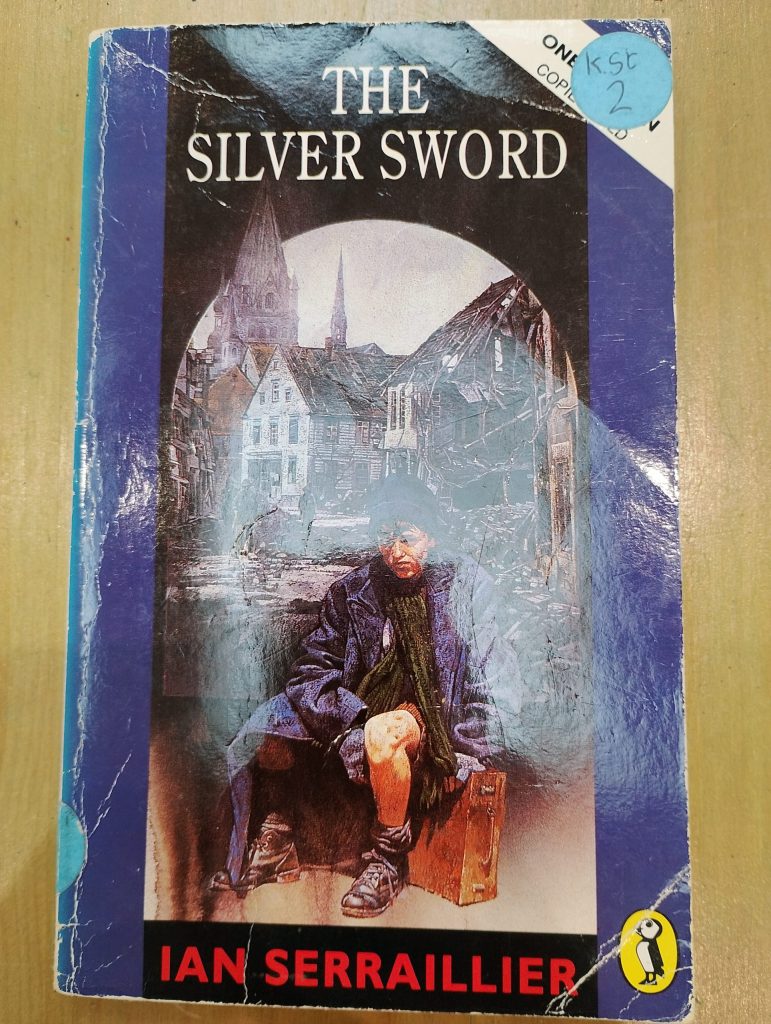
The Silver Sword
Ian Serraillier
Historical fiction about Polish children trying to survive in difficult circumstances during the Second World War. They become separated from their parents and attempt to escape to Switzerland.
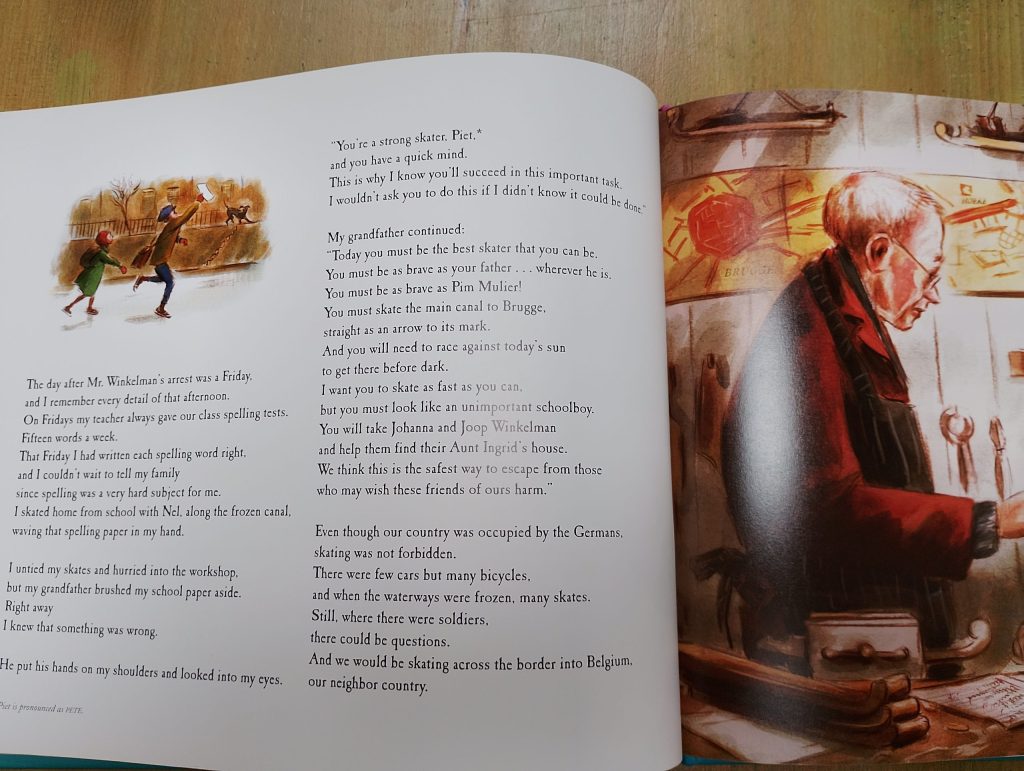
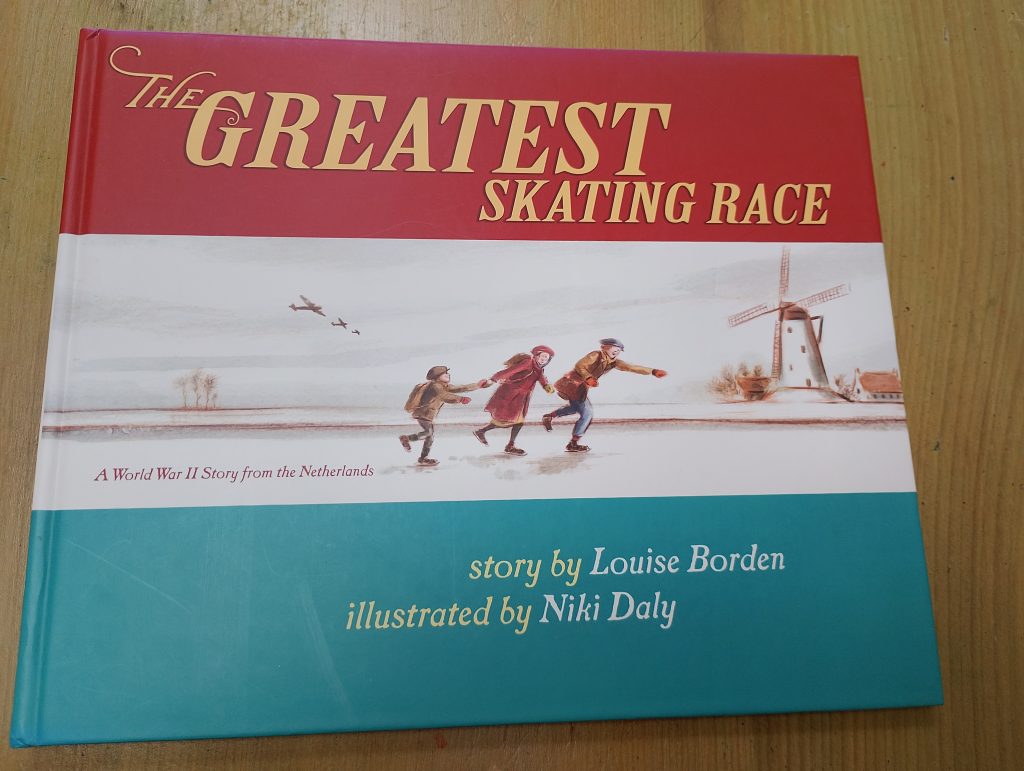
The Greatest Skating Race
Louise Bordern
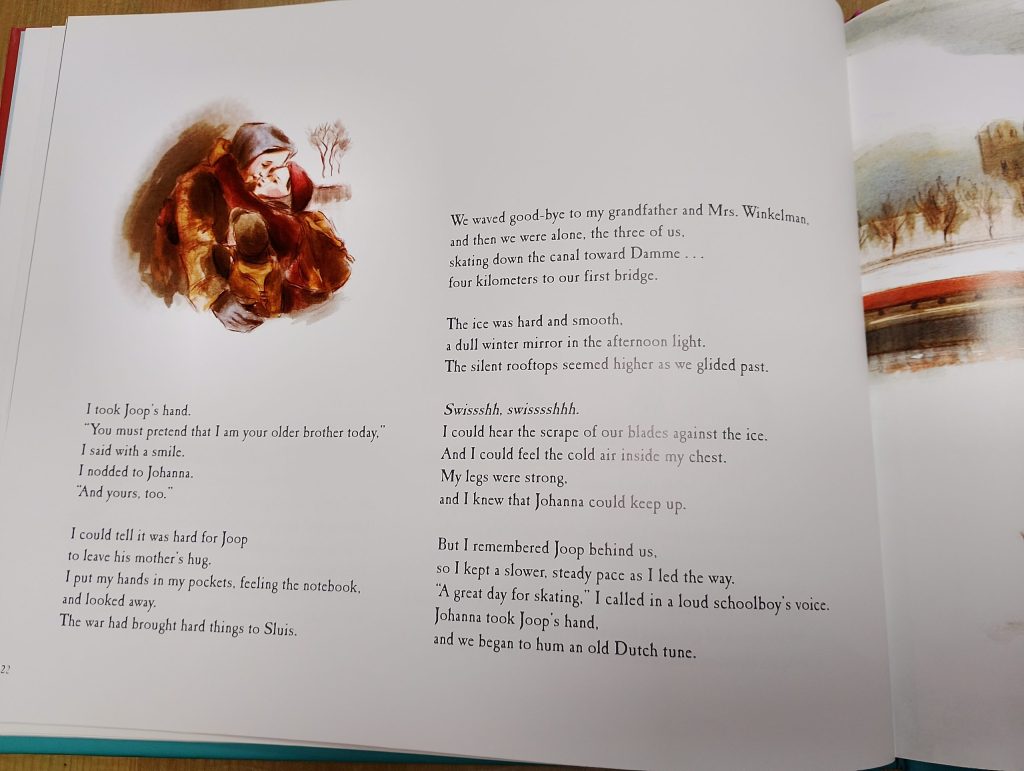
A fictional account of Dutch children living under German occupation. The father of some of the children is arrested for using a radio to contact England, and it is decided to move the children to an aunt in Belgium, by skating along the canals. The story is a gentle one, and beautifully illustrated. I think this is a good choice for introducing younger children to the idea of what it might be like to live under enemy occupation, without too much explicit detail. There is a picture of the father being led away at gunpoint with his hands up, and a page where German sentries accuse the children of being spies and fire a warning shot into the air. These are the most scary moments in the book.
WW2 Naval History
The Little Ships
Louise Borden
This picture book tells the story of Dunkirk from the perspective of a girl who travelled across with the flotilla of ‘little ships’ to rescue men stranded on the beaches. The illustrations by Michael Foreman are beautiful. Neither the writing nor the illustrations is particularly gory. To give you an idea, I think this is the most explicit line in the book: ‘I couldn’t look for more than a second at a soldier who cried for me to give him water, who had no bandages, just blood all down his front’. A good choice for slightly younger children wanting to understand something about the events of WWII.
When using this as part of our history work, we drew a large map of northern France, Belgium, the Netherlands and the United Kingdom to help us understand what was happening.

A World War II Submarine
Richard Humble and Mark Bergin
This is part of the Spectacular Visual Guides series of information books. There are a couple of pages about the development of submarines, complete with diagrams of various subs. Then follows several pages of diagrams explaining all the details of the WWII submarine, and then a description of various aspects of life on board. The latter part of the book covers the battle of the Atlantic and U-Boat attacks. This is a great choice for children who enjoy understanding the nitty-gritty details about how something works, and are interested in submarines.


Exploring the Bismarck
Robert D. Ballard
A Time Quest book dealing with the search for, and exploration of, the wreck of the Bismarck. As with other Time Quest books, the details of the wreck exploration are interleaved with semi-fictional sections about life on board ship, covering events in the run up to the sinking. This is probably the bulk of the book, and I think is well done. There are lots of photographs and diagrams to aid understanding.
I think this is one of the better books in the series, and it has been greatly loved and re-read in our house. There are some good underwater photographs of the wreck, in which you can clearly see various shell holes. There is also less time spent on the process of submersible exploration than others in the series, which I think is a positive.
Content warning: there are some gory details about the sinking. E.g. there is both a photograph and text description of the recovery of survivors from the water by the British cruiser Dorsetshire. ‘One man whose arms had been blown off was trying to grab a line in his teeth’.


The Sinking of the Bismarck: The Deadly Hunt
William Shirer
I think that this is a republication of a Landmark youth history book. It is one for older children, being mostly text with a few photographs and diagrams (roughly 150 pages). The story is told fairly simply, but it is an exciting and compelling read, and will give the reader a good understanding of the events of this important Atlantic sea battle.

Dive! World War II Stories of Sailors and Submarines in the Pacific
Deborah Hopkinson
A well-thumbed book here! The book is comprised of lots of short stories, arranged chronologically. There are quite a number of black and white photographs, and some short timeline sections for each year of the war. Although this is a longer book (well over 300 pages), I think it is surprisingly easy to read, because the individual stories are short and exciting. You can pick it up and put it down without losing too much of the narrative thread.

From Pearl Harbour to Okinawa: The War in the Pacific 1941-1945
Bruce Bliven Jr.
A book in the Landmark youth history series. It isn’t specifically a naval history book, but the War in the Pacific included a lot of naval battles. This book is one for older children, with roughly 180 pages of fairly dense text, and a few maps. I think that the author, Bruce Bliven, does a good job of succinctly covering the events in this arena of war.
It took me a while to find a copy at a reasonable price, but it is worth looking out for. This, coupled with Dive! (Deborah Hopkinson) are the only children’s books I have been able to find about WWII in the Pacific.


D-Day Invasion
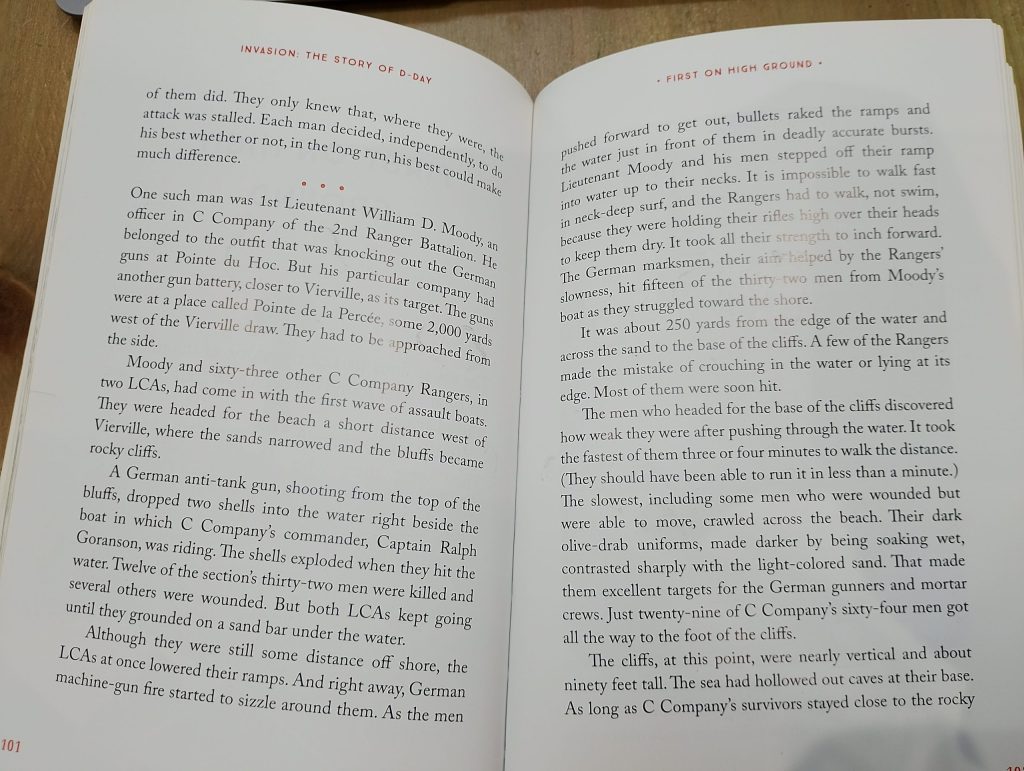
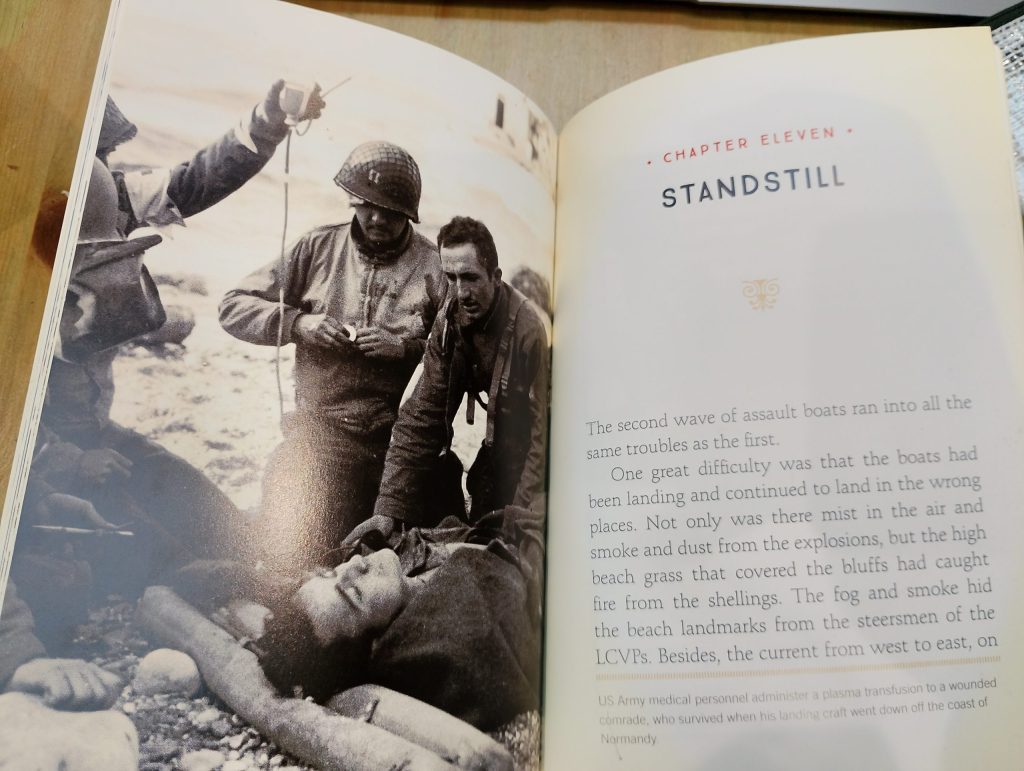
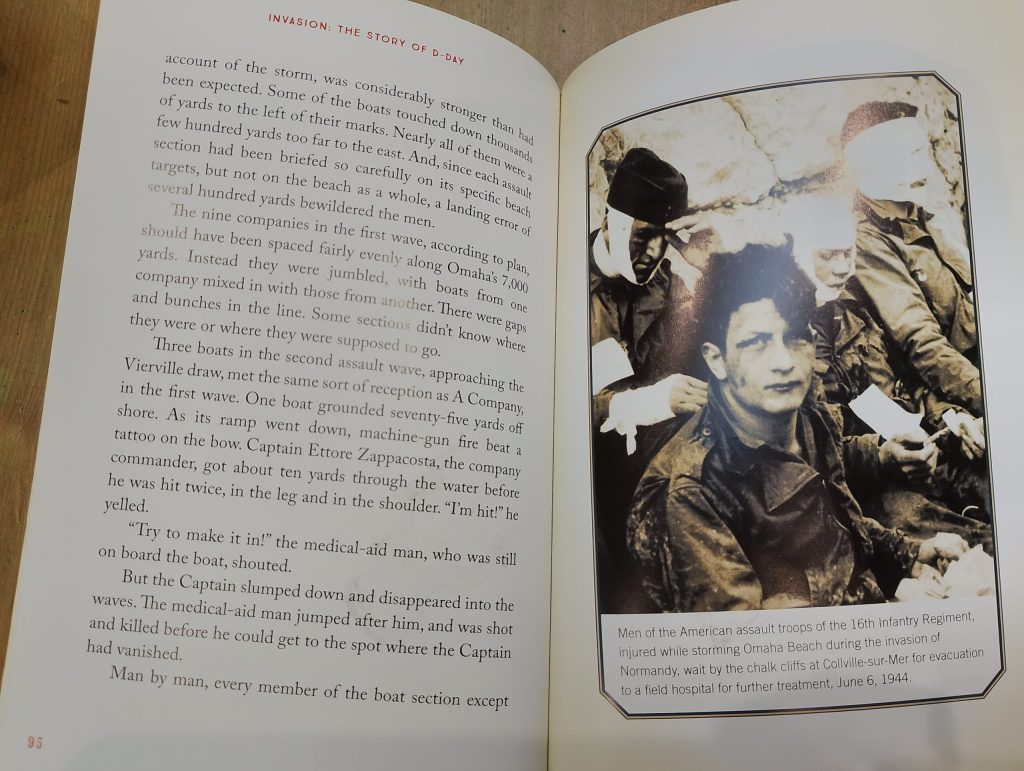
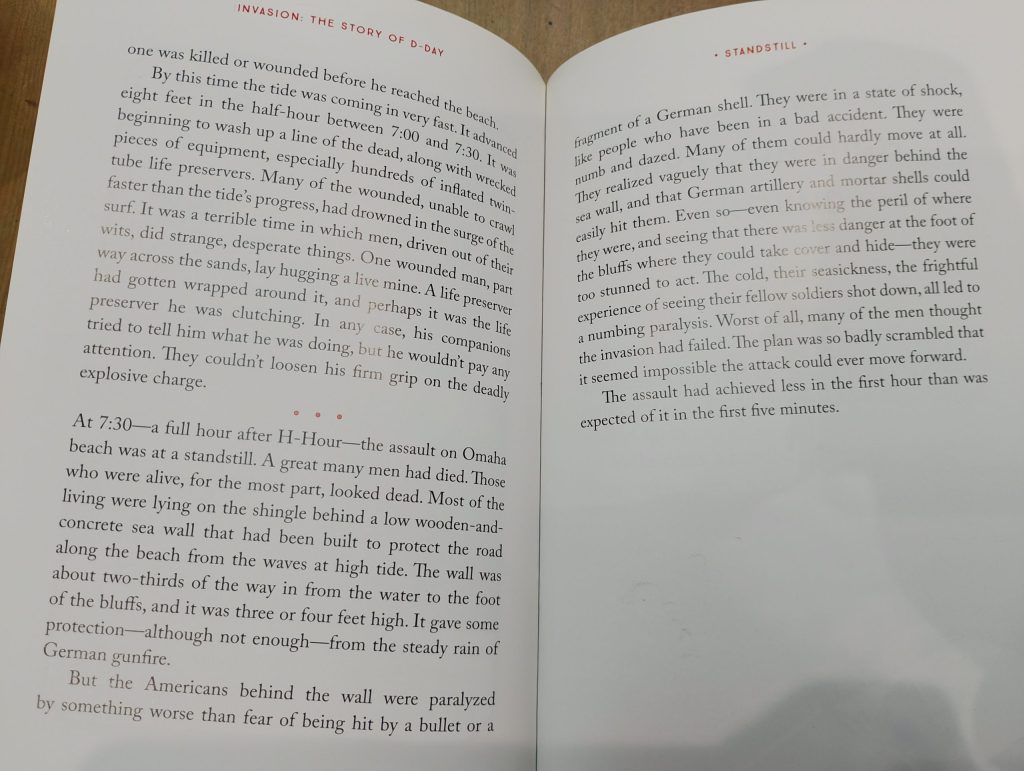
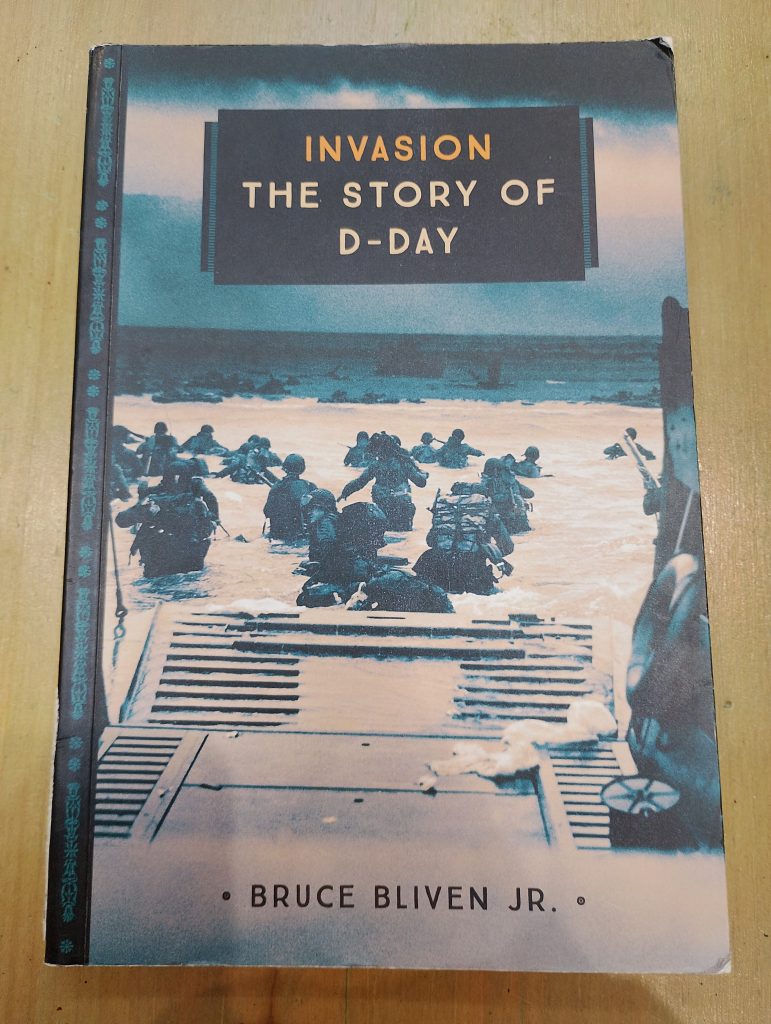
Invasion: The Story of D-Day
Bruce Bliven Jr.
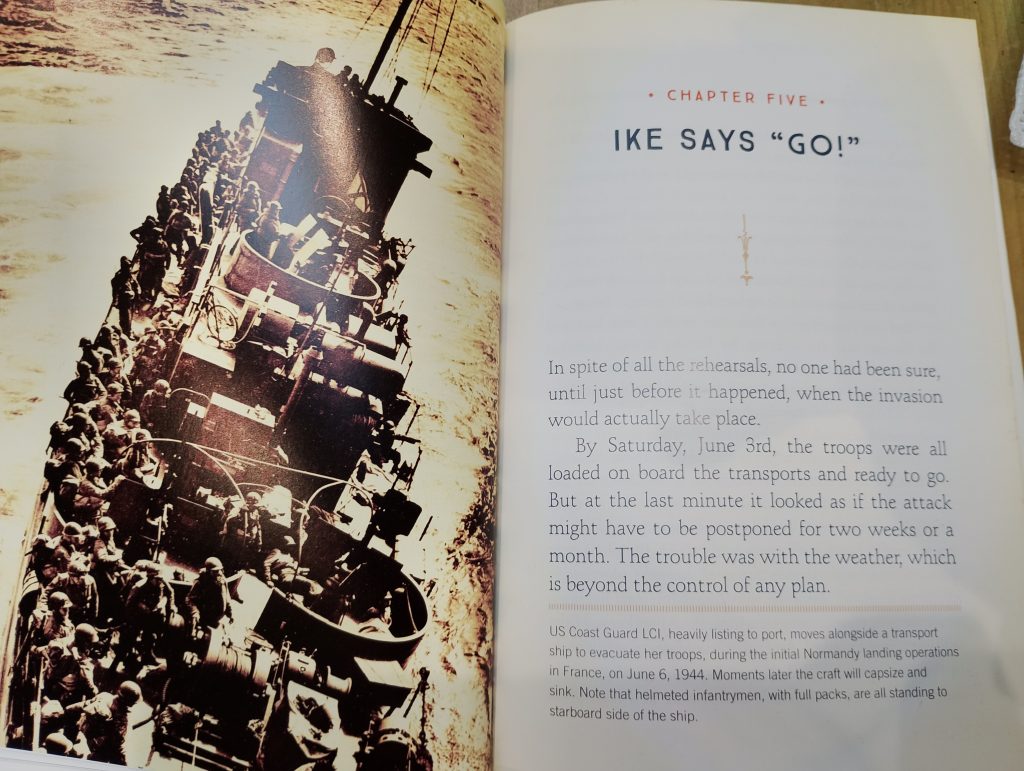
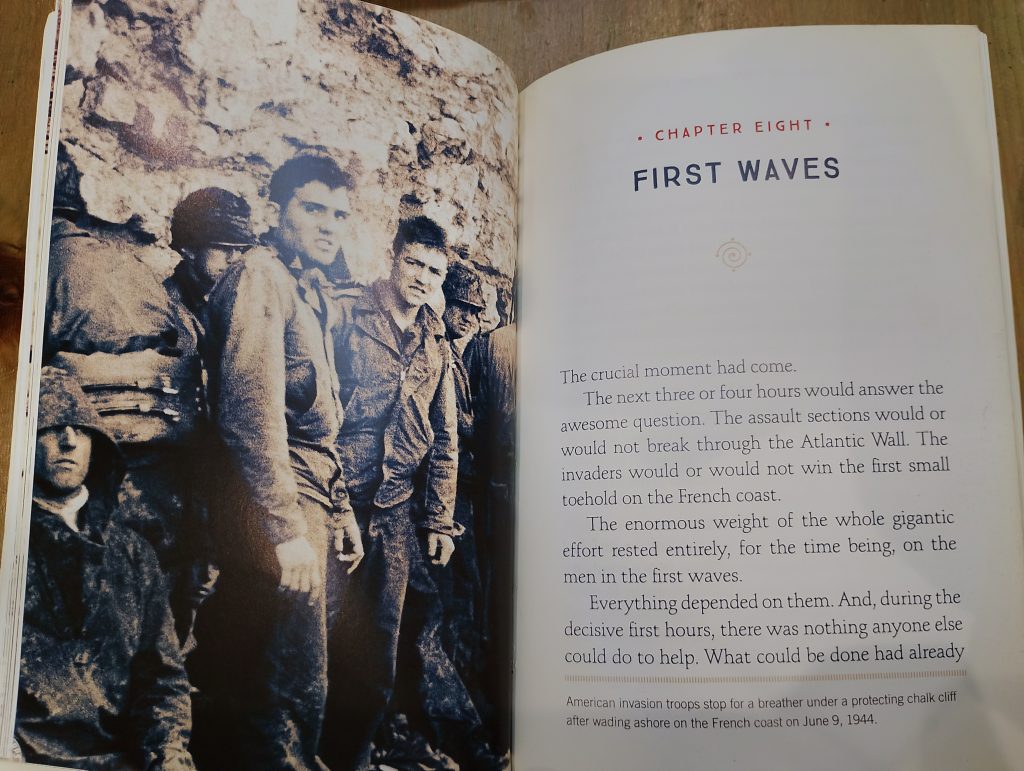
A highly recommended book on D-Day, by a man who was there on the day, as an American lieutenant. I believe this was originally published as part of the Landmark series, but our edition is a modern republication with lots of full-page photographs and information boxes.
The book is not long (c.160pp of good-sized print), and is a gripping read. There are descriptions of conflict which some children would find distressing. They are not gratuitously gory, but particularly on Omaha beach, conditions were very challenging. An excerpt of one of the hardest parts: ‘Many of the wounded, unable to crawl faster than the tide’s progress, had drowned in the surge of the surf. It was a terrible time in which men, driven out of their wits, did strange, desperate things. One wounded man, part way across the sands, lay hugging a live mine.’
Overall, this would be one of my top picks for children interested in D-Day.
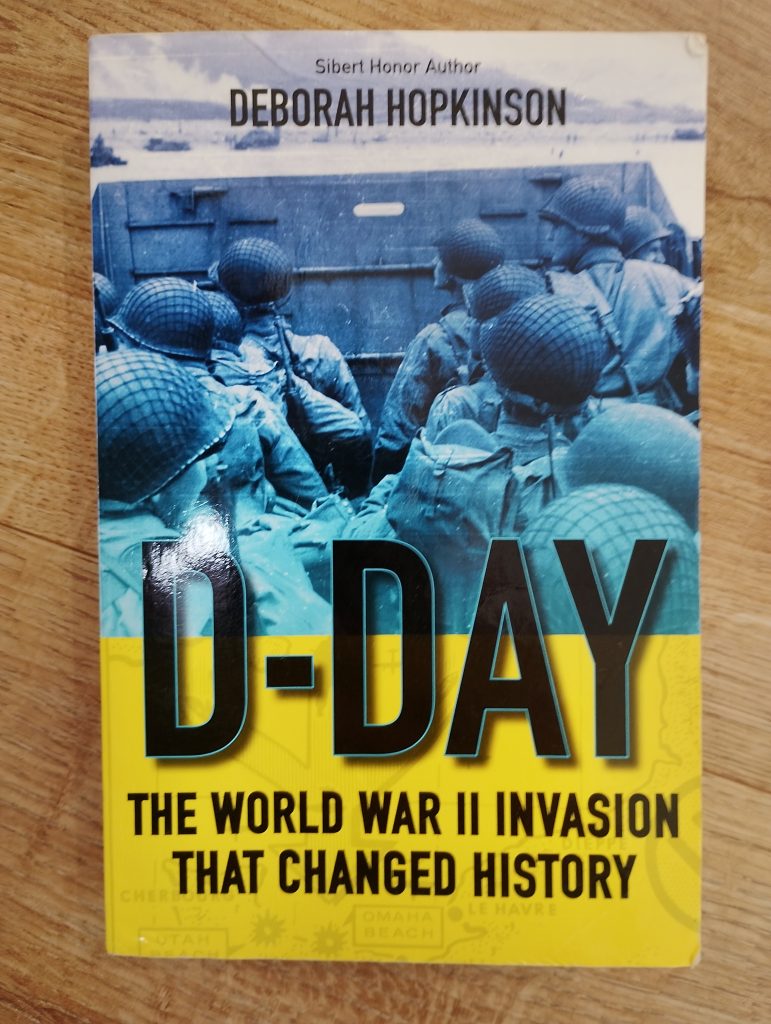
D-Day: The World War II Invasion that Changed History
Deborah Hopkinson
A longer book about D-Day, stretching to over 300 pages. The book is mostly text, but interspersed with quite a few black-and-white photographs, and short ‘dispatch’ sections highlighting particular themes such as the bocage (Normandy hedgerows) and the role of African-American soldiers.
Another excellent choice for an older child interested in the detail of the invasion.
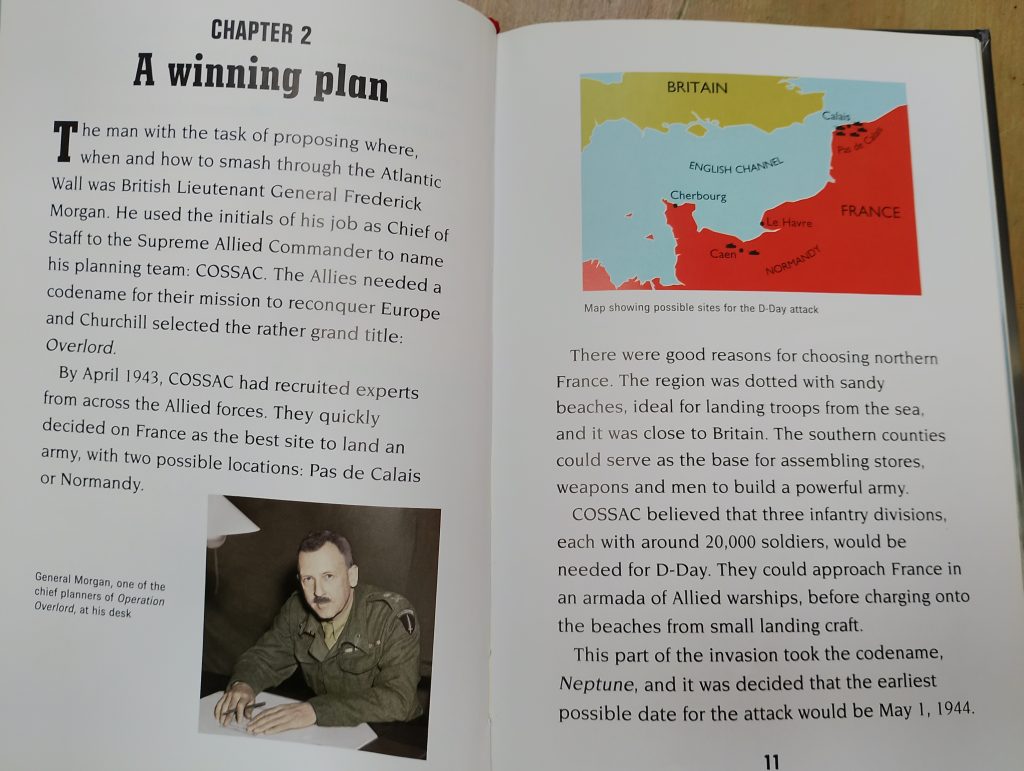
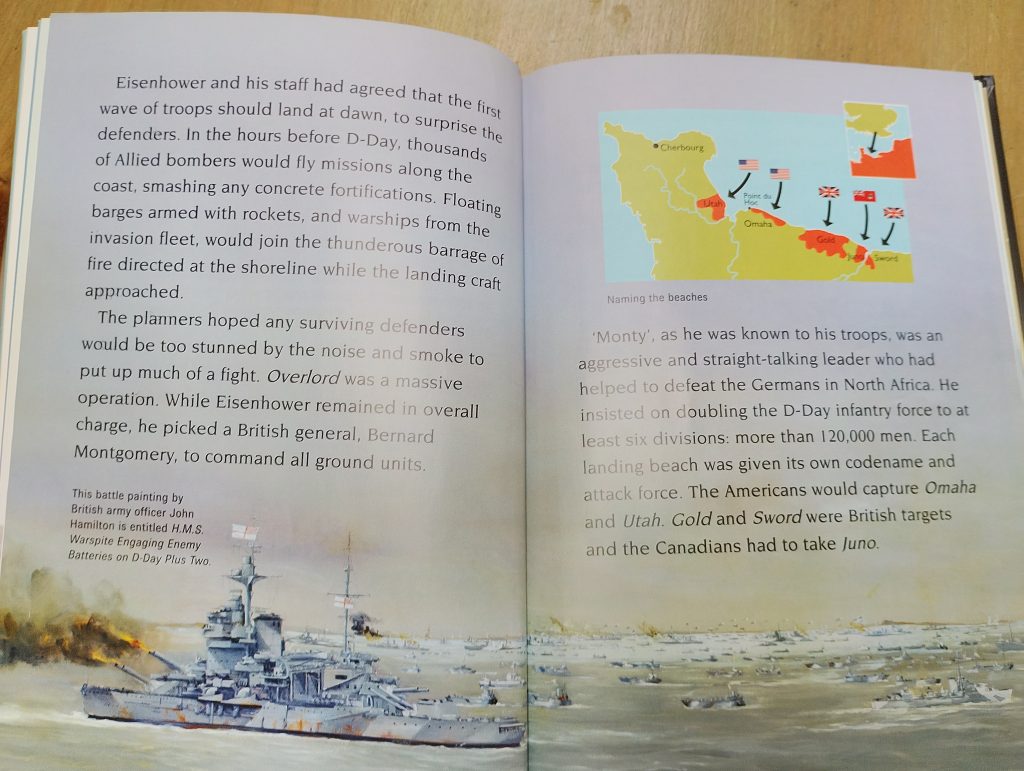
D-Day (Usborne Young Reading)
Henry Brook
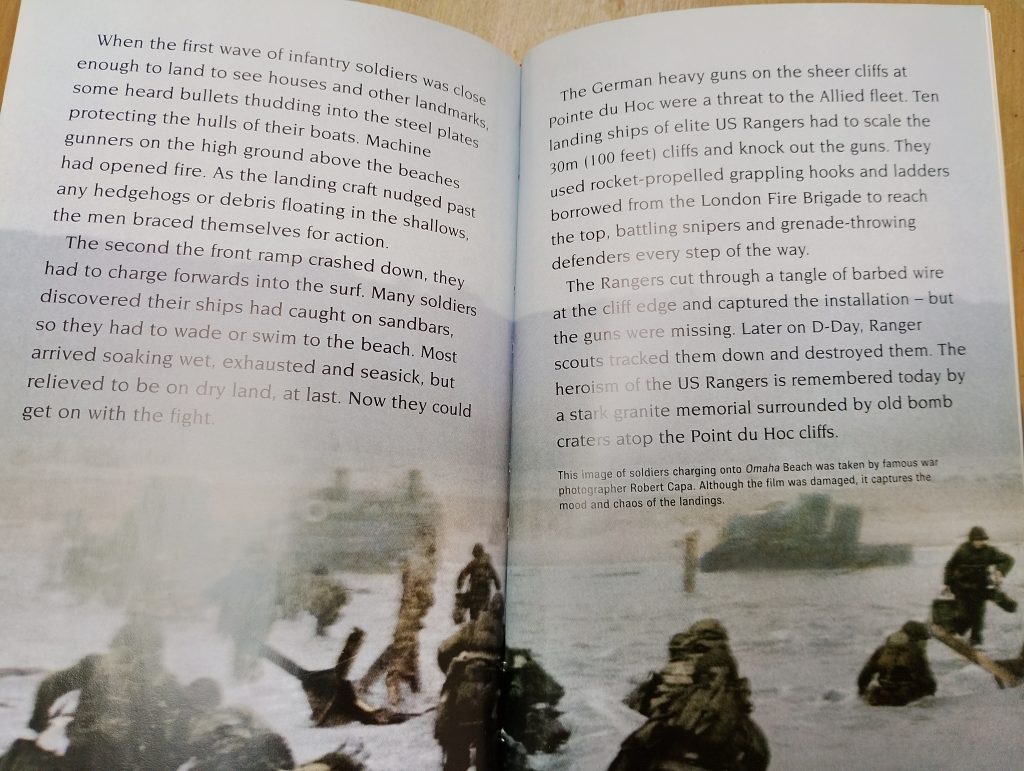
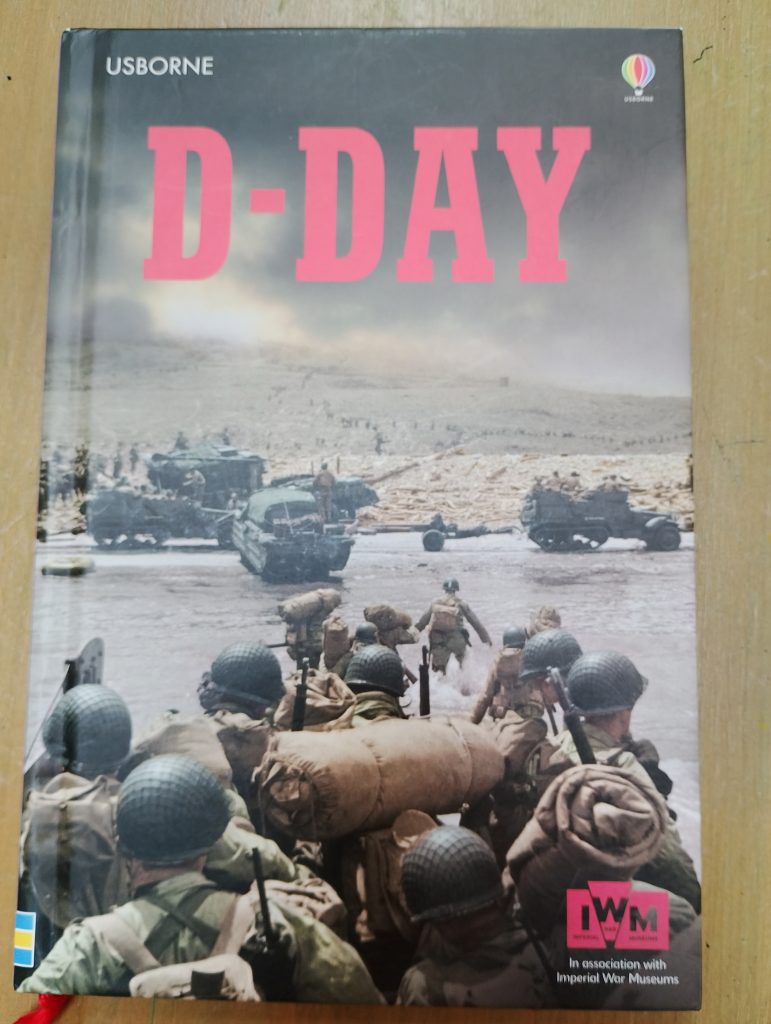
This is a good choice for slightly younger readers who are interested in D-Day. The first half of the book covers the context, planning and preparation for D-Day. The second half covers the events of the day itself, and whilst there is an acknowledgement of lives lost, it is sensitively done. The book is full of original photographs, maps and diagrams.
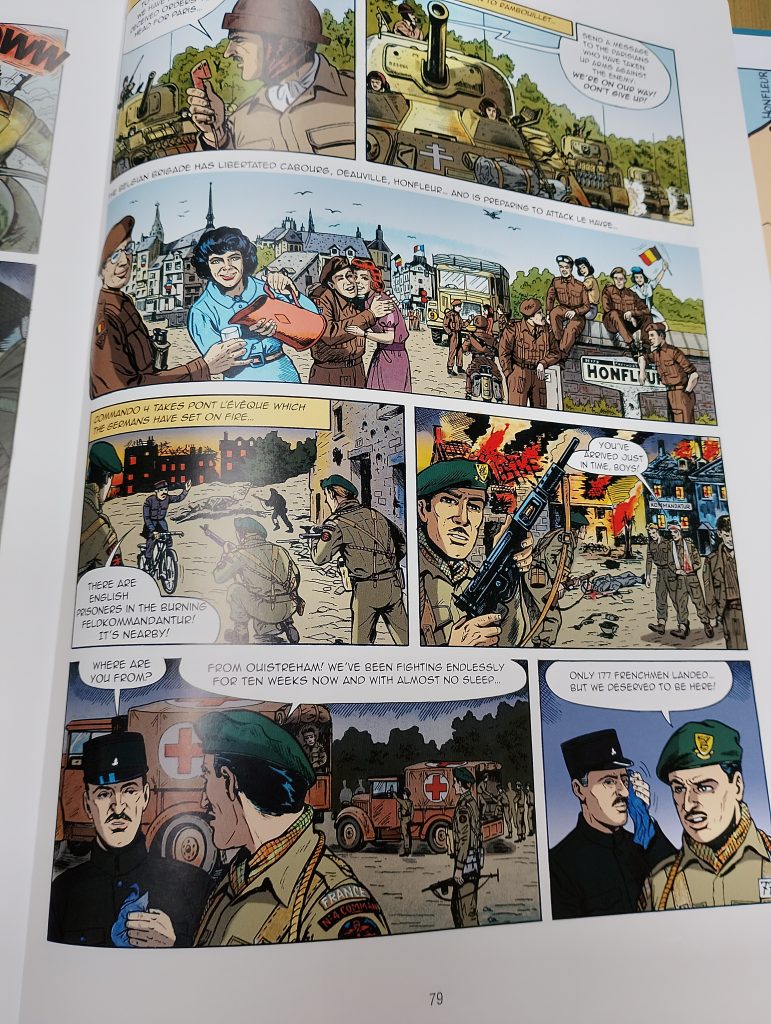
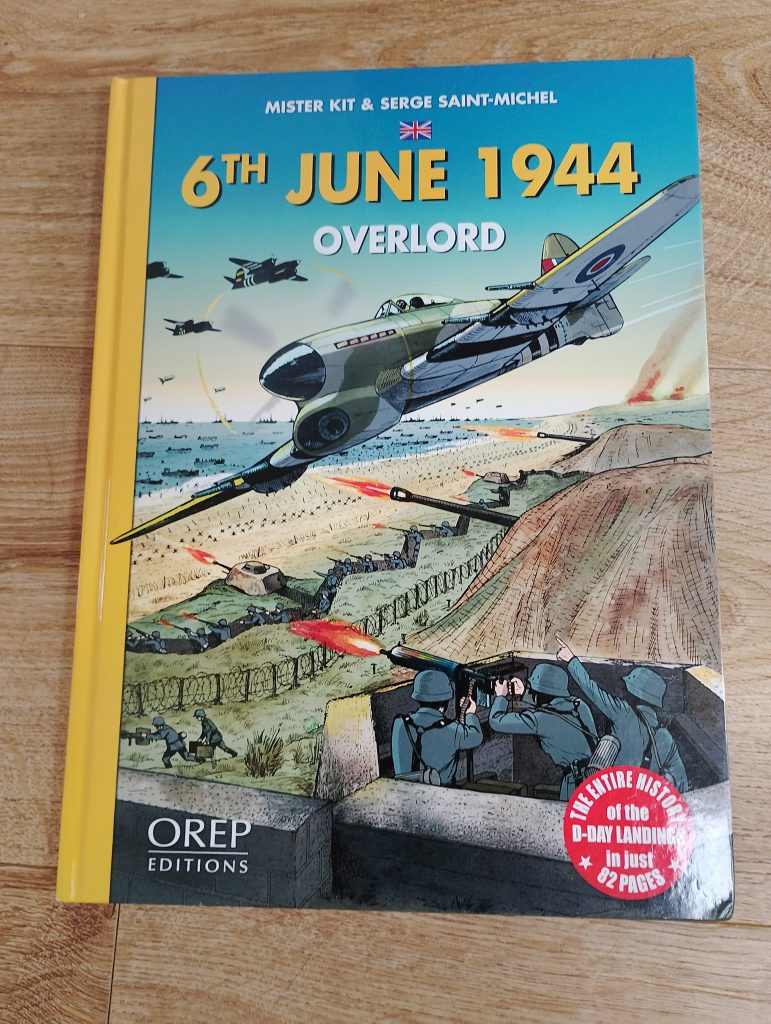
6th June 1944: Overlord
Mister Kit & Serge Saint-Michel
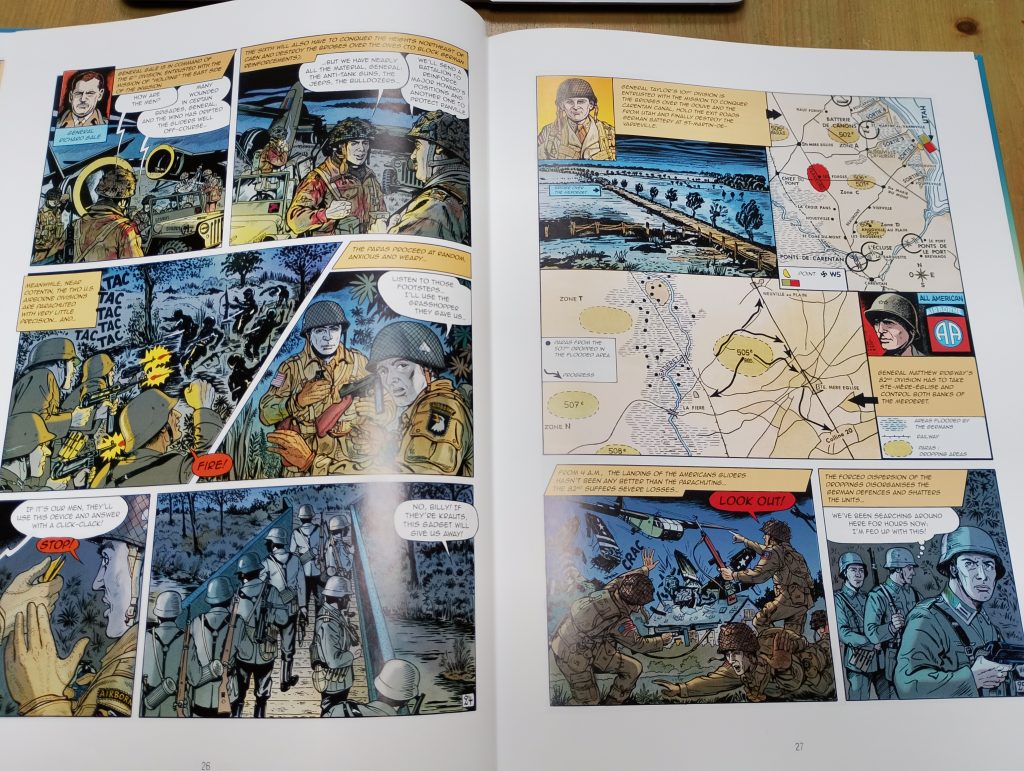
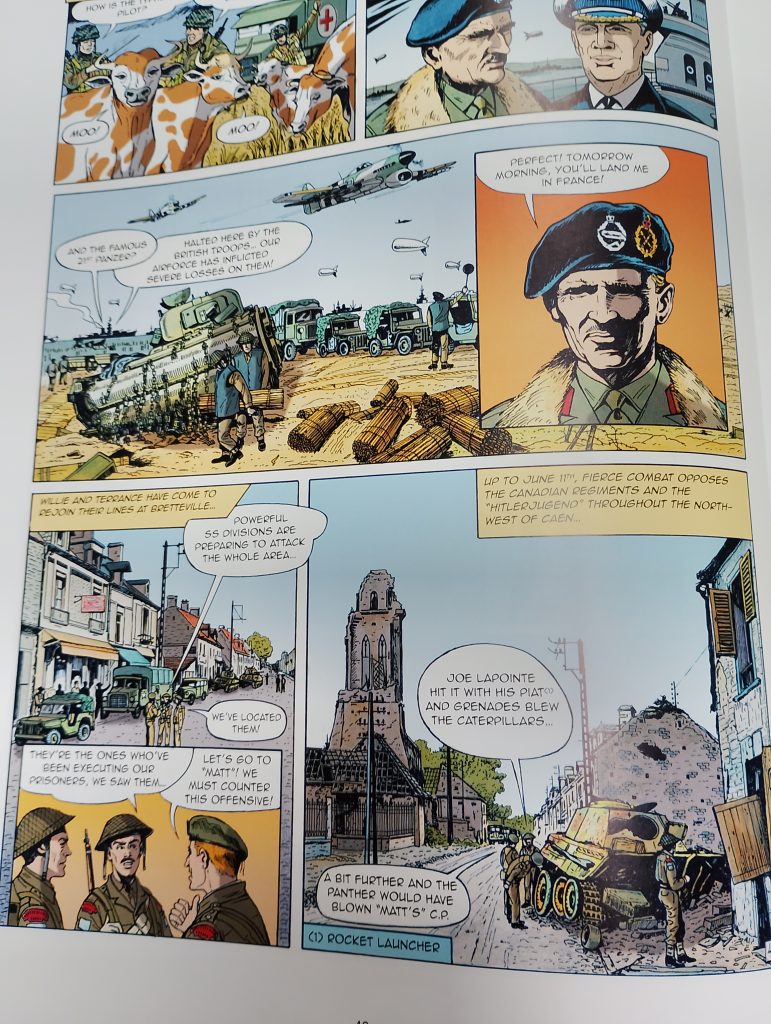
A graphic book from OREP Editions giving an overview of the whole of Operation Overlord, the invasion of Northern France that began on D-Day. There is a huge amount of history here, though the flow can at points be difficult to follow because of the sheer amount of material and different battle scenes. The illustrations are not gory, but quite a few soldiers do clearly die at various points. In common with other OREP publications, I feel that this book suffers somewhat from the quality of the translation, but it is still very popular here, and a good choice for older children who want to dive into the detail of D-Day.
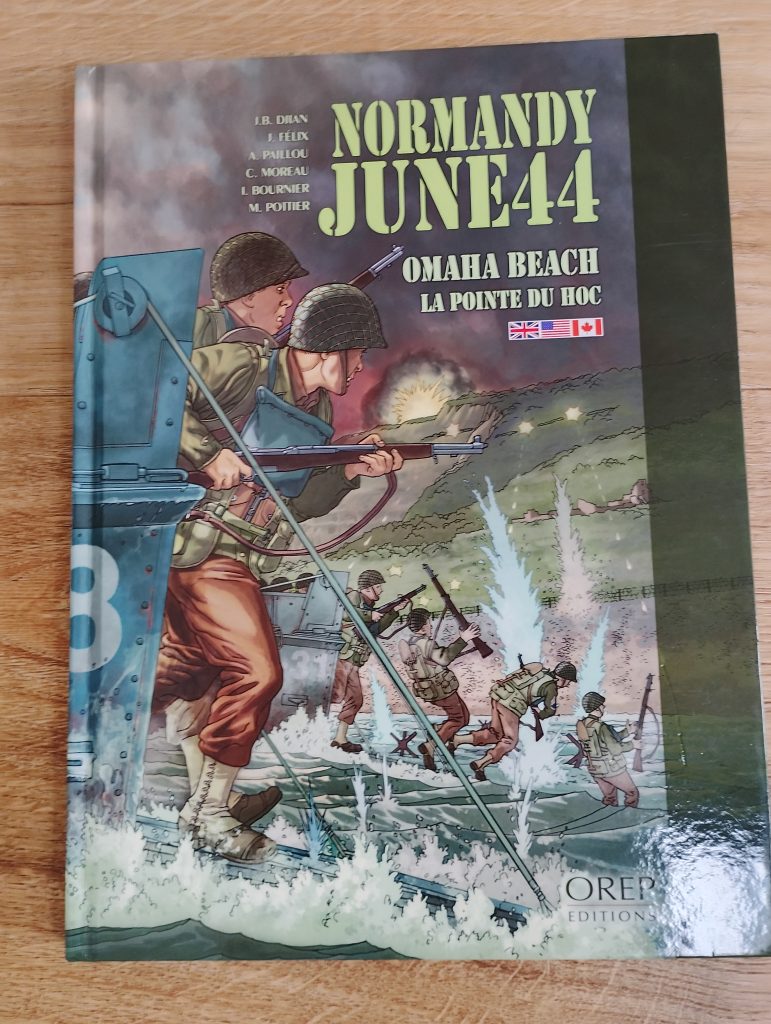
Normany June ’44: Omaha Beach, La Pointe du Hoc
OREP Editions
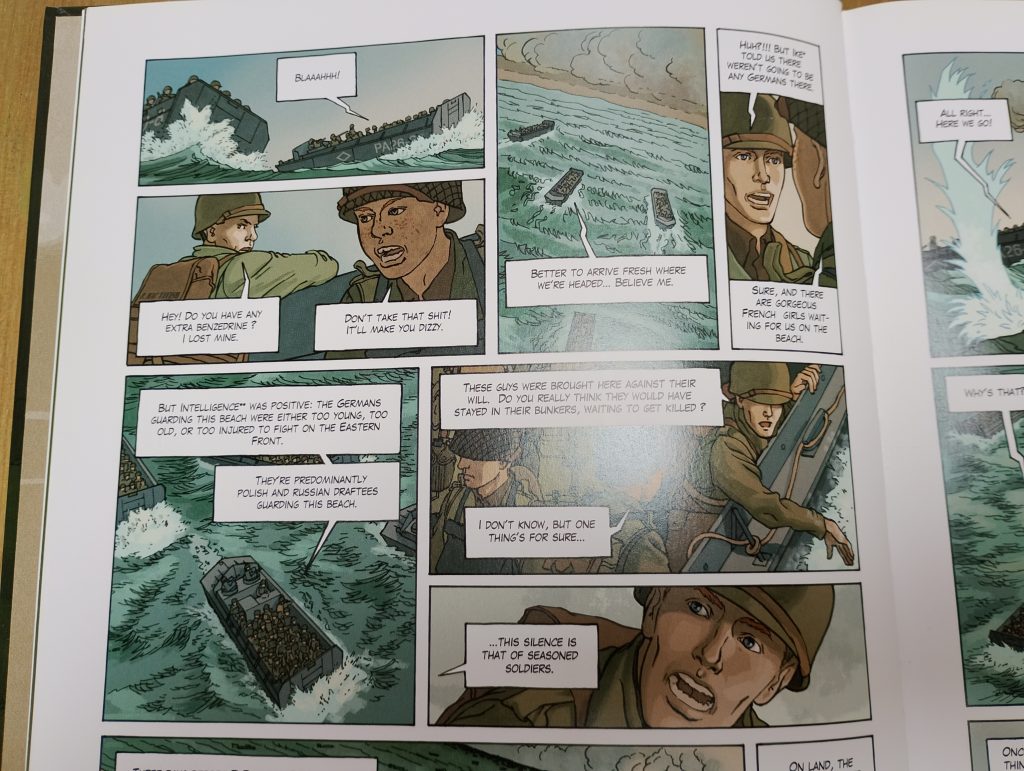
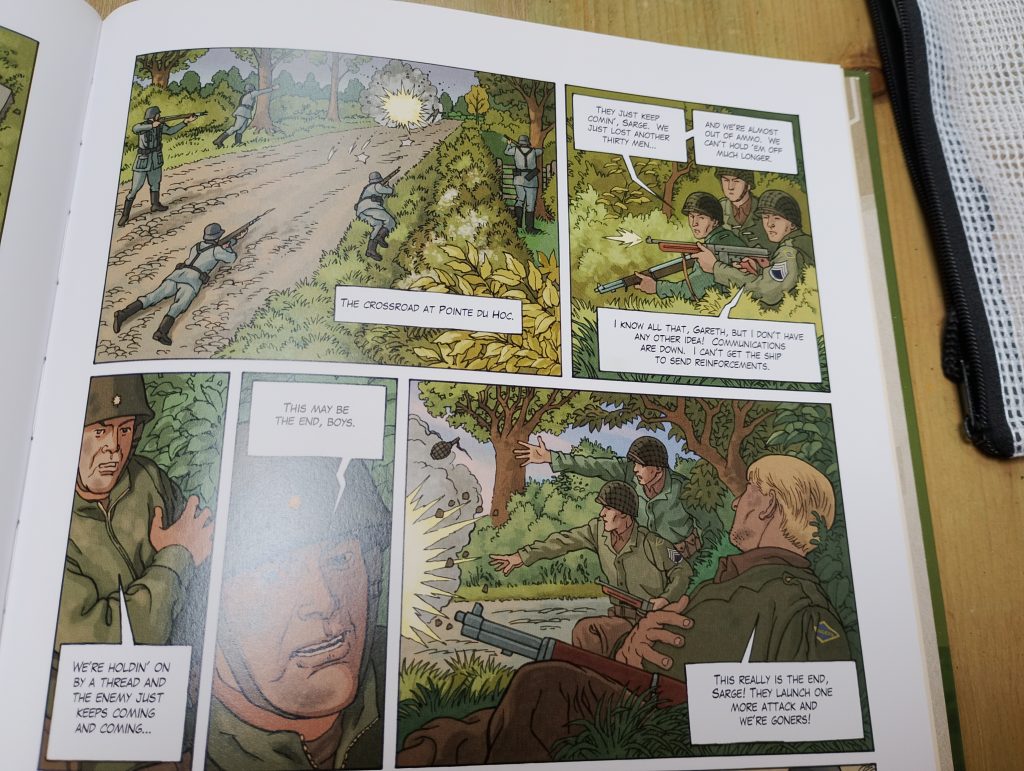
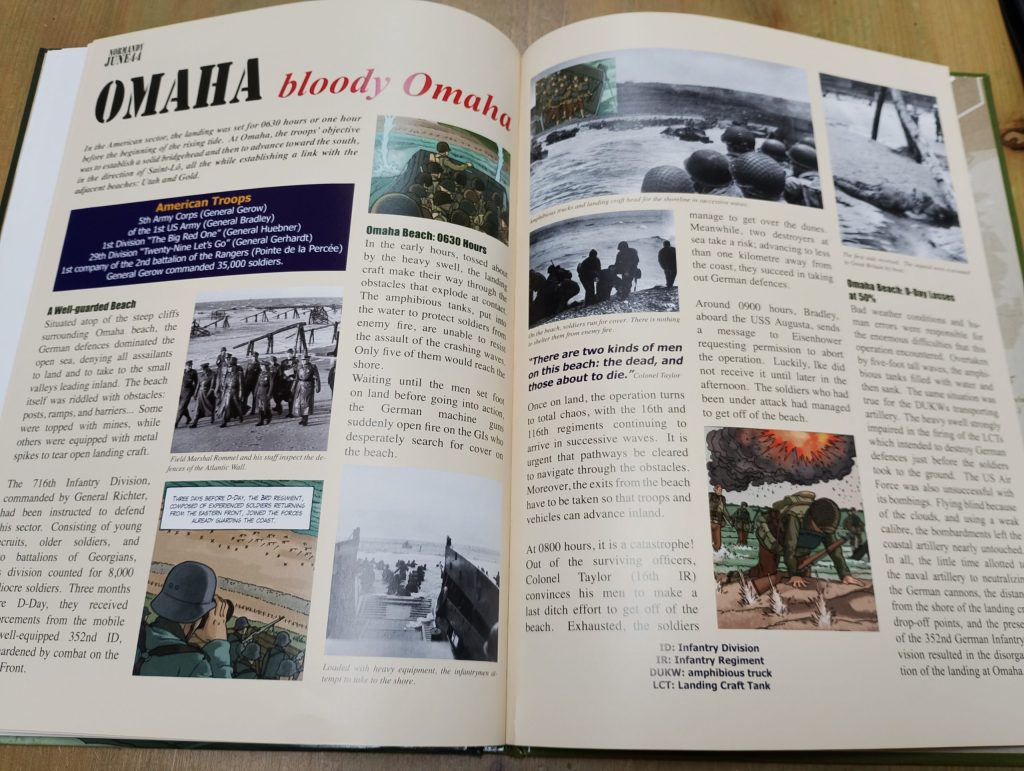
This is one of a series of graphic books from the Norman publishing house OREP editions. There is one comic for each of the D-Day Landing beaches. We picked out this one because we were particularly interested in the scaling of the cliffs at the Pointe du Hoc. I think these books are wonderful for the child who really wants to get into the detail of events on D-Day. They are slightly let down by the quality of the translation, in two regards. Firstly, many of the comics, including this one, have the odd swear-word in, which could easily have been avoided. You can see this in the photos below. Secondly, in my view they are translated in overly-casual English to give the impression of American GIs chatting to each other, but this sometimes makes the dialogue rather stilted.
There is also an occasional mention of drugs (in this case motion-sickness pills) without really explaining what is going on. Better not to have mentioned, or to have explained more!
All that being said, I do think the comics are a fantastic resource for an older child who really wants to understand the events of D-Day. Even better if you purchase them on a trip to Normandy, at one of the landing beach museums!
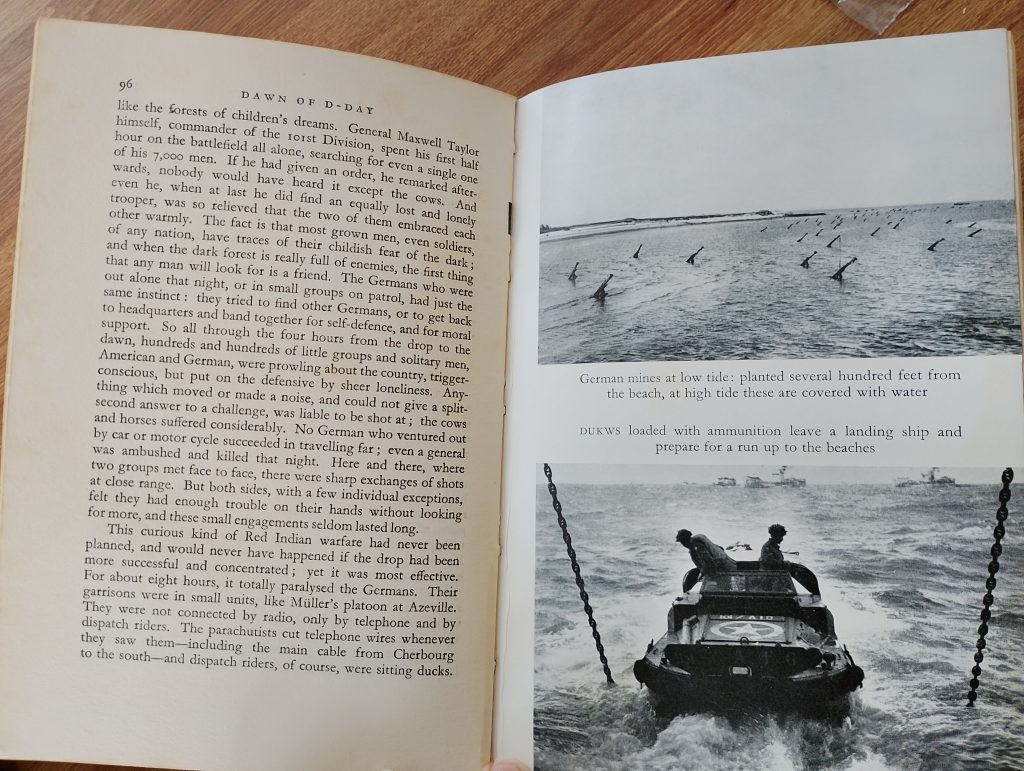
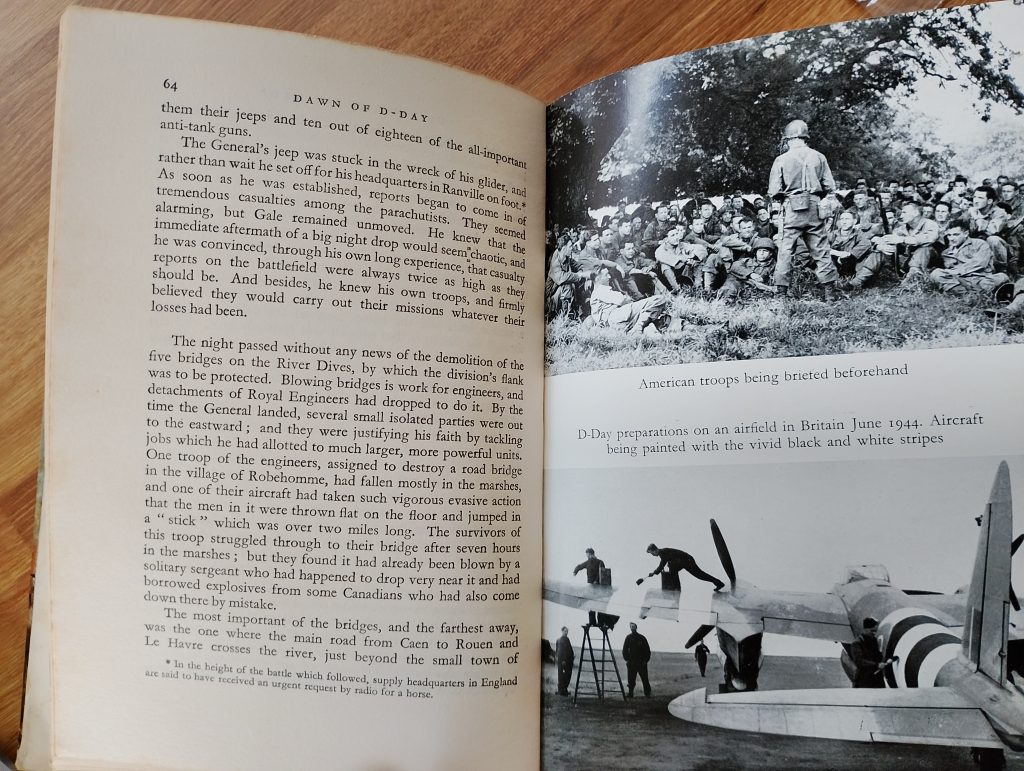
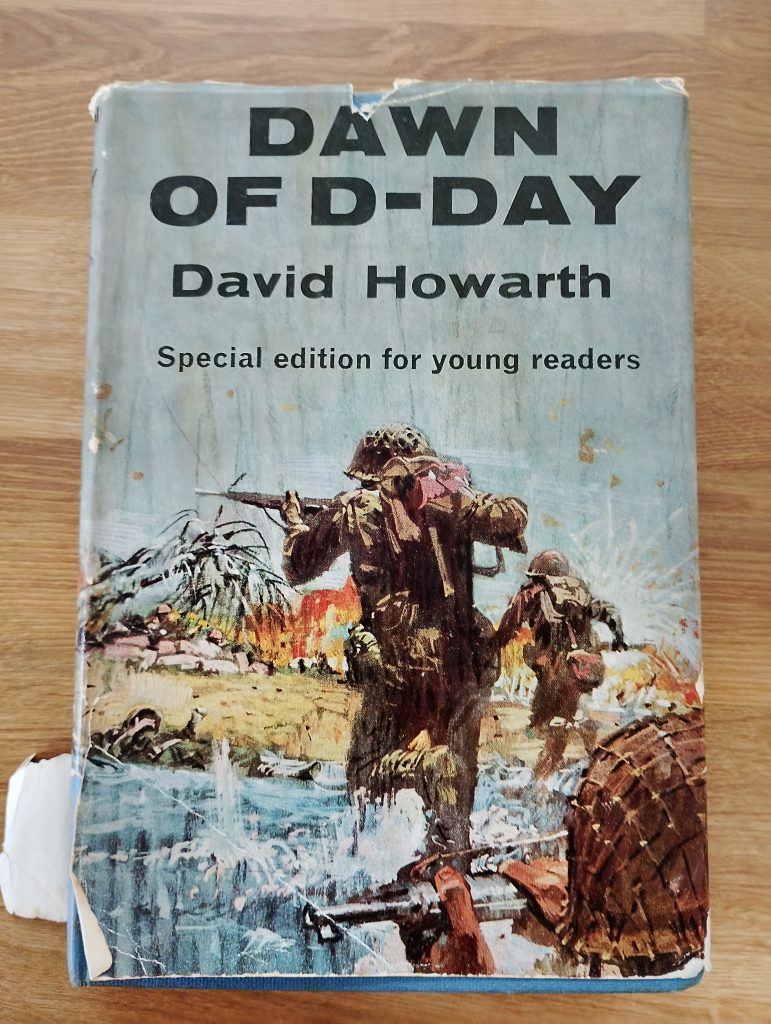
Dawn of D-Day (Special edition for young readers)
David Howarth
Another David Howarth book adapted for younger readers, this is a very detailed historical account of the invasion. There are a few photographs and maps on the cover pages, but this is predominantly dense text. One for the enthusiast. I couldn’t find the young people’s edition on Amazon, my copy was published by Collins in 1963.
Battles, military equipment and events
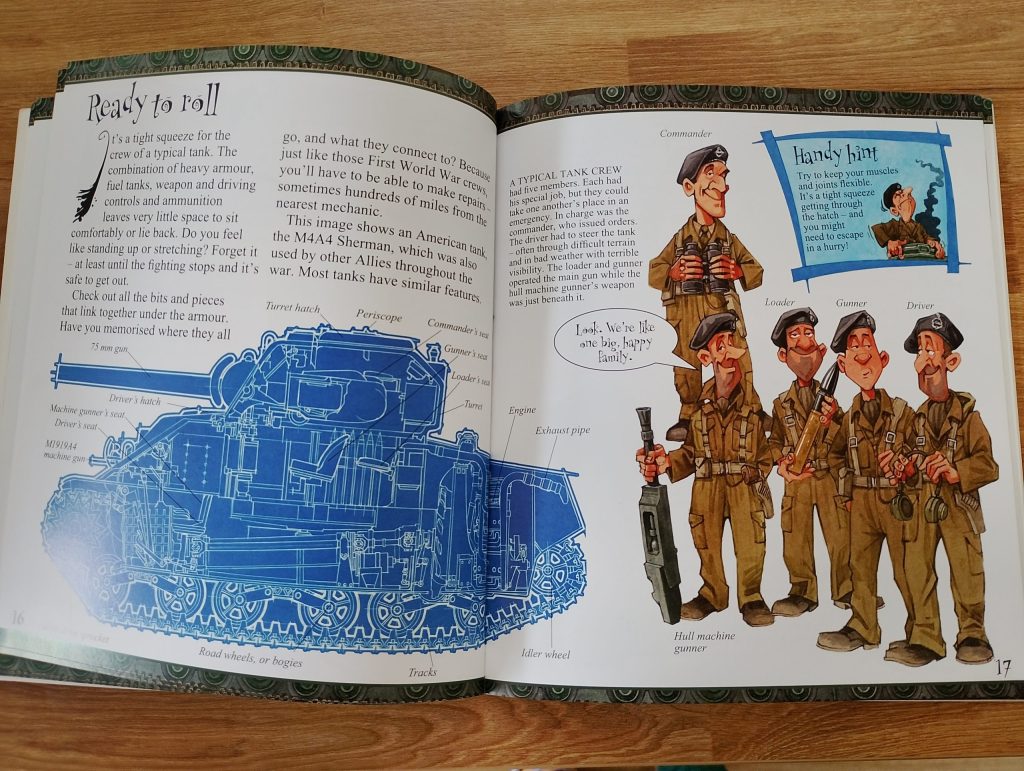
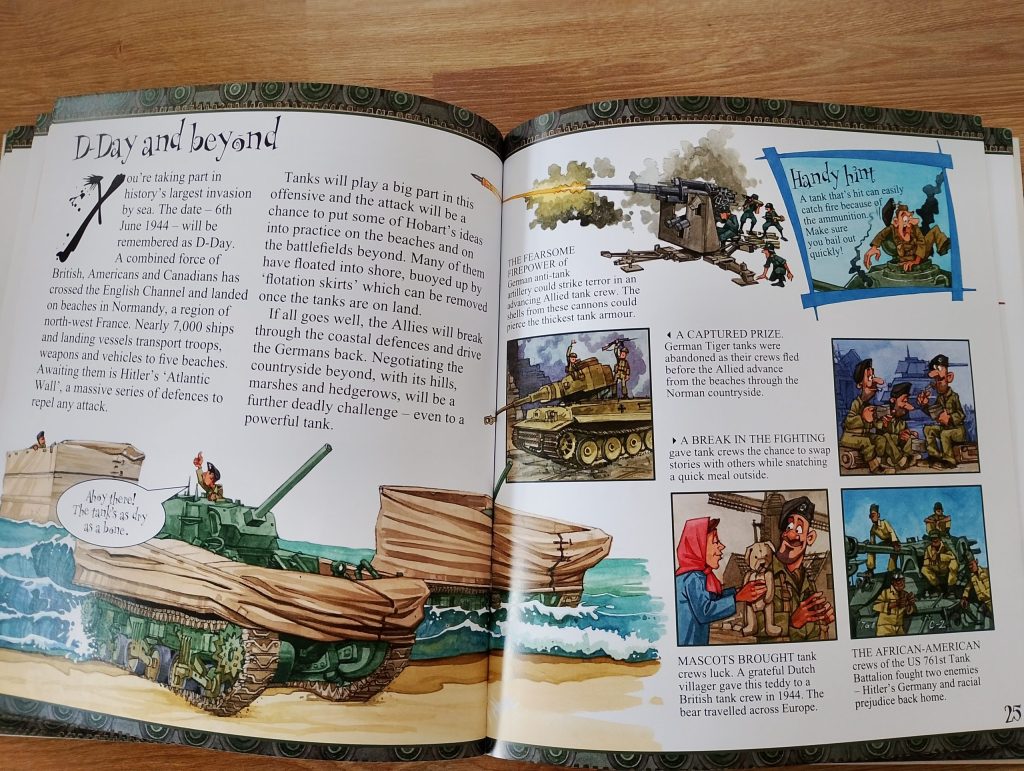
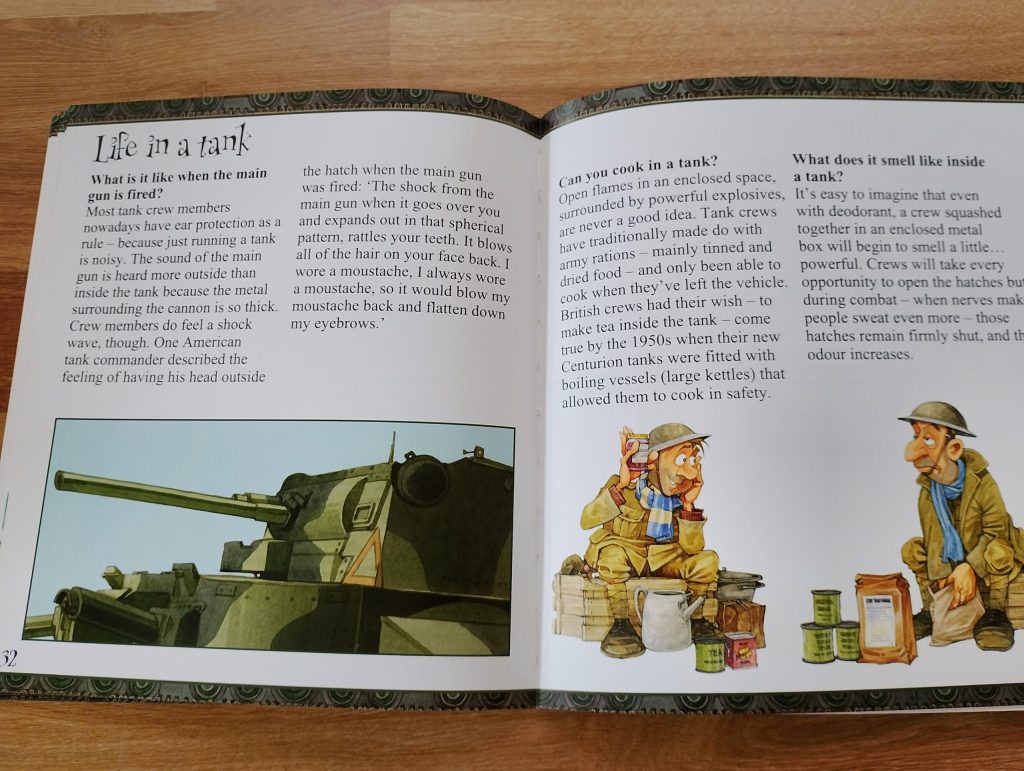
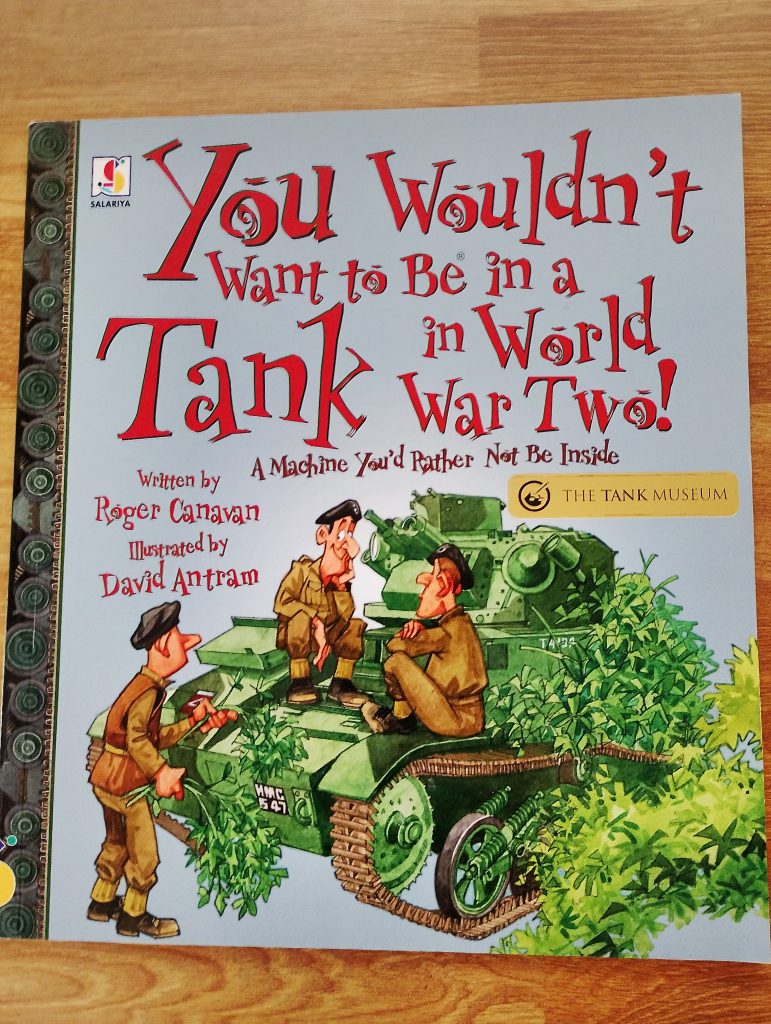
You Wouldn’t Want to be in a Tank in World War Two!
Roger Canavan
A book for younger children, giving an overview of tank warfare during the Second World War. The book is short, and quite high level, with some comic illustrations. It would be a good choice for children to read themselves.
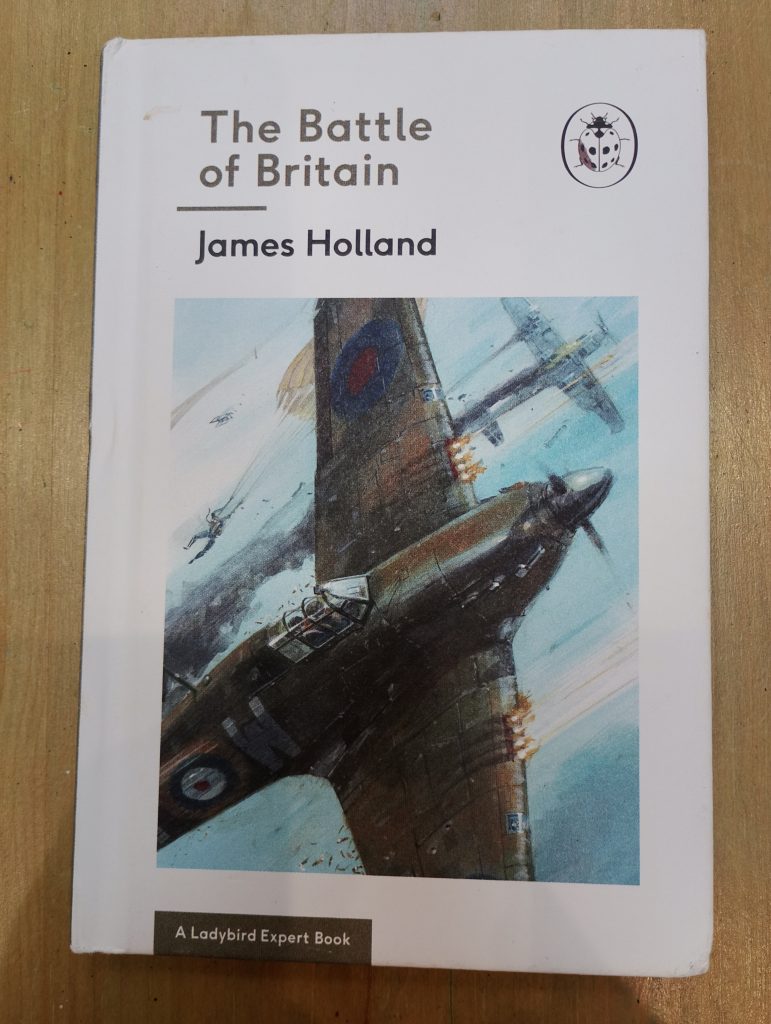
The Battle of Britain (Ladybird Experts)
James Holland
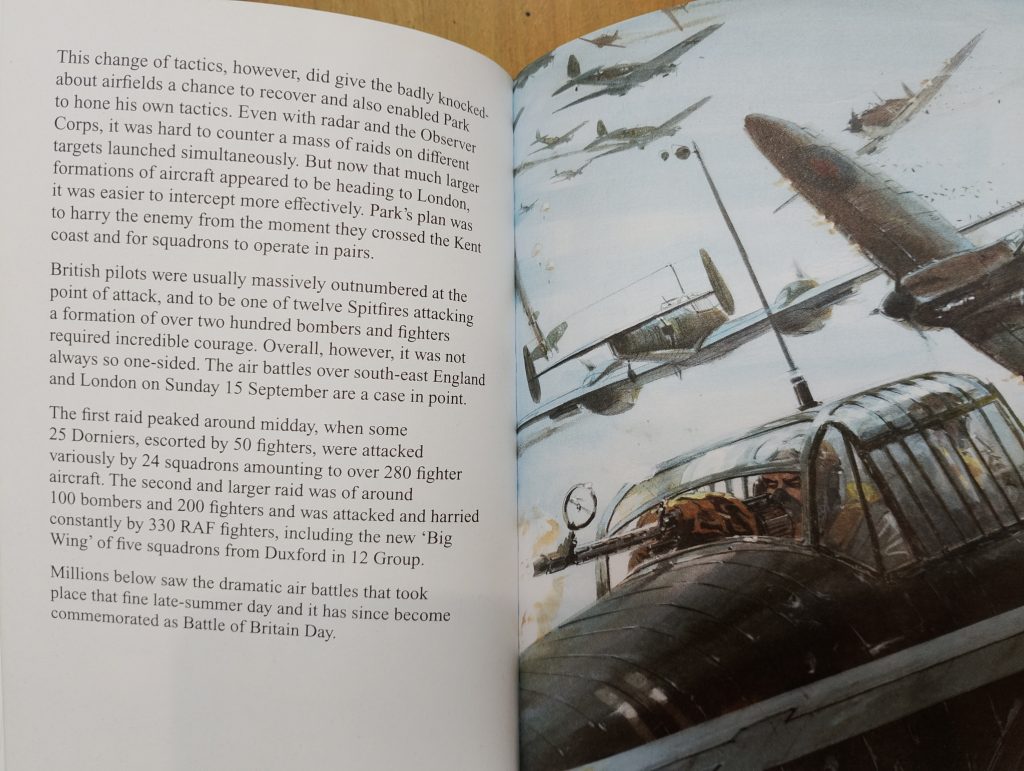
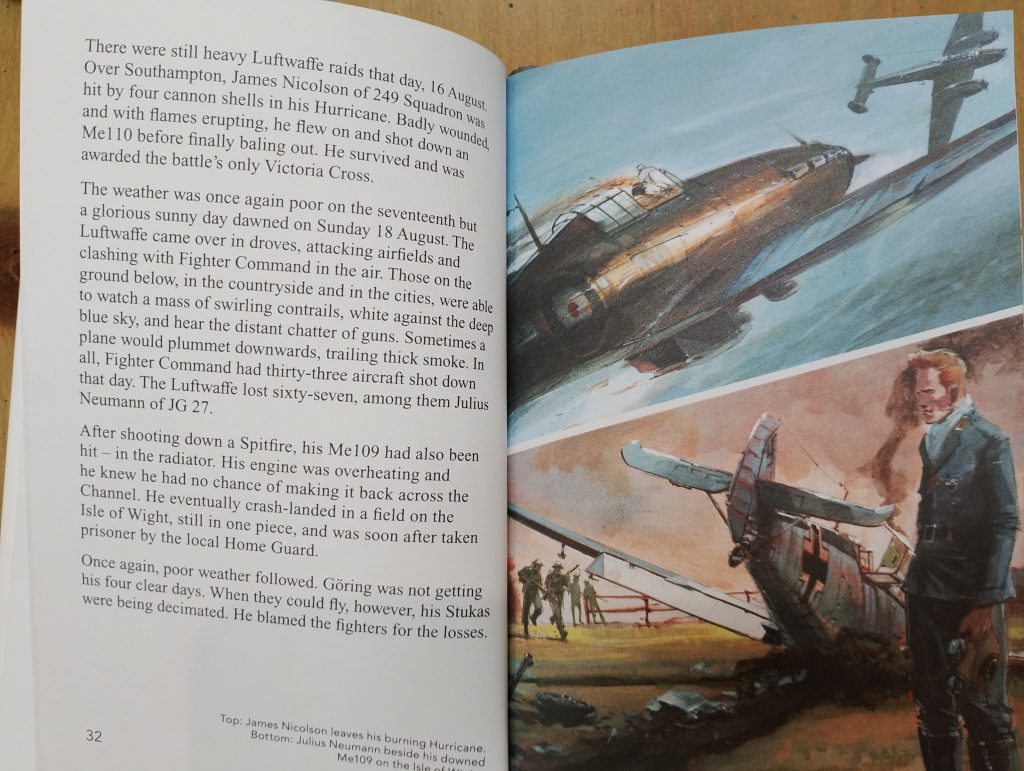
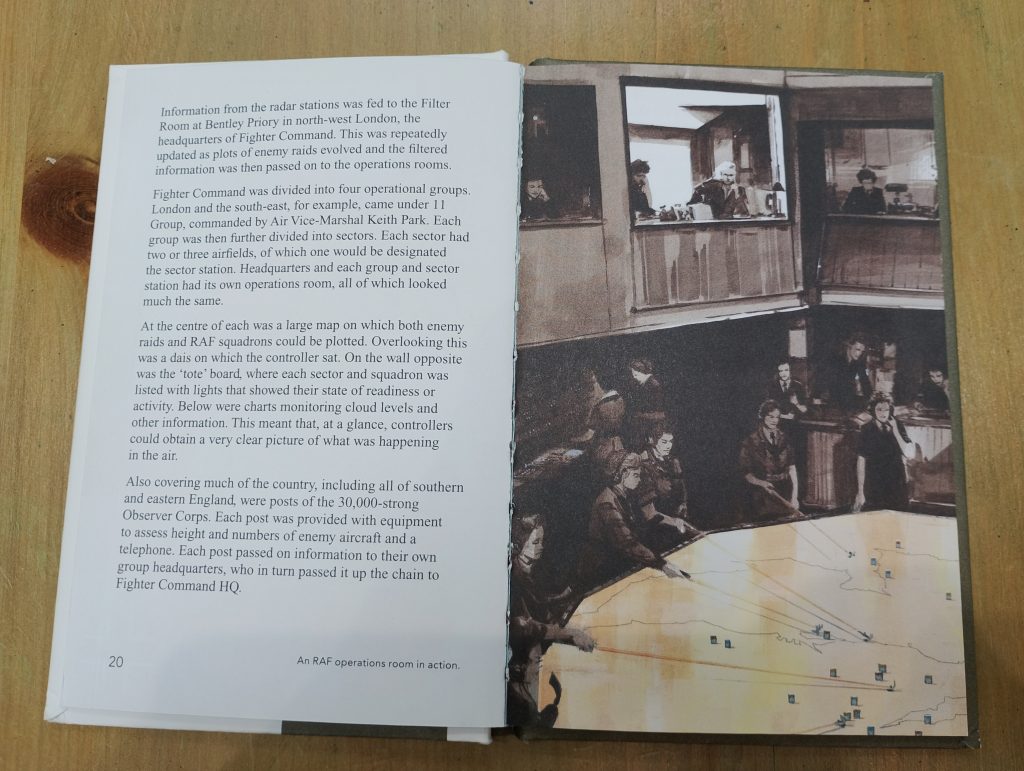
I chose this book because I was struggling to find a book about the Battle of Britain suitable for children. It is a Ladybird Expert which I think means it is in the Ladybird style, but designed for adults or enthusiasts. It is certainly more detailed than the average Ladybird. There is an excellent detailed map at the beginning, and the usual full page watercolour illustrations you would expect. Going forwards, I would probably give this one to older children to read to themselves, and try again to find something simpler to read aloud with younger children.
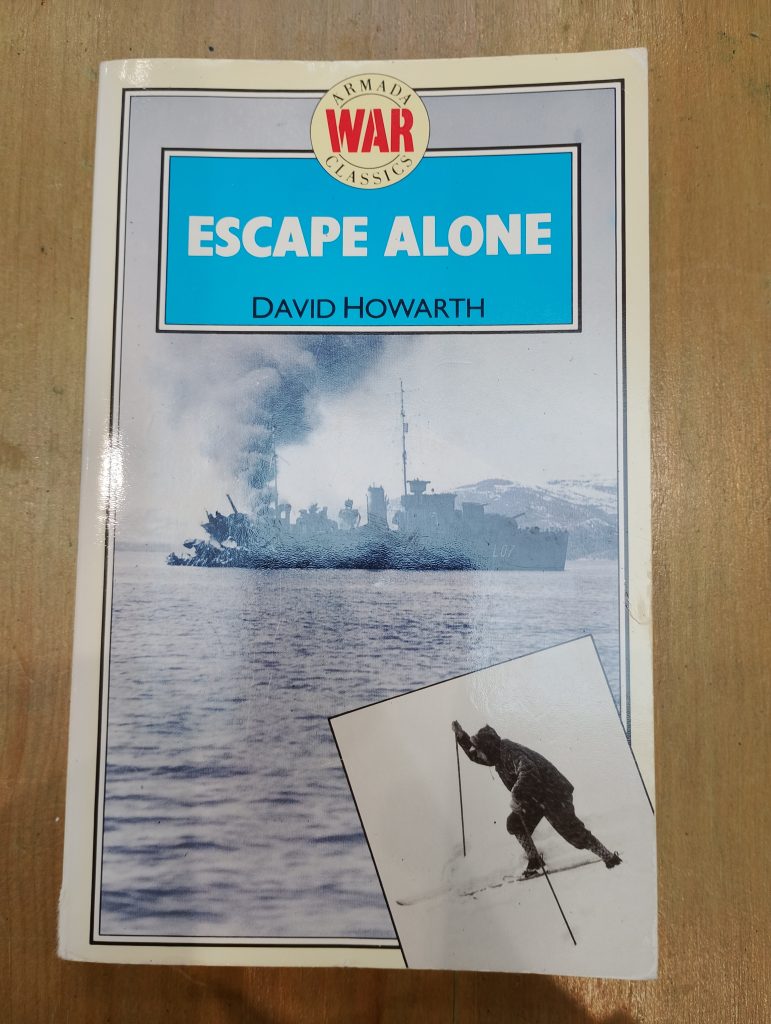
Escape Alone
David Howarth
I came across this older series of WW2 books and would like to explore it further. They mostly seem to be individual tales of bravery and adventure from the Second World War, which were originally written up as adult books, but have been adapted and abridged for younger readers. The adult version of this book is called ‘We Die Alone’!
It is a gripping true story. The main gory element to be aware of is that the protagonist gets gangrene in his toes, and managing this situation is a recurring theme.
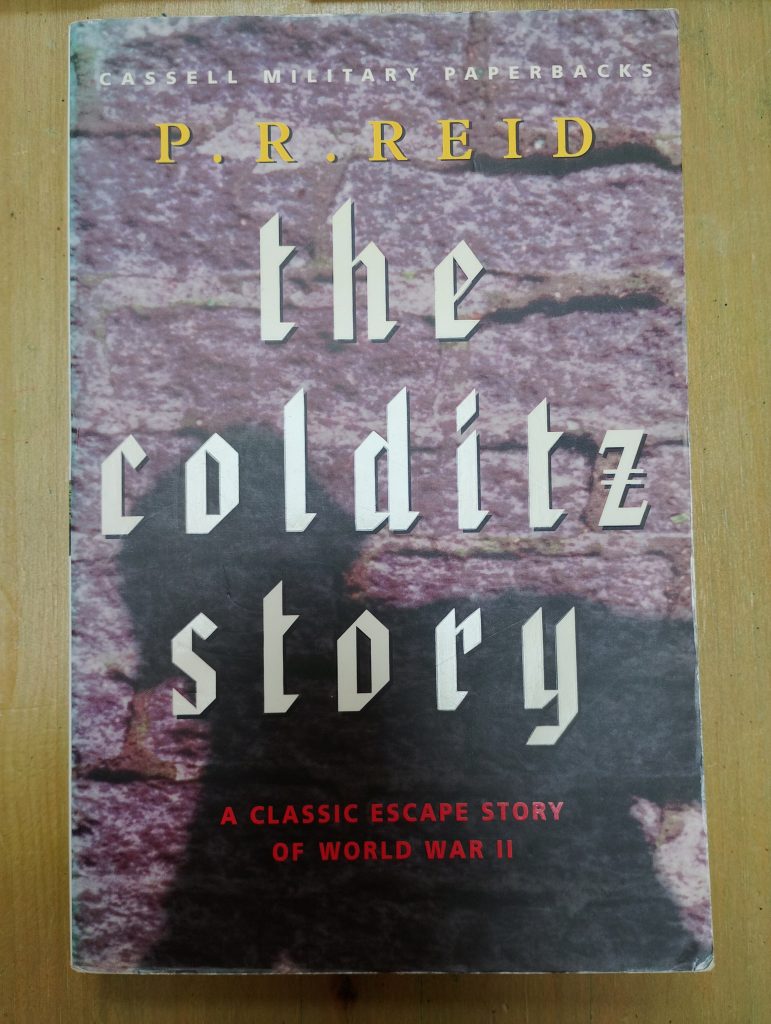
The Colditz Story
Pat Reid
This is not a children’s book, but it is pretty accessible and absolutely gripping! I loved this book when I was in my early teens. The Colditz Story is a largely autobiographical camp of a POW camp during the Second World War. Those officers who had attempted escape and been recaptured were sent to Colditz, a castle high on a sheer cliff above a river, supposedly an impenetrable fortress. Of course, most of the inmates viewed it as a challenge. There are a couple of deaths during the book, but nothing very graphic.
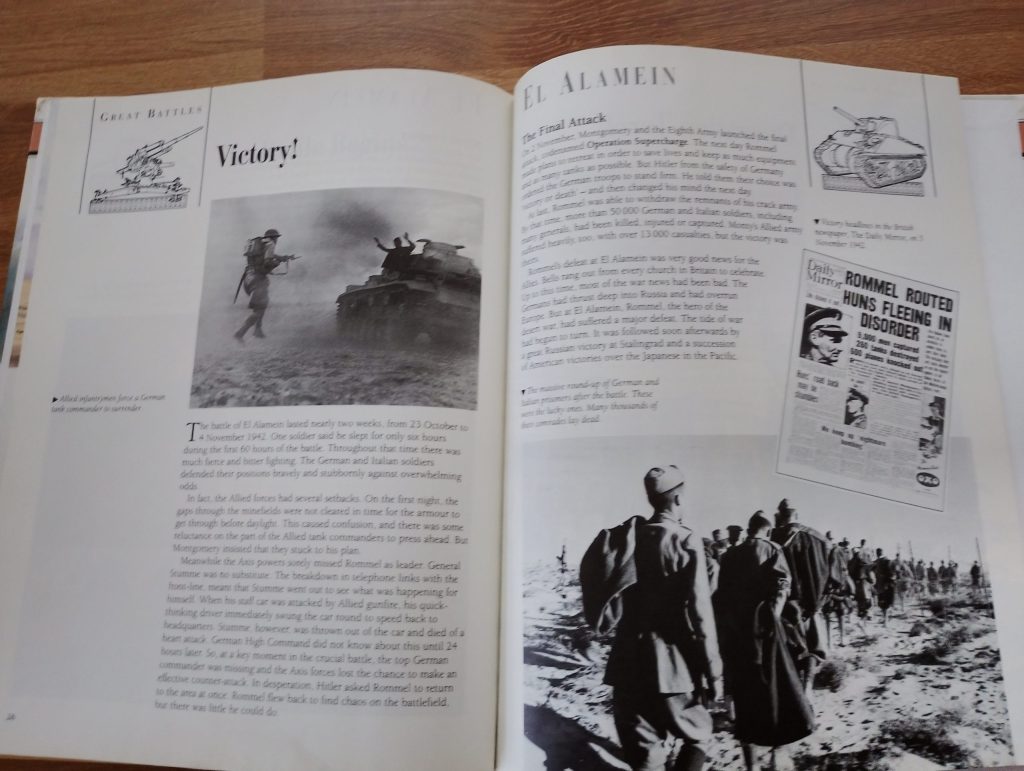
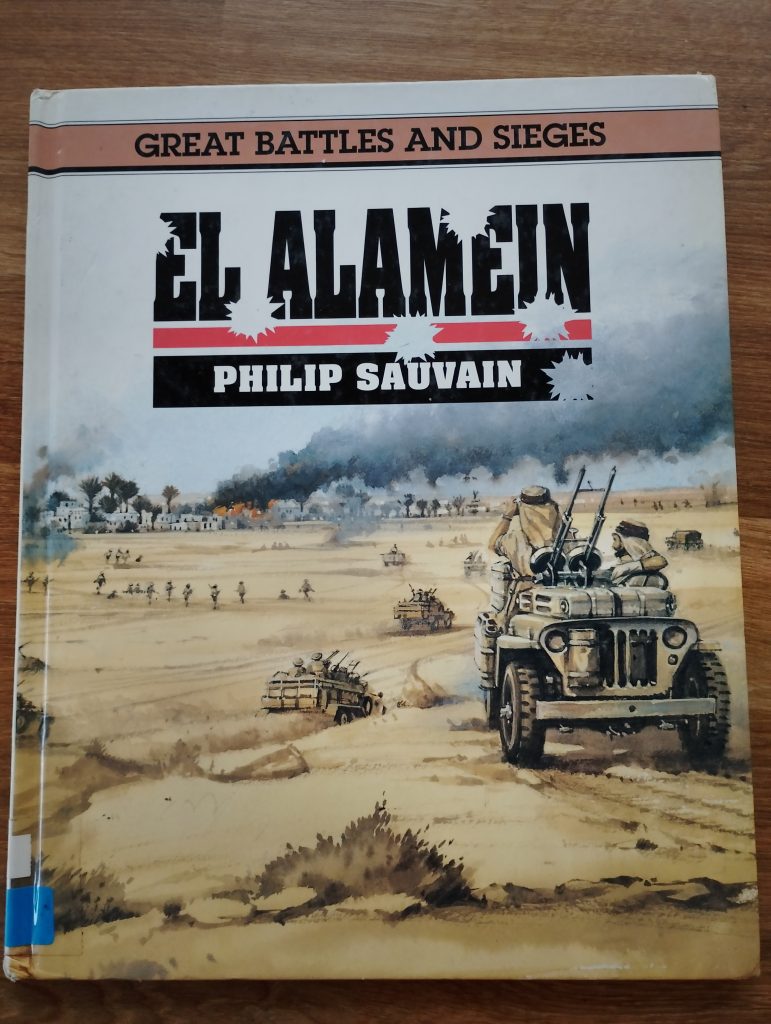
El Alamein (Great Battles and Sieges)
Philip Sauvain
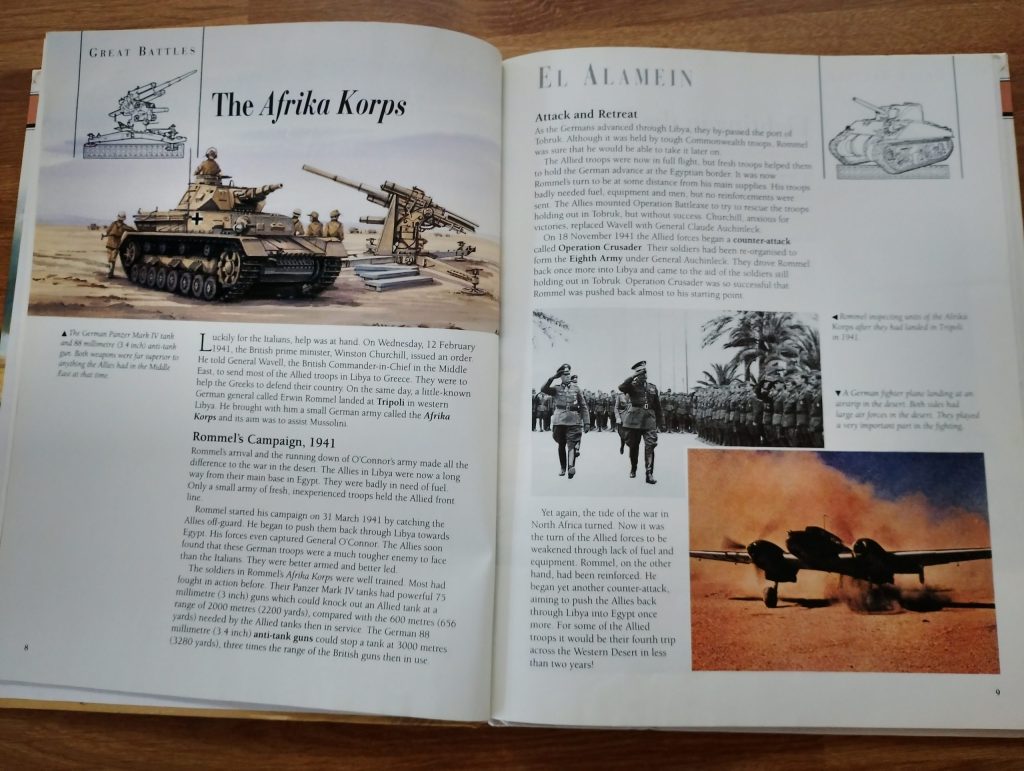
A great choice if you are wanting to explore the middle section of the war and the conflict in North Africa in greater detail. Plenty of original photographs, watercolour paintings and maps, and a good level of detail for those who are interested in the context and strategy of the battle.
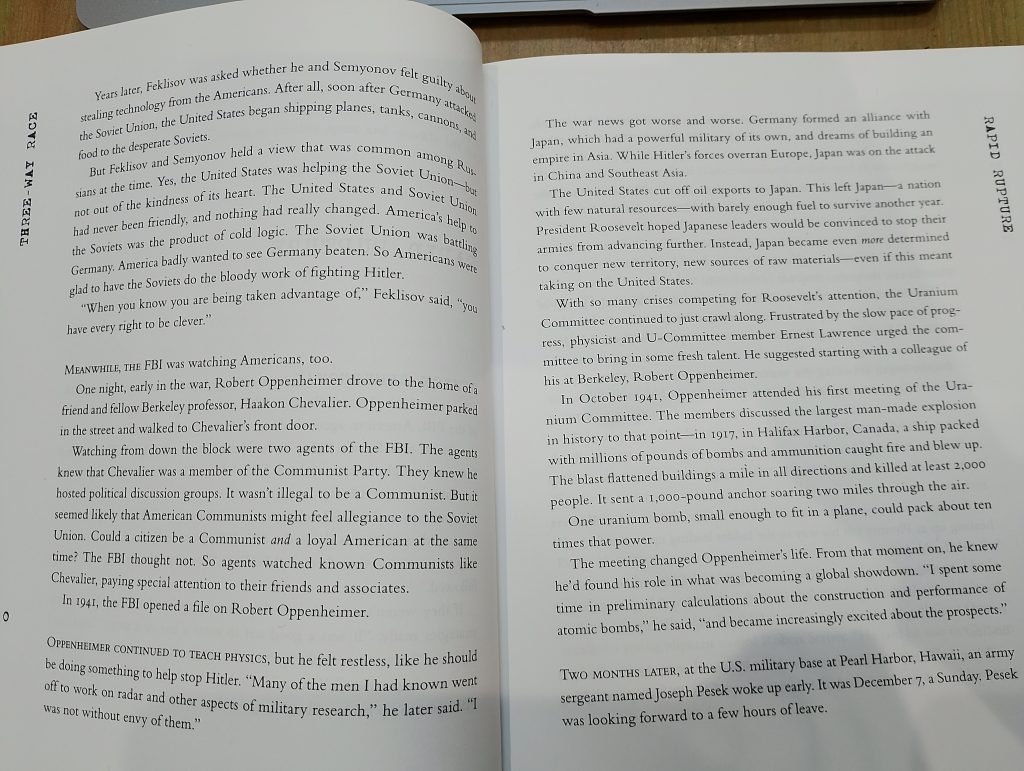
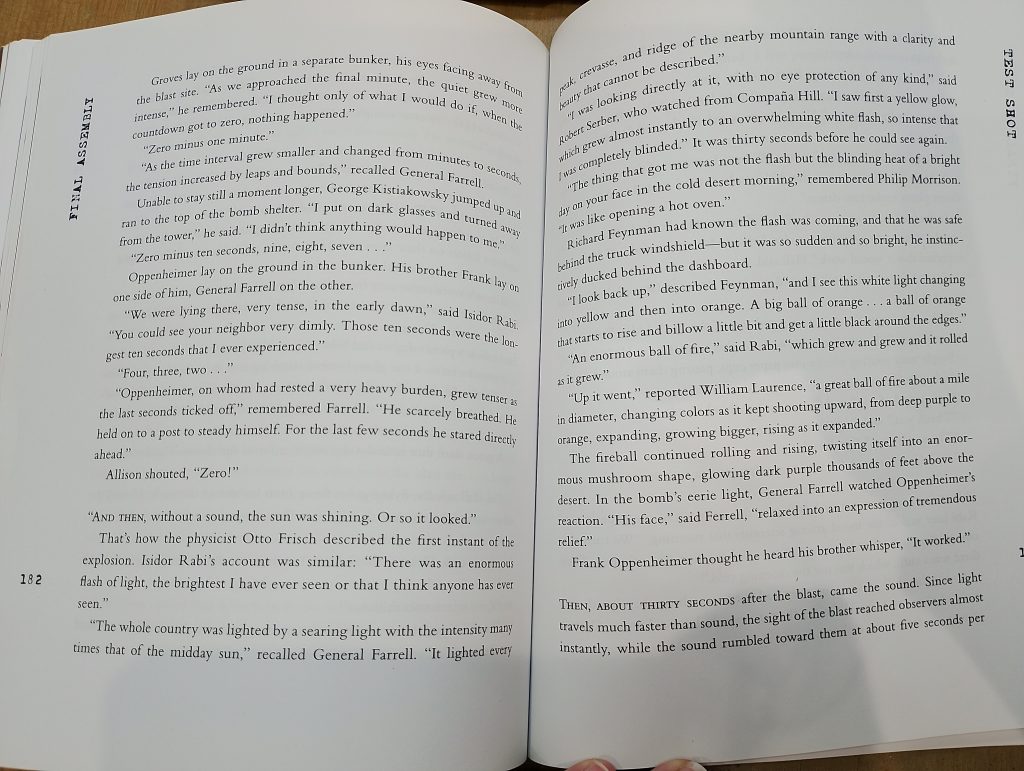
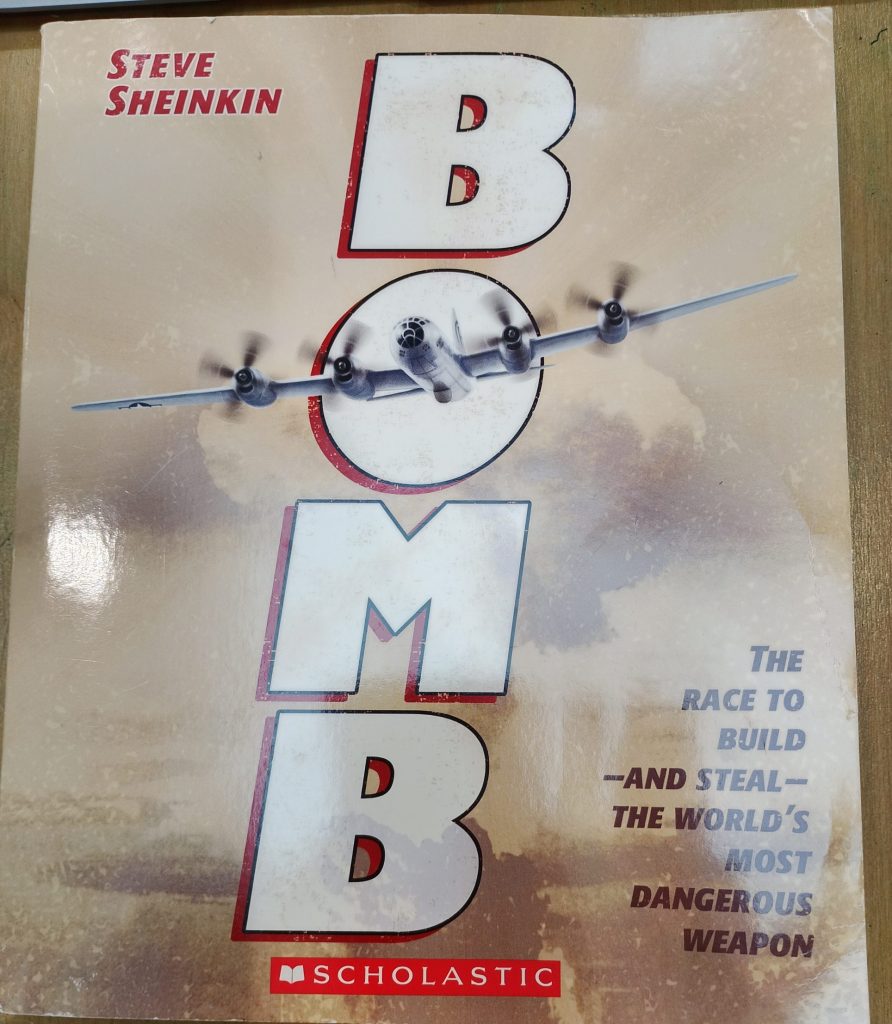
Bomb: The Race to Build and Steal the World’s Most Dangerous Weapon
Steve Sheinkin
This book covers the history and science of the development of the atomic bomb. It is mostly a chronological overview of Oppenheimer’s project, with smaller amounts of scientific detail interspersed. There is a very very small amount of information about the impact of the bombs on the Japanese people, I would have liked to see more on this theme.
There are a few pictures and diagrams, but not many. That being said, the text is engaging, and my child felt that they learned a lot from this book.